
News
10 June: what is celebrated today
10 June brings together observances that seem scattered, but share a common thread: the way societies converse with themselves and the world. Culture, science, memory, health and ethics coexist on the same date, reminding us that progress is not only technical or aesthetic, but also human.
International Day for Dialogue among Civilizations
Proclaimed in 2024 by the UN General Assembly, this day highlights the value of cultural diversity as a source of understanding and cooperation. Dialogue among civilizations is not an abstract slogan: it is the everyday practice of listening to others without reducing them to stereotypes.
History shows that when cultures meet — on trade routes, in translation centres or in shared cities — scientific, artistic and philosophical advances emerge. In an interconnected and tense world, speaking and understanding become acts of peace.
International Heraldry Day
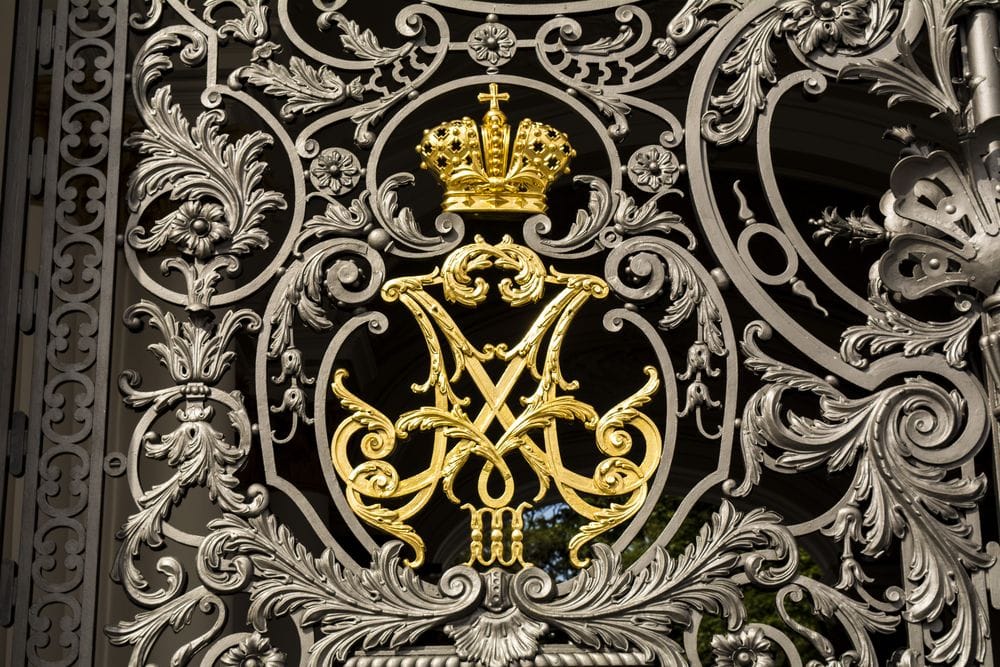
10 June also celebrates heraldry, a visual language born in the Middle Ages to identify lineages, cities and institutions. Coats of arms, colours and figures formed condensed accounts of origin, power and belonging.
Today, heraldry is read as an auxiliary science of history: a symbolic archive that helps us understand how societies represented themselves. Looking at a coat of arms means learning to decipher identity through image.
World Art Nouveau Day
This date pays tribute to Art Nouveau, a movement which, at the end of the nineteenth century, broke with the rigidity of the past to create a new, organic and free art. 10 June commemorates two key figures who died on this day: Antonio Gaudí and Ödön Lechner.
Curves, natural motifs and a deep faith in human creativity transformed entire cities. Celebrating Art Nouveau means championing imagination as a force capable of changing the way we inhabit the world.
World Anti-Counterfeiting and Piracy Day
World Anti-Counterfeiting and Piracy Day focuses attention on responsible consumption and the protection of creativity. Counterfeiting affects not only economies and copyright, but can also put people's health and safety at risk.
Choosing original products is an everyday gesture that defends creative work, quality and trust. On this day, consumer ethics becomes a concrete form of citizenship.
World Andrade Disease Day
10 June also raises awareness of a rare hereditary disease: Andrade disease, which affects the peripheral nervous system. The date coincides with the birth of the Portuguese neurologist who first described it.
This observance recalls the importance of early diagnosis, research and support for patients and families. Talking about rare diseases broadens the idea of care and health justice.
National Day of Space Scientific and Technological Development (Argentina)
In Argentina, 10 June commemorates the National Day of Space Scientific and Technological Development, in remembrance of the launch of the SAC-D/Aquarius satellite in 2011. That milestone marked a new stage in the country's space research and technological sovereignty.
Here, space exploration appears not as a distant gesture, but as a concrete tool for studying the Earth, improving connectivity and reducing gaps. Science and the future, anchored in a precise date.
International Archives Week (9–13 June)
During these days, International Archives Week takes place, bringing the documentary memory of societies to the forefront. Public and private archives open their collections to show that the past is not asleep, but available to be read and questioned.
The week invites reflection on accessibility, digitisation and inclusion: what is preserved, how it is preserved and who can access that shared memory.
International Men's Health Week (9–15 June)
10 June also falls within International Men's Health Week, devoted to prevention and awareness of health problems affecting boys and men. The focus is on regular check-ups and on breaking the silence around physical and mental discomfort.
Taking care of oneself ceases to be an individual matter and becomes a shared responsibility. Prevention, here, is a form of the future.