
News
12 February: what is celebrated today
12 February is a day marked by very intense contrasts: from the defence of human rights against extreme violence to the protection of childhood in wartime contexts; from the memory of a scientist who transformed our way of understanding life to the building of fairer and more peaceful societies. A day that compels us to look directly at what threatens the most vulnerable people, but which also invites us to celebrate human curiosity and its capacity to discover, question and transform.
International Day for the Prevention of Violent Extremism as and When Conducive to Terrorism
Proclaimed by the UN, this day stems from a global urgency: the need to halt a phenomenon that destroys communities, erodes democracy and sows fear where coexistence should exist. In recent years, violent extremism has taken on new forms, fuelled by inequalities, prolonged conflicts, radical discourse and the ability of networks to amplify hatred. When these dynamics lead to terrorism, the impact reaches thousands of people, especially women and children, who often become direct victims of abuse, kidnapping, slavery and sexual violence.
More than an armed or police struggle, preventing extremism is a cultural and educational effort. It requires strengthening media literacy, combating disinformation, promoting tolerance and creating communities that offer alternatives to young people at risk of recruitment. It also means recovering the value of dialogue, inclusion and the defence of cultural heritage that is often attacked to destroy identities. This day reminds us that lasting security can only be built in just, informed and cohesive societies.
World Day Against the Use of Child Soldiers
12 February is also a day of mourning and resistance. The World Day Against the Use of Child Soldiers makes visible one of the cruellest realities of contemporary wars: the forced recruitment of minors by armed groups. Boys and girls turned into combatants, guards, messengers or victims of sexual exploitation; childhoods stolen by a conflict they did not choose. For many of them, the harm is so profound that it will mark their entire lives.
International bodies, governments and NGOs have built legal frameworks, campaigns and reintegration programmes over many years. France, UNICEF and more than one hundred States support the Paris Principles, a key reference for freeing minors and offering them education, psychological support and real opportunities for the future. Although progress has been made, the reality remains tragic in areas of chronic conflict, where childhood grows up with no horizon beyond violence. This day invites us to ask what it means to protect children in a world where their vulnerability is exploited so easily.
Darwin Day
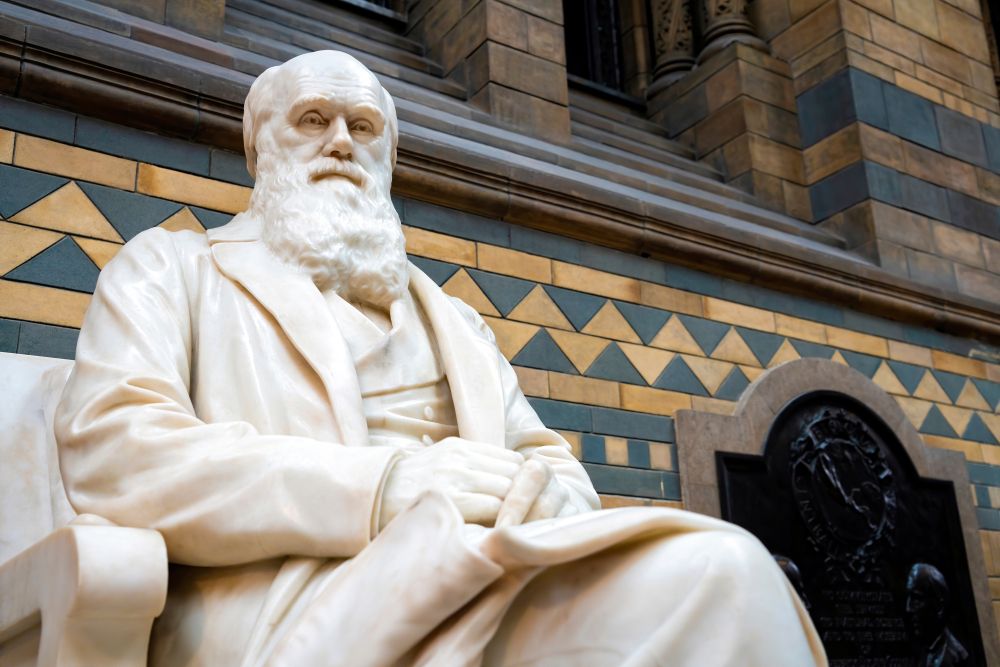
Born on 12 February 1809, Charles Darwin transformed forever the way we understand life. His theory of evolution by natural selection not only revolutionised biology: it inaugurated a new perspective on human beings, their origin and their relationship with the natural world. However, behind the celebrated naturalist there is also the figure of a curious child, a tireless traveller and a thinker who doubted, questioned himself and sought answers even amid his own contradictions.
On the Origin of Species was the result of years of observations, journeys and experiments, from giant tortoises to small insects that he studied with almost childlike passion. His ideas opened scientific, philosophical and religious debates that continue to this day. Contemporary culture remembers him in biographies, documentaries and films that show not only the scientist, but the man who faced losses, uncertainties and the pressure of a theory that would change the world. Celebrating Darwin Day is recognising the power of critical thought and the importance of science as a tool for understanding—and caring for—our planet.