
News
14 October: what is celebrated today
14 October is no ordinary date. It is a mosaic of talents and passions: from those who patiently sew a dress to those who programme the future, define rules for global coexistence or defy the laws of gravity. Precision, creativity, intelligence and human boldness come together in a single day. Each of this day's commemorations reminds us of something essential: progress is not a matter of chance, but the sum of those who dare to imagine, create and build.
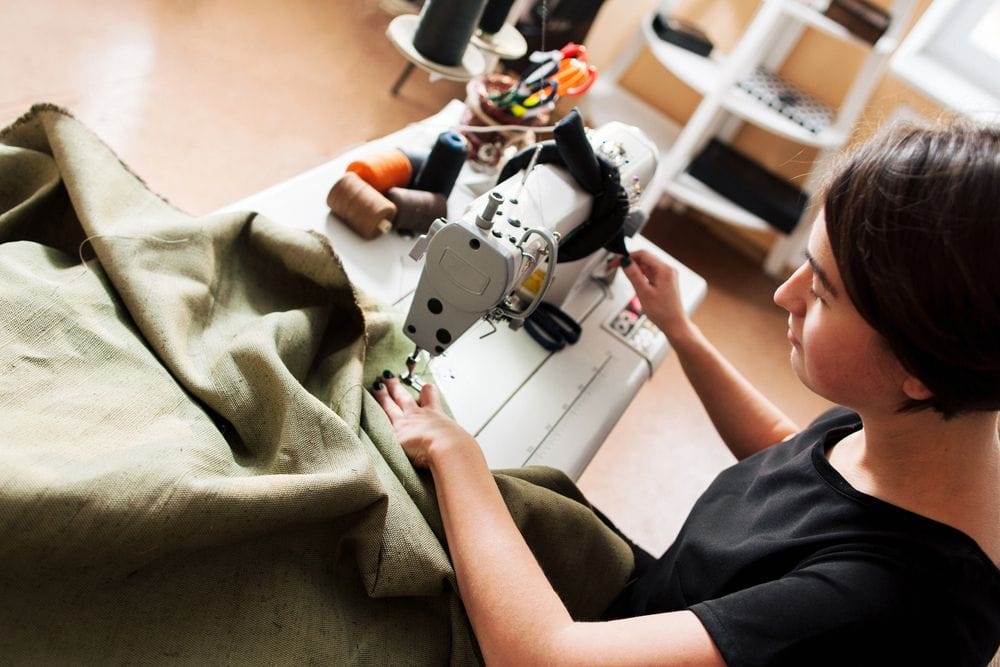
World Dressmaker’s Day: the invisible art that clothes us
Behind every garment there is a story of effort, patience and talent. Every 14 October, World Dressmaker’s Day is celebrated, a day dedicated to paying tribute to those who transform simple fabrics into works of art that accompany our daily lives.
Although its origin is uncertain, this celebration resonates in many countries. Dressmakers, many of whom work from their homes or in small workshops, have for centuries sustained a tradition that combines technique, creativity and a love of detail.
In the 17th century, the guild of dressmakers in Paris marked a turning point for this profession. Later, industrialisation brought exhausting working days, but also independence for many women who, needle in hand, found a way to earn a living and express their identity.
Today, sewing remains a symbol of perseverance and beauty. A thread, a stitch, a garment: everyday gestures that continue to weave the world.
World Standards Day: the harmony behind progress
On the same 14 October, the world celebrates Standards Day, a date promoted by the ISO, IEC and ITU to recognise the work of those who create norms and standards that enable everything to function.
Standards are not cold rules: they are invisible agreements that make it possible for planes to take off, technological systems to understand one another and communications to be secure. They are the common language of progress.
Standardisation is, at heart, a form of global cooperation. Through it, countries build a more balanced, sustainable and fair world. In times of uncertainty, standards are a compass that guides innovation towards a shared future.
International Ada Lovelace Day: the woman who dreamed of machines that could think
The second Tuesday of October is dedicated to Ada Lovelace, a prodigious mind of the 19th century who, before computers existed, imagined how they might think. A mathematician, writer and visionary, Ada developed the first algorithm intended to be processed by a machine, opening the way for modern programming.
Since 2009, her name has headed an international day that seeks to make visible women working in science, technology, engineering and mathematics (STEM). More than a tribute, it is an invitation to follow her example: think differently, challenge limits and build the future.
Ada Lovelace did not just write code: she wrote the beginning of the digital age.
World Improviser’s Day: when courage touches the sky
On 14 October 2012, Austrian Felix Baumgartner jumped from the stratosphere, from almost 39,000 metres high, reaching more than 1,300 km/h in free fall. It was a leap into history, science and the limits of humanity.
In honour of his feat, World Improviser’s Day is celebrated, a day that symbolises boldness, preparation and confidence in the impossible. Baumgartner broke three world records and showed that the boundary between the real and the unattainable can be broken with a mixture of calculation and courage.
His jump was not only physical, but also symbolic: a reminder that every human advance begins with someone willing to leap into the void.
Women Writers’ Day: words as an act of freedom
Every year, on the Monday closest to 15 October, Spain celebrates Women Writers’ Day, an initiative of the Biblioteca Nacional de España, the Asociación Clásicas y Modernas and FEDEPE. Its purpose is simple and profound: to rescue from silence the women who have built, with their words, the soul of our culture.
Since its creation in 2016, this day has grown in importance, becoming a celebration of women’s thought and emotion. The 2023 motto, “Women’s pleasure, joy and laughter”, invites us to recognise writing as a space of enjoyment and resistance.
Because writing is also a way to rebel, to create memory and to claim a place in history. In the pages of authors such as Almudena Grandes, Elena Fortún and María Elena Walsh, the world expands and is rewritten through the voices of those who were not always heard.