
News
15 April: what is celebrated today
There are dates that seem to turn on a light in humanity’s workshop: that of art, creativity and childhood as a promise. 15 April brings together celebration and awareness, beauty and responsibility. It reminds us that imagining is not a luxury: it is a tool for understanding ourselves, caring for ourselves and building a future, even when the body imposes limits or the world becomes uncertain.
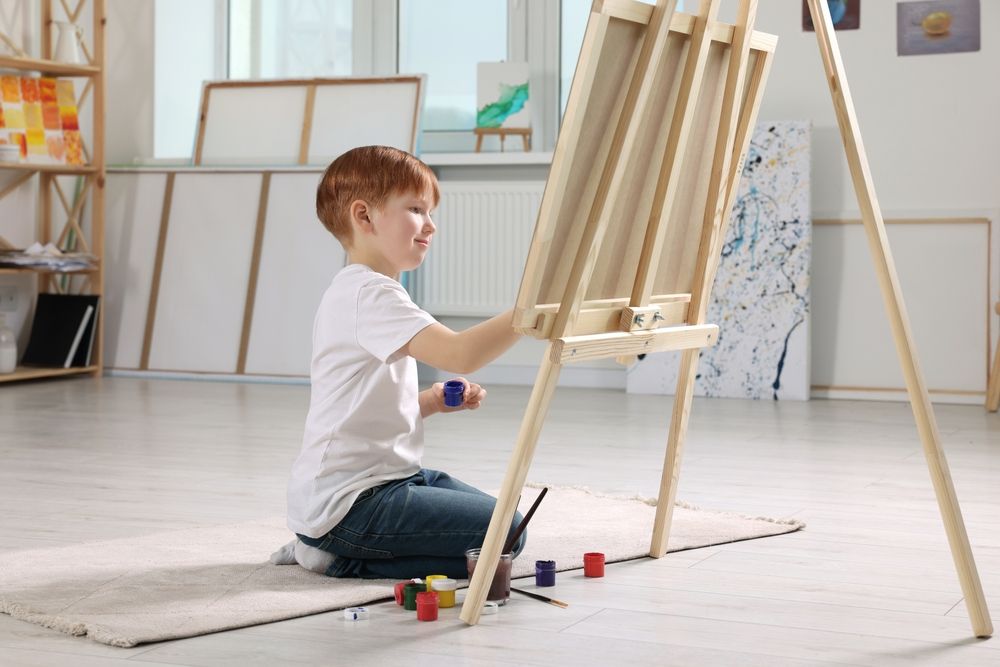
World Art Day
15 April marks World Art Day, made official by UNESCO in 2019 following a proposal promoted by the International Association of Plastic Arts. The choice of day is no coincidence: it coincides with the birth of Leonardo da Vinci, a symbol of the Renaissance and of that boundless curiosity which blends painting, science, architecture and poetry in a single breath.
This day champions a simple and profound idea: art does not decorate life, it interprets it. It teaches us to look closely, to hold questions, to imagine solutions where there was previously only routine. From childhood onwards, artistic practice refines sensitivity, strengthens concentration and opens up complex forms of thought. But above all, it creates an intimate space to say “this is who I am” without needing to explain it completely.
Celebrating it can be as broad as art itself: visiting an exhibition, entering a museum, watching a film about creators, drawing again even if clumsily, listening to music with the same seriousness with which one reads a news story. Because the creative act — however small it may seem — is a form of freedom.
International Pompe Disease Day
15 April is also dedicated to Pompe disease, a progressive, hereditary and rare neuromuscular condition, whose name honours the Dutch pathologist Joannes Pompe, who described the first case in 1930. Its cause is linked to a deficiency of an enzyme (acid alpha-glucosidase), which causes glycogen to accumulate in the muscles and leads to weakness and loss of strength.
The disease can manifest at different stages of life, from infants to adults, with varying rates and severity. In many cases there are difficulties walking, climbing stairs, getting up, breathing or even chewing normally. And, as happens with so many rare diseases, the challenge is not only clinical: it is also social, because the lack of visibility delays diagnoses and limits support.
This observance highlights the work of patient associations and networks, which sustain information, research and support. Remembering Pompe means remembering that science needs time, but people need answers now: access to specialists, continuous follow-up and a community that leaves no one behind.
Children's Day (Spain)
In Spain, 15 April is Children's Day, a date intended to honour the youngest and reinforce the idea that their wellbeing is not an isolated family matter, but a collective responsibility. Because children's rights — education, health, protection, play — are not an “extra”: they are the foundation of any society that aspires to be dignified.
After the pandemic, a symbolic proposal also emerged in 2020 to celebrate it on 26 April, recalling the day when children were able to go out into the street again after weeks of lockdown. Beyond the discussion about calendars, the message remains: caring for childhood is caring for the future, and also repairing what has been lived through.
Celebrating it can be simple and true: time shared, games, reading, a walk, an afternoon film, painting without fear of making a mess. What matters is not the plan, but the attention: that form of love which says “I am here” and turns an ordinary day into a memory.
World Creativity and Innovation Week
From 15 to 21 April, World Creativity and Innovation Week is celebrated, an initiative promoted by Canadian Marci Segal. Its proposal is clear: creativity belongs not only to artists or inventors; it is an everyday capacity, a way of looking at problems without accepting that what exists is the only possibility.
This week serves as an invitation to try things out: small ideas, modest changes, shared projects, new questions. Innovation does not always arrive with a major announcement; sometimes it appears when someone dares to do something different at their school, work or in their neighbourhood.
And at heart it links with everything above: art, childhood, health. Because imagining — at any scale — is a way of caring for ourselves: creating to understand, to accompany, to open paths where it seemed there were none.