
News
20 January: what is celebrated today
Sometimes the calendar seems to align to remind us that life is a delicate balance between fragility and hope. This 20 January brings together apparently disparate observances — the collective sadness of Blue Monday, the luminous memory of Martin Luther King, the tenderness of penguins, and two weeks dedicated to care and spiritual coexistence — but they all share the same pulse: the need to look at ourselves honestly, understand our shadows and strengthen what unites us. Between winter and its silences, this day invites us to take a breath and look beyond discouragement, has
Blue Monday: the saddest day of the year
Every third Monday of January, the so-called Blue Monday reappears as a reminder of the emotional burden that the start of the year often brings. The formula proposed in 2005 by psychologist Cliff Arnall — a combination of factors such as the weather, debts, lack of motivation or the end of the holidays — never had solid scientific backing, but it did capture something millions of people feel: the inertia of a cold, slow month, in which goals waver and enthusiasm fades.
Beyond its accuracy, Blue Monday functions as a contemporary metaphor for discouragement. As communicators and psychologists explain, it is easy to turn a label into a self-fulfilling prophecy if we uncritically accept the role of “sad day”. But it is also an opportunity to reverse that narrative: to remember that sadness is not an enemy, but a legitimate emotion, and that choosing how to go through it is part of caring for our mental health. In a world saturated with urgencies, stopping to acknowledge one's own feelings is already an act of resistance.
Martin Luther King Day: memory and justice
The same Monday that some fear for being bleak is, in the United States, a public holiday in honour of Martin Luther King, born on 15 January and a universal symbol of the peaceful struggle against racial segregation. His legacy, built through marches, speeches and constant threats, transformed the American political landscape and opened spaces of dignity where there had previously only been exclusion.
The official establishment of the public holiday in 1983, after years of social pressure, turned this date into an act of collective memory. It is not only about remembering a leader murdered in Memphis in 1968, but about understanding the continuing relevance of his message: that civil rights are not definitive achievements, but commitments that must be renewed. Film screenings, civic activities and volunteering reinforce every year the idea that equality is not an inheritance, but everyday work.
Penguin Awareness Day
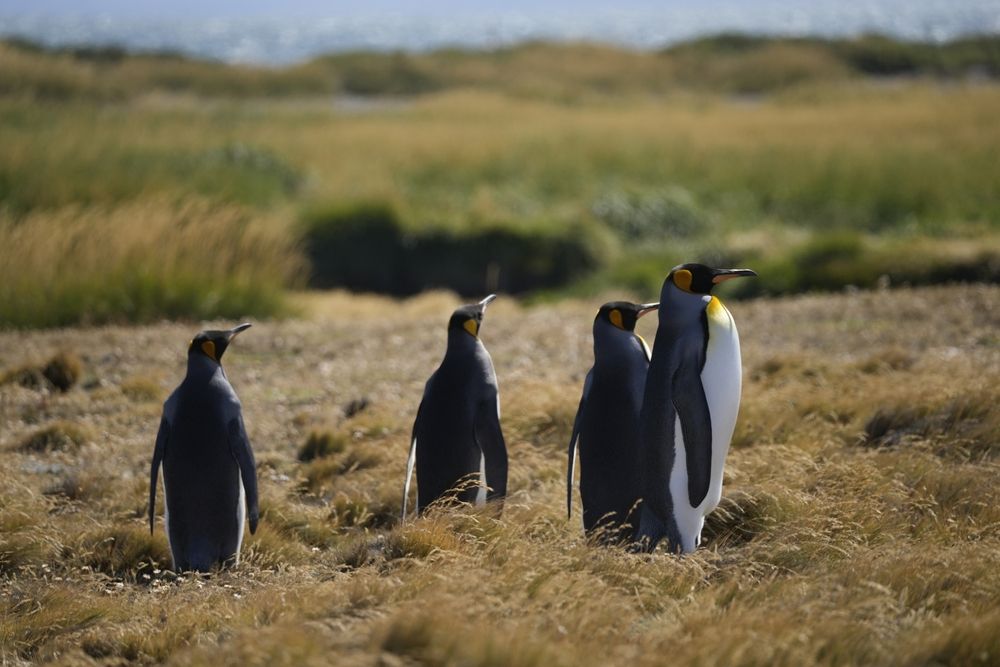
This 20 January also pays tribute to penguins, creatures that have fascinated for centuries because of their clumsy elegance, resilience and extraordinary community life. Although they were long thought to originate in Antarctica, fossil records point to New Zealand as their evolutionary cradle. From there they began a slow journey towards the coldest regions of the southern hemisphere, where their bodies — wings turned into flippers, two-coloured plumage as camouflage — found a perfect balance between ice and current.
Celebrating this day is a reminder of the fragility of their ecosystems. With 18 different species and growing threats due to climate change, pollution and overfishing, penguins have become indicators of ocean health. Documentaries and environmental campaigns remind us that their survival depends on concrete human actions: protecting the seas, reducing waste and understanding that, when a species disappears, a part of our own world is also torn away.
European Cervical Cancer Prevention Week
Coinciding with this day, Europe begins a week devoted to preventing cervical cancer, a disease that still causes thousands of deaths despite being, to a large extent, preventable. Information is a vital tool here: knowing the role of human papillomavirus, attending regular check-ups, receiving the recommended vaccines. Every gesture is a barrier raised against a pathology that advances in silence.
The week also serves as a space for public awareness. Health institutions, civil-society organisations and educational centres promote talks, informative materials and early screening campaigns. The message is forceful: prevention is a right, but also a shared responsibility. In a January so full of symbolism, this date reminds us that caring for health is not an isolated act, but a way of building the future.
Week of Prayer for Christian Unity
Finally, from 18 to 25 January, different Christian denominations celebrate the Week of Prayer for Unity, a time for reflection marked each year by a different motto. For 2025, the question “Do you believe this?” resounds as an invitation to review one's own faith, not from dogma but from coexistence. From Rome to local communities, ecumenical gatherings seek to heal historic divisions and recall that spirituality can be a place of encounter rather than a border.
The reflection materials distributed around the world — including those intended for young people and children — invite reflection on justice, mercy and compassion, themes that transcend any tradition. In a tense global time, this week proposes a simple and profound gesture: to recognise oneself in the other, even in that which is not shared. A reflection that, in some way, connects with all the day's observances: the sadness we seek to understand, the equality we defend, the nature we protect and the health we care for.