
News
20 February: what is celebrated today
On 20 February, the calendar seems to fan out: justice, science, ancestral music, social struggles, domestic affections and even objects that belong to the personal mythology of those who use them. It is a day that speaks of how we relate to one another—as a community, as a species, as citizens, as beings capable of creating, caring and reflecting—and also of how we give meaning to the world we build. From defending fairness to tenderness towards our pets; from the marimba that resonates in the heart of Guatemala to the anthropologists who study our orig
World Day of Social Justice
20 February, proclaimed by the UN in 2007, invites us to think of justice not as a legal abstraction, but as an everyday experience that determines who can live with dignity. In a world marked by persistent inequalities, this observance reminds us that economic development means nothing if it does not translate into real wellbeing, real opportunities and guaranteed rights for everyone. Social justice is not an isolated purpose, but the foundation on which any collective project stands.
Each year, the day adopts a motto that reflects the challenges of the moment: from “overcoming barriers” to “promoting social justice” or rethinking the digital economy so that no one is left behind. In every case, the message is the same: no social contract can survive if it normalises precariousness or neglect. And yet history shows that even in times of crisis —pandemics, conflicts, setbacks in labour rights— societies can rebuild their bonds if they recognise the most vulnerable as an indispensable part of their fabric.
Culture, cinema and communication have illuminated these inequalities with renewed force. From When They See Us to 13th, works that portray modern injustice compel us to look at what we would rather ignore. This day, more than a commemoration, is a reminder that social justice does not advance by itself: it needs voices, movements and decisions to sustain it.
International Cat Day
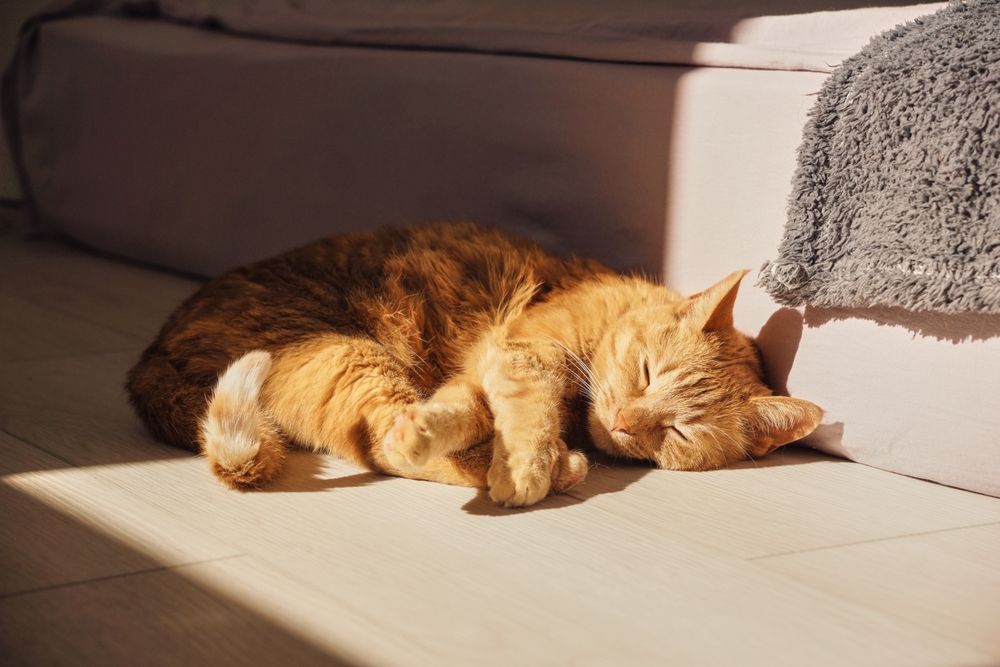
For many people, 20 February is also the day devoted to the most charismatic feline on the internet and in the home. The date recalls Socks, the celebrated cat of the Clinton family, whose life in the White House ended on 20 February 2009. Since then, this day has honoured not only his memory but also the adoration that millions of people feel for these animals, which have conquered our homes and screens with an irresistible mix of elegance, humour and mystery.
Curiously, the cat is the only animal that celebrates its day three times a year —in February, August and October— a reflection of its symbolic presence in different cultures and its global popularity. On social media, videos of kittens rack up millions of views; in everyday life, their company becomes a form of calm and affection that requires no grand gestures: a purr, a precise leap, a glance from the windowsill.
Celebrating this day is as simple as giving them a few more minutes of play, a brushing, a small domestic ritual that reaffirms the silent bond that so many humans consider indispensable. For those who do not yet have a cat, the observance also promotes responsible adoption and respect for abandoned animals.
International Day of the Cameraperson and Photographer
The day also pays tribute to those who capture the world through a lens: photographers and camera operators who turn reality into visual memory. For decades, their work has not only documented events but has also given them a language of their own, capable of moving, denouncing, touching or changing collective perceptions. Every image reveals a point of view, a sensibility that translates life into moments.
This day also recognises those who risk their safety in areas of conflict and disaster, accompanying the work of journalists and reporters with their cameras. Photography and video are more than professions: they are tools that build a historical record and shape our understanding of the present.
The celebration coincides with numerous awards devoted to the profession —from World Press Photo to Wildlife Photography of the Year— which recall the diversity of perspectives enriching the visual world. Today, pausing over a photograph is also a way of thanking that quiet, rigorous work.
World Anthropology Day
The third Thursday in February, which this year falls on the 20th, shines a light on the discipline that explains us as a species. Anthropology observes what we take for granted: our customs, our symbolic systems, the everyday gestures that speak of who we are. Born as a National Day in the United States and made global in 2016, this event celebrates those who study the many ways of inhabiting the planet.
Anthropological work consists of listening without judging, understanding without imposing external categories. It means abandoning ethnocentrism in order to see each culture on its own terms. Thanks to this perspective, we know how our societies evolved, how identities are formed, how the rites that have accompanied us since remote times work. In a globalised world, anthropology is a compass that allows us not to lose our humanity amid accelerated change.
World Cholangiocarcinoma Day
Although less visible than other observances, this day —also celebrated on the third Thursday in February— seeks to shed light on a silent and devastating disease: cholangiocarcinoma, a rare and aggressive cancer of the bile ducts. Its late diagnosis, the lack of clear symptoms and the absence of specific tests make detecting it a global challenge.
Recent research has begun to map the disease in detail, allowing a deeper understanding of its risk factors and progression. But the challenge remains immense: to raise awareness, drive research, promote liver-health habits and support those living with a diagnosis that still receives little public attention.
This day is not only a medical call; it is a reminder that even the lesser-known diseases need a community that does not leave them in the shadows.
World Love Your Pet Day
20 February also celebrates that everyday, endearing bond that transforms a home: love for pets. Cats, dogs, birds, fish or more unexpected creatures… each occupies an emotional place that no object can fill. They are companionship in loneliness, relief from stress and a form of direct affection, without masks or pretence.
Pets do not only give us tenderness: they improve our physical and mental health, reduce anxiety, increase self-esteem and, in many cases, even detect early illnesses thanks to their prodigious sense of smell. This day reminds us that the loyalty we receive demands responsibility: care, attention and the certainty that they must never be abandoned for convenience or whim.
Celebrating it means playing with them for a little longer, looking at them with the same devotion with which they look at us, or even deciding to adopt an animal that needs a home.
International Pipe Day
Finally, 20 February brings attention to an object laden with history and symbolism: the pipe, whose use dates back several millennia. In Africa, in pre-Columbian America, in medieval Europe… the pipe appears as a cultural artefact rather than a mere instrument for smoking. Approved as an observance in 2008, this day brings together those who preserve this ancestral tradition, whether through custom, aesthetics or the ritual that accompanies it.
Although the practice has many detractors for health reasons, its presence in culture is undeniable: poets such as Pablo Neruda, scientists such as Einstein and political figures such as Che Guevara incorporated the pipe into their personal imagery. For its devotees, beyond tobacco, it is a contemplative gesture: a way of stopping time while smoke traces its own choreography in the air.
The day invites both cultural reflection and criticism, recalling the paradox of a custom that is, at once, symbol and risk.
National Marimba Day (Guatemala)
Guatemala also celebrates, every 20 February, one of its most beloved symbols: the marimba, an instrument that encapsulates centuries of cultural mixing between Africa, Europe and America. From its declaration as a National Instrument in 1978 to its continental recognition by the OEA, the marimba is more than music: it is identity, memory and community.
Its construction —a precise architecture of wooden bars and resonators— produces a warm, vibrant sound that accompanies festivals, ceremonies and social gatherings. At the end of the 19th century, the chromatic marimba emerged, capable of producing a tonal richness comparable to that of a miniature orchestra, and since then its presence has become inseparable from Guatemalan life.
Every year, festivals, concerts and school activities celebrate this living legacy. For Guatemala, the marimba is not only an instrument: it is a heart that resonates collectively.