
News
21 February: what is celebrated today
21 February invites us to return to the origin: the language through which we learned to name the world and those who help us discover it through travel. Between linguistic memory and the art of guiding, this day links cultural diversity with the human experience of knowledge: speaking, listening, understanding and telling. Today’s commemorations converse as two ways of safeguarding collective heritage—one through words, the other through territory—and remind us that identity is passed on in both the voice we use and the stories we share.
International Mother Language Day
Since 2000, every 21 February UNESCO has invited us to look at an invisible map: that of the languages that gave us our first key to the world. A mother tongue is not only a system of signs; it is the intimate territory where we discover affection, thought and memory. In 2025 this commemoration marks twenty-five years, an anniversary that seeks to assert not only a celebration, but an urgency: more than half of the planet's languages are at risk of disappearing in the coming decades.
The themes of recent years—from multilingual education to the role of technology in preserving indigenous languages—underline the same idea: without linguistic diversity there is no cultural diversity, and without it the future is impoverished. The mother tongue is also a right. Bangladesh defended it with blood in 1952, when demonstrators demanding Bengali as an official language were killed. Since then, this day has paid tribute to those who fought to express themselves in their own voice.
Today, as a language dies every two weeks, the challenge is collective. UNESCO insists on strengthening multilingual education, promoting inclusive policies and creating protective networks that allow these voices to remain alive. To speak of languages is to speak of identity, history and a unique way of seeing the world. Celebrating them means listening to them before they fall silent forever.
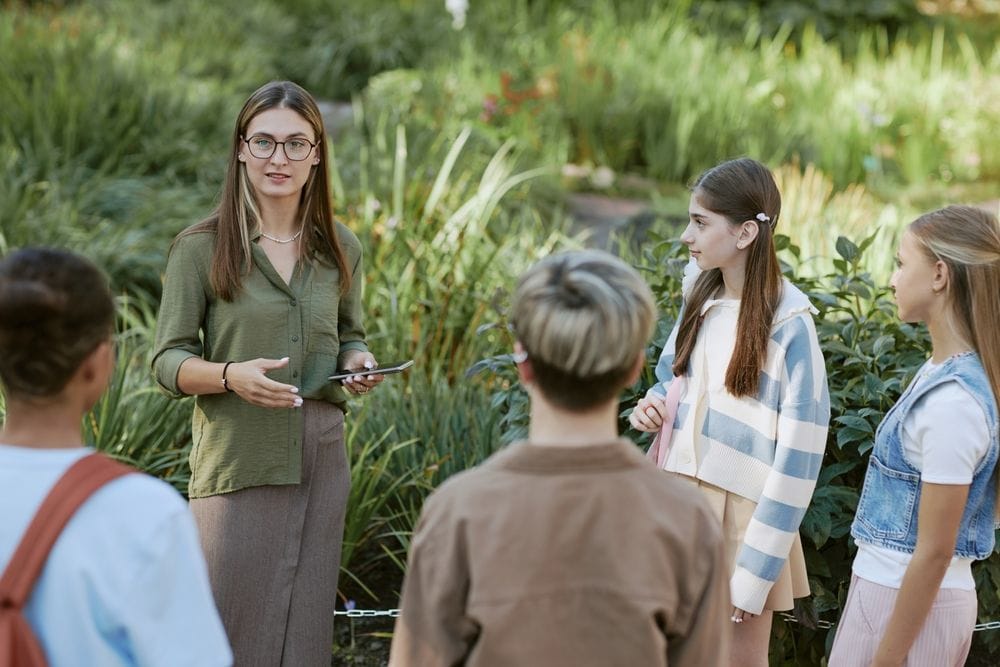
International Tourist Guide Day
Also on 21 February, those who turn travel into an experience are recognised: tourist guides. Since 1990, this date has honoured professionals who not only guide visitors, but translate a country, a landscape or a city through stories, details and gestures that do not appear on maps. A guide does not merely show monuments: they accompany, interpret and bring the places we travel through to life.
The Federación Mundial de Guías Profesionales, founded on 21 February in Vienna, brings together thousands of specialists from around the world. Their work is a blend of historical knowledge, a calling for communication and intercultural sensitivity. They speak several languages, know local mysteries and have an essential skill: making travellers understand not only what they see, but what those who live there feel.
Cinema has made this figure the protagonist of comic, romantic or adventure stories—from journeys through Athens to crossings of the Grand Canyon—thereby reflecting the narrative dimension of the profession. Because a good guide is, above all, a storyteller: someone who knows when to stop, which detail to highlight, which silence to respect. In a world where travel has become everyday, they keep the essence of discovery alive.