
News
24 May: what is celebrated today
There are days that sound like a long chord: nature, memory, rights, faith, education. This is how 24 May unfolds, with celebrations that seem different but touch at a common point: protecting what is fragile—the life of the mountains, parks breathing across Europe, dignity in peace processes, births attended with respect, creativity as a shared language. On the calendar, this date acts as a compass: look at the world with more responsibility and less noise.
International Women's Day for Peace and Disarmament
Since 1982, this day has insisted on an idea that still makes those who prefer war as a habit uncomfortable: without women at the table, peace remains incomplete. Its origins are linked to the peace movements of the 1980s, when activists in Europe and the United States raised their voices against the arms race and nuclear weapons, demanding real participation in decisions that determine lives.
History holds bright precedents — such as the 1915 Hague Congress — but the present also has unfinished tasks: in contexts of conflict, many women continue to see basic rights curtailed. That is why this day is not an abstract symbol, but a practical invitation: support networks, make women-led mediation visible and remember that disarmament is not only a political goal, but a concrete form of human security.
International Marjor Day
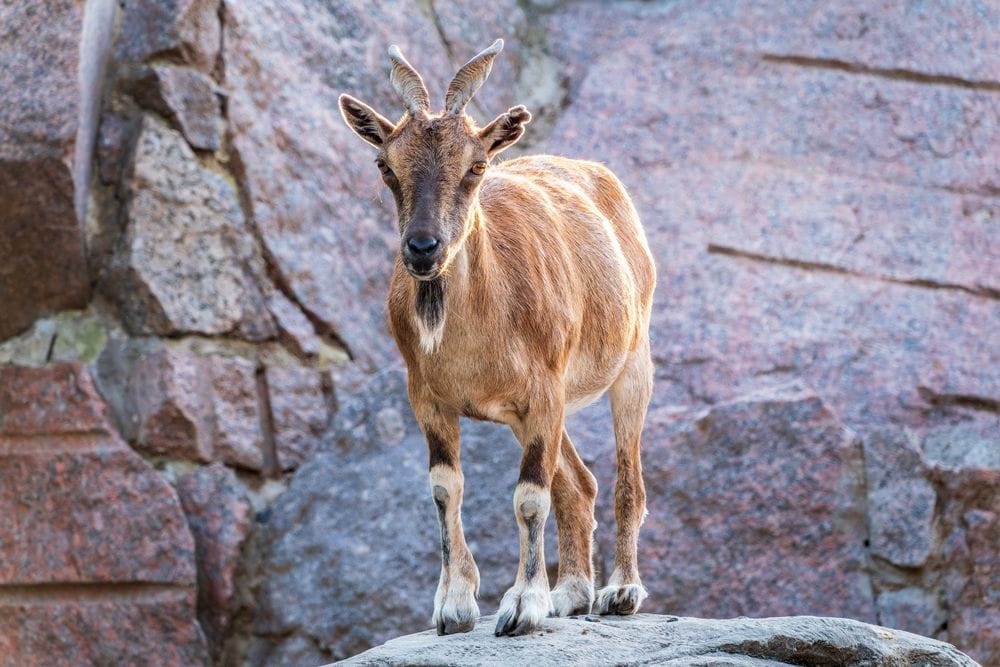
24 May also takes us to the mountains of Central and South Asia to look directly at an animal that seems taken from a legend: the marjor (Capra falconeri), a wild goat with spiral horns, a key part of ecosystems where everything is connected by altitude, cold and scarcity. The UN declared this observance in 2024, underlining the urgency of protecting an emblematic species in countries such as Afghanistan, Pakistan, India and other nearby mountainous regions.
Its threat is no mystery: habitat loss, illegal hunting and the slow blow of climate change. Speaking about the marjor is speaking about conservation, yes, but also about local economies and sustainable tourism when things are done properly: protecting a living symbol can become a future strategy for communities living where the world seems to end.
European Day of Parks
Europe celebrates its parks on 24 May because on that date, in 1909, Sweden declared the continent's first national parks. Since 1999, the EUROPARC Federation has turned the anniversary into a collective call: to understand that a protected area is not “a pretty place”, but a living system on which we depend, even when we do not visit it.
The 2025 slogan — «Together for Nature!» — sounds simple, but points to the hardest thing: coordinating institutions, local communities and citizens so that these spaces are resilient. Parks are not sustained only by boundaries on a map; they are sustained by daily decisions outside their borders, in how we consume, vote, travel and care for the territory.
Pentecost
Pentecost is celebrated fifty days after Easter and, in 2026, falls on 24 May. In the Christian tradition, it recalls the descent of the Holy Spirit and is associated with the symbolic birth of the Church; its roots, however, converse with older festivities: the «Feast of Weeks» and thanksgiving for the harvest in the Jewish calendar, which over time would be linked to Shavuot and the giving of the Law.
Beyond doctrines, Pentecost has a powerful image: a community that suddenly finds a common language to say what is essential. In some places it is observed with pilgrimages and processions; in others, with vigils and songs. And perhaps that is why it resonates even with those looking from outside: it speaks of the human desire for meaning, gathering and renewal.
International Arts Education Week
From 19 to 25 May, UNESCO proposes a week to defend what is sometimes regarded as secondary and is in fact central: art as a form of learning. Proclaimed in 2011, this week reminds us that drawing, singing, acting or dancing is not “decorating” education, but opening paths towards empathy, critical thinking and intercultural dialogue.
Arts education teaches us to look slowly, tolerate ambiguity and build meaning with others. In a world that demands immediate answers, art restores an ancient and necessary skill: that of asking good questions, even when there is no single correct answer.
World Respectful Birth Week
Also from 19 to 25 May, World Respectful Birth Week is observed, created in 2004 to name a basic right: receiving dignified care during pregnancy, childbirth and the post-partum period. Speaking of “respect” here is not rhetoric; it means clear information, supported — not imposed — decisions, privacy and avoiding unnecessary interventions that turn birth into an experience of violence or fear.
This week connects with a broader idea: maternal and neonatal health is an indicator of social justice. A respectful birth is not a cultural luxury, but a form of healthcare quality and human rights, where care is measured as much by technique as by the humanity with which it is applied.