
News
24 October: what is celebrated today
There are days when humanity seems to look in the mirror: to see its beauty, its fragility and its desire to survive. 24 October is one of them. On this date, commemorations converge that remind us of the power of cooperation, the urgency of protecting life, the need to understand the world and also the joy of celebrating it. From Madagascar’s lemurs to the United Nations, from champagne to freely accessible knowledge, each observance on this day speaks of the same aspiration: to keep reason and emotion, memory and the future in balance.
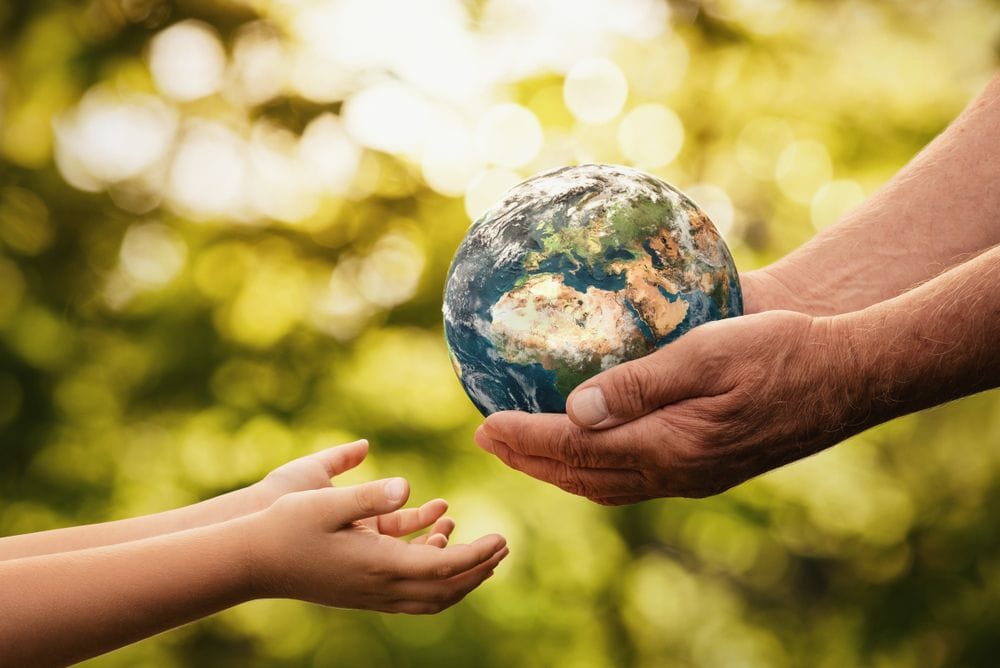
United Nations Day
On 24 October 1945, the UN’s founding Charter came into force. Amid the ruins of war, 51 countries placed their faith in a world order based on cooperation and words, not weapons. Today, almost eight decades later, the organisation brings together 193 nations, trying —sometimes successfully, sometimes helplessly— to keep the peace, promote equality and curb the deterioration of the planet.
Celebrating United Nations Day means believing once again in diplomacy as a tool for resolving conflicts. In a world saturated with borders and rhetoric, this day invites us to imagine a common language: that of global empathy, the same one that inspired that first signature in San Francisco.
International Day against Climate Change
On that same 24 October, the planet sends out its silent cry. International Day against Climate Change reminds us that this is no longer a matter of theories: melting ice, fires and drought are the visible language of an exhausted Earth. This date, supported by the UN, embodies Sustainable Development Goal number 13: “Climate Action”.
From Arctic summits to advancing deserts, global warming demands a new ethic: consume less, care more, listen to science. Every tree planted, every responsible gesture, every city that decides to breathe better is an intimate victory of humanity over its own indifference.
World Polio Day
Among so many crises, there are also reasons for hope. In 1988, Rotary International promoted the global fight against polio, a disease that for centuries condemned millions of children to paralysis. Thanks to vaccination, polio has now disappeared from almost the entire planet, although some pockets remain in Asia.
On 24 October, the anniversary of the birth of Jonas Salk, creator of the first effective vaccine, scientific progress is celebrated as an act of compassion. Remembering this day pays tribute to humanity when it acts together, not out of economic interest, but for the health of its children.
International Day of Libraries
Between vaccines and treaties, this day also reserves a place for silence. International Day of Libraries was born in memory of the Sarajevo Library, destroyed during the Balkan war. Among its ruins, a cellist played in honour of the lost books, and that image gave rise to the commemoration.
Celebrating libraries is celebrating memory. They are temples of resistance where knowledge survives bombs and oblivion. On every shelf lives a form of disarmament: the word that replaces violence, the reading that opens paths where there were once trenches.
World Lemur Day
And meanwhile, in Madagascar, the forests hold another message. World Lemur Day invites us to look at those small primates that seem made of curiosity and melancholy. There are more than a hundred species unique to the planet, but 98% are endangered.
On the last Friday of October, zoos and environmental organisations around the world remind us that caring for the lemur means caring for the entire balance of an ecosystem. In their eyes, an ancient question is reflected: will we learn to live without destroying what we love?
International Champagne Day
In contrast with so many warnings, International Champagne Day gives us a breath of light. The golden bubble that inspired kings and poets is also a metaphor for the moment: fleeting, brilliant, unrepeatable. From the wineries of the French Champagne region, where Dom Pérignon discovered the magic of sparkling wine by chance, this drink became a symbol of celebration.
On 24 October, to toast with champagne is to pay tribute to life. To what remains intact, despite everything. To efforts, reunions and causes that deserve a collective toast.
World Development Information Day
On this same date, the UN also celebrates World Development Information Day. Because without knowledge there is no progress, and without communication there is no justice. The observance reminds us that truthful, accessible information is a human right and a tool for reducing inequalities.
Every piece of data shared, every open network, every connection that breaks digital isolation adds a step towards a more equitable world. In the face of misinformation and noise, transparency remains a form of hope.
Disarmament Week
From 24 to 30 October, the UN promotes Disarmament Week. It is a time to imagine a planet without weapons, where security does not depend on fear. Although the ideal may seem distant, every treaty signed, every country that destroys an arsenal, every community that chooses peace shows that utopia still breathes.
Disarmament begins in thought: when we understand that strength is not measured by the amount of gunpowder, but by the capacity for dialogue.
Global Media and Information Literacy Week
From 24 to 31 October, UNESCO promotes Global Media and Information Literacy Week. In the age of networks and artificial intelligence, discerning truth from manipulation has become a form of survival.
Learning to read the media with a critical eye is the new literacy of the 21st century: knowing when an image lies, when data are distorted, when a news story seeks to divide us. The mental and democratic health of our societies is at stake in that learning.
International Open Access Week
The last week of October is also dedicated to knowledge without borders. International Open Access Week defends the right to freely access scientific research. Because science, when it is locked behind paywalls, ceases to serve the common good.
This global initiative promotes cooperation among universities, researchers and citizens. Its motto —“Community over Commercialization”— reminds us that knowledge should not belong to a few, but circulate like the air.
European Week for Safety and Health at Work
Between 21 and 25 October, European Week for Safety and Health at Work takes place, focused on the digital age. An invitation to rethink employment in a time of screens and algorithms.
In a world where work has become increasingly intangible, this campaign reminds us of something essential: behind every piece of data is a body, and every body needs care. Productivity without wellbeing is a form of blindness.
International Lead Poisoning Prevention Week
Finally, the WHO dedicates these October days to International Lead Poisoning Prevention Week. Though invisible, this metal continues to affect millions of children worldwide. Its toxicity accumulates, damaging brains and futures.
This year’s motto, “A bright future begins without lead”, sums up the task still pending: to eradicate a silent poison that still stains the walls of schools and homes. Because the right to grow up healthy is also a form of environmental justice.
Hetalia Day
And in a more playful corner of the calendar, on 24 October fans of the anime Hetalia celebrate their own day. A satire that turns countries into characters and transforms history into comedy. This curious observance reminds us that humour too is a form of collective memory: a different way of looking at politics, narrating the past and creating community through art and imagination.
24 October is not just a date: it is a map of what we are. Between vaccines and bubbles, forests and libraries, peace agreements and shared laughter, the world shows us its fragile fabric, made of life, culture and hope. Celebrating it is understanding that everything —from a lemur to a United Nations symphony— depends on the same impulse: to care, learn, celebrate and not give up.