
News
25 May: what is celebrated today
Some days are like a mosaic: different pieces which, when brought together, reveal the same image. 25 May speaks of the body and its memory — skin that holds the sun, the gland that regulates the pulse — but also of communities seeking voice, justice and celebration. Between health campaigns, historic anniversaries and an openly ‘geeky’ joy, today the world looks at itself in a broad mirror: that of dignity, care and belonging.
International Skin Spots Day
The skin, that intimate diary we carry in plain sight, writes in light: sometimes as freckles, at other times as persistent shadows. Skin pigmentation marks — common because of sun exposure, hormonal changes or certain medicines — are not only an aesthetic matter: they can affect self-esteem and the way we inhabit our own reflection. That is why this date, promoted since 2021 by a brand specialising in pigmentation, focuses on something basic and yet easy to postpone: understanding what is happening to us and protecting ourselves better.
To talk about marks is to talk about melanin and how the body defends itself; also about differences worth recognising — lentigines, melasma, post-inflammatory hyperpigmentation — and other extremes such as white patches associated with a lack of melanin. The everyday gesture that captures the spirit of the day is simple: consistency with sun protection and informed attention, so that care is not a punishment but a form of respect.
Africa Day
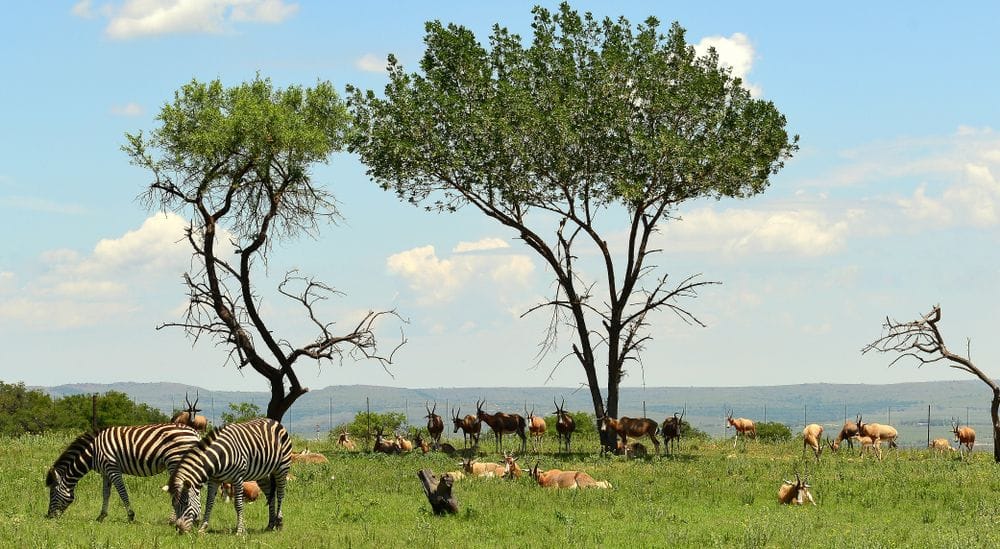
Africa cannot fit into a single word: it is a continent of stories that cannot be reduced to a headline, and yet the date insists on what is essential. 25 May recalls the will for unity and liberation from colonialism, crystallised in 1963 with the creation of the Organisation of African Unity. The commemoration was created to make persistent challenges visible, yes, but also to recognise progress and achievements that often remain out of focus.
Celebrating Africa Day means learning to look without paternalism: paying attention to its economic transformations, its cultural creativity, the drive of its social movements and the increasingly visible role of women in public life. At heart, it is a reminder that dignity is not granted: it is built, defended and narrated.
World Football Day
There are universal languages, and football is one of them: all it takes is a ball for two strangers to invent a truce. Since 2024, the UN has designated 25 May as World Football Day, a way of recognising the power of sport to promote peace, respect and coexistence. The choice of date looks to the past: the centenary of an international tournament held in Paris in 1924, when the game began to sound truly global.
But what is truly contemporary lies in the question: what legacy does the spectacle leave? Football can be business and noise, but also a school of fair play, integration and community. Today, the invitation is to reclaim that bright version: the one that turns a stadium — or a square — into a place where all differences have room.
Geek Pride Day
For a long time, being a geek was a label used to exclude. Since 2006, this celebration born in Spain has turned the script around: it has turned the “strange” into a shared identity, and intense enthusiasm — for science fiction, comics, video games, cosplay — into a legitimate form of joy. It is no coincidence that 25 May engages with pop culture: the date looks out onto that galaxy of references that taught millions to imagine alternative worlds.
Beyond the festive nod, Geek Pride has a human dimension: it asserts the right to be enthusiastic without apologising. In times of permanent irony, celebrating what we love with almost childlike seriousness can be an act of resistance.
World Thyroid Day
Small and silent, the thyroid governs enormous rhythms: energy, temperature, metabolism, mood. Since 2008, this day has sought to raise awareness of its importance and of how easy it is to confuse its signals with other ailments. The paradox is well known: thyroid disorders are common and yet many people live with them without knowing it.
Today the message is clear: listen to the body patiently and ask questions in good time. In an era that glorifies productivity, speaking of a gland that regulates the internal “engine” is also speaking of limits, rest and preventive care as an everyday culture.
European Week Against Cancer
The last week of May opens up a space to name what nobody wants to say aloud and which nevertheless runs through so many lives. European Week Against Cancer insists on two ideas: reliable information and personalised care, because there is not just one cancer nor a single treatment path. The history of this disease is as old as humanity, but the present is written through research, support and public policy.
Its symbolic value lies in the collective: remembering that prevention, early diagnosis and access to care should not depend on luck. Talking about cancer in a community does not remove fear, but it makes it less lonely.
International Week of Solidarity with the Peoples of Non-Self-Governing Territories
Among today's observances is one that is not celebrated noisily, but with political awareness. This week, promoted by the UN, reminds us that territories still exist that have not achieved full self-government and whose rights and resources therefore require real guarantees. Here, the idea of “solidarity” is not a slogan: it is an ethical obligation to look at where forms of tutelage and inequality persist.
Commemorating it means asking about the contemporary meaning of self-determination: who decides, who administers, who benefits. And, above all, how to make the language of international law translate into everyday well-being for people.
International Arts Education Week
In the final stretch of this week proclaimed by UNESCO, art appears as more than a subject: a way of learning to live with others. Arts education teaches us to observe, doubt and imagine; it creates empathy and opens conversation between cultures. It is not decoration: it is a tool for social cohesion.
When a school sings, paints or acts, it does not only produce works: it produces community. In times of screens and haste, art restores an essential ability: the ability to pause and feel attentively.
World Week of Respectful Childbirth
Today also echoes an intimate and political idea: being born and giving birth with dignity. This week, promoted since 2004 and coordinated in Europe since 2011, emphasises the rights of pregnant women and newborns: clear information, respected decisions, chosen support, non-invasive practices and treatment without violence. Childbirth is not a procedure: it is a vital event.
Talking about “respectful childbirth” means remembering that medicine and humanity must walk together. And that the best care is not only technical: it is also listening, care for the environment and recognition of the body as one's own territory.