
News
27 February: what is celebrated today
27 February unfolds with the intensity of those dates when the calendar seems to open multiple doors at once. It is a day that calls up social commitment, popular celebration, environmental memory and the fragility of the human body. NGOs combating inequality, carnivals bursting with colour, polar bears facing thawing ice and people living without a sense of smell: four very different dimensions that nevertheless coincide in reminding us that the world — and those who inhabit it — need to be heard, protected and understood.
World NGO Day
The history of this day began in the Baltic, at a forum where activists and organisations from different countries recognised that their work — usually quiet, often precarious — deserved a day of global visibility. Since 2010, this date has stood up for those who sustain community projects, defend human rights or respond to humanitarian crises without expecting any reward beyond the dignity of the cause. These organisations are almost always born of an urgency: an institutional void, an entrenched injustice, a need that neither the State nor the market can meet.
The NGO world is as broad as its geographies: some build schools or water wells; others support victims of violence, look after children or protect threatened biodiversity. They all share one principle: the defence of life in its many forms. That is why this day is also recognition for volunteering, for that anonymous multitude which gives time, knowledge and energy so that solidarity does not dissolve into rhetoric.
Celebrating it perhaps means something as simple as looking around and recognising the mark these organisations leave in neighbourhoods, communities and emergencies that do not make the headlines.
Carnival
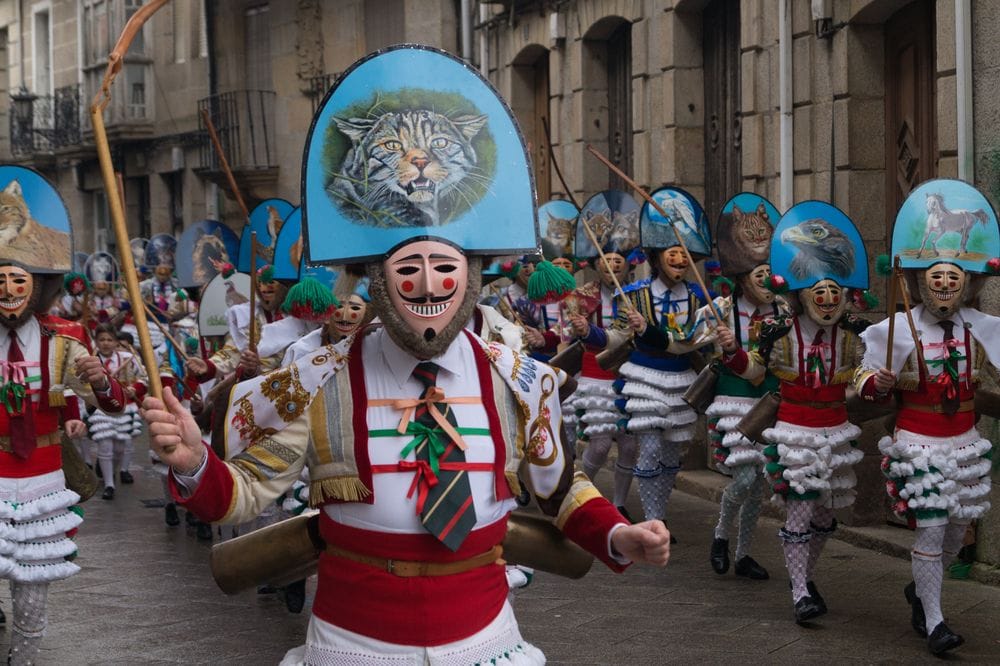
In many places around the world, 27 February opens the doors to Carnival: a bright pause in the middle of winter, when streets give themselves over to play, costume and music. Although its roots go back to ancient rituals — Roman Saturnalia, agricultural traditions, rites of passage — today Carnival is above all an outburst of collective freedom. For a few days, the city reinvents itself: Venetian masks coexist with Brazilian batucadas, Cádiz satire with Andean comparsas, and frozen northern carnivals with the fiery parades of the Caribbean.
The lunar calendar determines this movable date, which always comes before Lent. Historically, it was the final festive explosion before the period of religious retreat, a time to “say farewell to meat”. But today the festival has emancipated itself from its origin and become a space of cultural identity: each region shapes it in its own way, among colonial legacies, African rhythms, indigenous rituals and European traditions that converge in a kind of global choreography.
Carnival demonstrates that societies need to celebrate, reinvent themselves and laugh at themselves. In every float, in every mask, a shared memory beats: that of a world allowing itself, at least for a few days, to escape the everyday.
International Polar Bear Day
The Arctic may seem far away, but its pulse marks the health of the entire planet. That is why this day, promoted by Polar Bears International since 2006, invites us to think about the animal that embodies both the majesty and vulnerability of the far north. The polar bear — powerful swimmer, patient hunter, symbol of endurance in a frozen ecosystem — faces a threat as silent as it is relentless: melting ice.
As global temperatures rise, the ice on which it hunts fragments and retreats. Mothers must travel ever greater distances to find food, while cubs — fewer than half of whom survive — face an uncertain future. In some regions, this is compounded by historic hunting and conflicts with human settlements. The result is an alarming portrait: a formidable predator trapped in an environment melting beneath its paws.
That is why this date is a call to act. Protecting the polar bear also means protecting oceans, climate currents and entire ecosystems that depend on the Arctic balance. Its white, silent figure reflects the shared fate of a planet warming too quickly.
Anosmia Awareness Day
Smell is the sense we mention least and yet it profoundly shapes our lives: it feeds emotional memory, warns of dangers, accompanies the flavour of food and colours everyday experience. Losing it — wholly or partly — entails a radical transformation of perception. This is what the day, created in 2012 by Daniel Schein from his own experience of olfactory dysfunction, is about.
Anosmia can arise from many causes: respiratory infections, allergies, injuries, neurodegenerative diseases or viral after-effects such as those associated with COVID-19. Beyond the clinical aspect, its impact is emotional: many people describe isolation, loss of sensory pleasure and a persistent feeling of disconnection from the world. Memory becomes more blurred, everyday ties change and safety is compromised: a gas leak or spoiled food may go unnoticed.
This day invites us not only to learn about the medical mechanisms, but to understand the human burden of the disorder. Raising awareness, supporting research and accompanying those who experience it thus become a gesture of empathy towards a sense that usually remains invisible… until it is gone.