
News
27 June: what is celebrated today
Some days the calendar feels like a showcase of contrasts: the immense and the tiny, the urgent and the personal. 27 June brings together four very different perspectives: the local economy that supports entire countries, a disability that demands to be seen and understood, a microscopic universe on which our health depends, and suddenly, a blue village that reminds us of the value of simplicity. All of this happens today, as if the world wanted to tell us that life is held together by networks: human, biological, and even imaginary.
Microenterprise and Small and Medium-sized Enterprises Day
They are not always called by their name when people speak of the future, but they are everywhere: the bakery that opens before dawn, the workshop that repairs what seemed beyond saving, the entrepreneur who turns an idea into employment. Since 2017, the UN and the International Trade Centre have devoted 27 June to recognising the real weight of microenterprises and SMEs in the Sustainable Development Goals, and the very concrete need for access to credit and financing.
In 2024, the theme was ambitious and realistic at once: “Leverage the power and resilience of micro-, small and medium-sized enterprises (MSMEs) to accelerate sustainable development and eradicate poverty in times of multiple crises.” The phrase sounds long, but it describes an everyday scene: when the cost of living rises, when liquidity is lacking, when climate or conflicts tighten their grip, these businesses are the ones that withstand with creativity… and also the first to fall if the system closes its doors to them.
And that paradox defines the day: SMEs often adapt quickly, but because they are small, they are vulnerable. Scarce financing, difficulty internationalising or maintaining stable supply chains are not “technical problems”: they are barriers that determine whether a community has decent employment, opportunities for young people and women, or a future that does not force people to leave.
International Day of Deafblindness
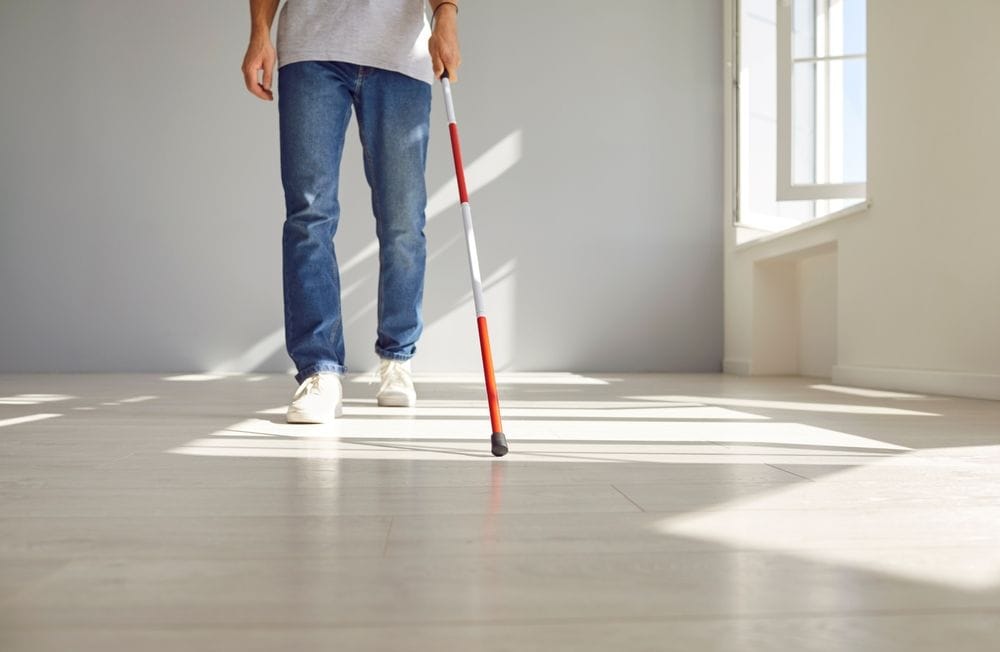
There are disabilities that become invisible precisely because the world does not know how to look at them. Deafblindness — a severe impairment of sight and hearing — is one of them: it is not easily compensated for by one sense or the other, and it poses specific challenges in communication, mobility and inclusion. 27 June is devoted to making it visible and calling for something as basic as recognition of its own needs.
The date coincides with the birth of Helen Keller (1880–1968), author and activist who became a symbol of possibility when almost everything seemed denied. Her story is not a myth of “overcoming” for quick consumption; it is a reminder of what changes when accessible education, appropriate support and a society that does not abandon people exist. And since 2025, moreover, this commemoration has been made official by the UN General Assembly, reinforcing the idea that inclusion cannot depend on goodwill: it must be public policy.
World Microbiome Day
What is most decisive is sometimes not visible even under a magnifying glass. The microbiome — the set of microorganisms and their genomes that inhabit environments and living beings — is a silent ecosystem that influences human health and the sustainability of the planet. That is why, since 2018, World Microbiome Day has been celebrated every 27 June, promoted by APC Microbiome Ireland (University College Cork), with a clear mission: to raise awareness, connect science and daily life, and remember that “the small” also governs the world.
In 2024, the theme was almost a domestic invitation: “Feed Your Microbes: How Diet Shapes Your Gut Microbiome.” It is not about turning food into dogma, but about understanding that what we choose every day converses with our biology. At the same time, outside the body, soil microbiomes help nutrient cycles, some microorganisms contribute to climate processes, and microbial marine ecosystems sustain balances that we are still learning to describe.
Thinking about the microbiome is learning scientific humility: we are, in part, a shared landscape. And caring for it — without miraculous simplifications — is another way of caring for the future.
World Smurfs Day
And then, as though the calendar were breathing, blue appears. The fourth Saturday in June is World Smurfs Day, an observance created in 2011 in tribute to Peyo (Pierre Culliford, 1928–1992), the Belgian cartoonist who imagined those little village-dwelling creatures with white hats. It may seem a light note, but it has its own cultural logic: we also need shared symbols, stories that unite generations and humour that disarms cynicism.
The Smurfs were born in 1958 and ended up becoming a childhood language for half the planet. There are curiosities that say it all: their original French name, Schtroumpfs; the small Spanish town of Júzcar, which painted itself blue and became “smurfed” for a time; that detail of the hat as an emblem of freedom. Celebrating them today gives us a truce: a reminder that imagination is also a public good, and that the simple — sometimes — keeps the complex afloat.