
News
27 May: what is celebrated today
27 May brings together anniversaries that at first glance have nothing in common: rare diseases, a gut that protests silently, ancient languages that endure and a playful animal that monitors the health of rivers. Yet they all speak of the same thing: what sustains life when nobody sees it — collagen in bones, trust in food, memory within words, the balance of an ecosystem. Today the calendar becomes an invitation to look more closely: what is fragile is also valuable, and what is valuable deserves to be named.
Type II Collagenopathy Awareness Day
There are conditions that make no noise, yet change the way a person moves through the world. Type II collagenopathies—including Stickler syndrome, SEDC and others—arise from genetic alterations (such as mutations in the COL2A1 gene) that affect collagen production and, with it, cartilage and bone. What is routine for many—walking, seeing clearly, growing up without pain—can become a daily negotiation.
This date has been promoted by AFASCOL since 2017 and recalls a very specific 27 May: that of the first days dedicated to these conditions at La Paz Hospital (Madrid). Awareness here is not a kindly word: it is a practical necessity. It means shortening the path to diagnosis, improving information and, above all, preventing what is “rare” from being confused with what is “non-existent”.
World Otter Day
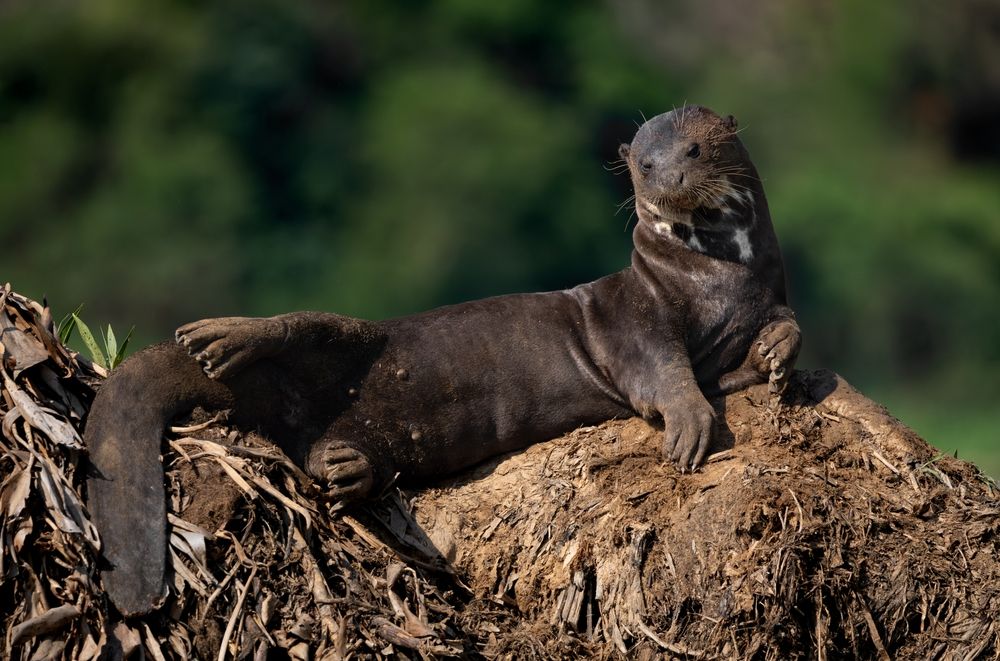
If a river is alive, it is often apparent in its inhabitants. The otter—an amphibious, carnivorous mammal with dense, waterproof fur—is a bioindicator species: where it thrives, the water usually breathes better. That is why World Otter Day is celebrated on the last Wednesday in May, an initiative that began in 2014 to remind us that conservation is not a luxury, but an urgency.
The threat is familiar and, unfortunately, recurrent: habitat loss, pollution, human pressure. The otter may seem to play, but its presence is a diagnosis of the landscape. Celebrating it is, at heart, defending the idea that ecosystems too deserve preventive care, like a body.
Coeliac Disease Day
There are illnesses that force people to read the world through a magnifying glass. Coeliac disease transforms the table—that place of meeting—into a territory where every ingredient matters. In Spain, Coeliac Disease Day is celebrated on 27 May to make visible those living with this condition and to normalise something essential: eating without fear is also quality of life.
The date promotes everyday education: clear information, support and social empathy. Because a strict gluten-free diet is not a fashion; it is a treatment. And when the surrounding environment understands, life becomes less complicated: at the supermarket, in a school canteen, at dinner with friends.
Day of Peru's Indigenous Languages
A country is also measured by the voices it chooses to hear. On 27 May, Peru celebrates the Day of Indigenous Languages, a date made official in 2019 but anchored in an older memory: that of the recognition of Quechua as an official language in 1975. Remembering it is not a folkloric gesture; it is a form of symbolic and practical justice.
Languages do not only name objects: they name relationships with the land, the community and time. When a language disappears, it is not only a dictionary that is lost: a way of thinking is extinguished. That is why this day proposes something as simple as it is radical: learn, respect, create spaces where speaking an indigenous language is not a cause for shame, but for pride.
European Week Against Cancer
In the last week of May, Europe once again puts an uncomfortable truth at the centre: cancer runs through generations, families and entire biographies. European Week Against Cancer insists on prevention, early diagnosis and the need for constant research, but also on something less visible: human, personalised care, without prefabricated emotional prescriptions.
Talking about cancer without empty melodrama means recognising its complexity: different treatments, different responses, different timescales. And remembering that health should not depend on luck. Information saves lives, yes, but so do systems of care that do not leave anyone alone in the corridor.
International Week of Solidarity with the Peoples of Non-Self-Governing Territories
Among health observances and cultural celebrations, there is a week that asks about the right to decide. The UN dedicates these days to solidarity with the peoples of non-self-governing territories, places that have not attained full self-government. The expression sounds technical, but behind it are concrete lives, disputed resources and identities seeking recognition.
Commemorating this week means remembering that solidarity is not only empathy: it is political and ethical responsibility. Defending rights, protecting common goods, guaranteeing well-being. In a calendar full of symbols, this date feels like a serious reminder: dignity is also administered, and it should not be administered from afar.