
News
28 January: what is celebrated today
The date advances frozen through the January calendar and yet this day pulses with a particular energy: a blend of environmental commitment, defence of citizens' rights, everyday diplomacy and playful childhood memory. 28 January brings together causes which, although very different, point to the same need: to learn to live together—with the planet, with technology, with others and with ourselves—in a world that changes faster than we understand it.
World Day of Action against Global Warming
The rise in global temperature has ceased to be an abstract threat and has become a visible story: more extreme summers, unpredictable winters, fires advancing with fury and weather phenomena that redraw maps. That is why this day calls for action—not empty alarm—reminding us that global warming is not an isolated accident, but the result of a way of life that has pushed the planet to the brink.
For decades, science has pointed to the sources of the problem: the burning of fossil fuels, deforestation that leaves the Earth without lungs, the accumulation of waste and consumption models that use more than nature can regenerate. Yet it has also shown the way back: cleaner energy policies, green technologies and changes in habits that are already producing results in communities around the world.
28 January thus becomes a reminder that the solution begins with everyday actions—saving energy, reducing waste, choosing less-polluting transport—but does not end there. It requires global agreements, firm political decisions and citizens capable of demanding them. Action, on this day, is both personal and collective.
European Data Protection Day
Digital life offers us immense freedom, but also a new vulnerability: every photograph, every search, every click leaves a trace. That is why Europe marks this day, which was created to remind us that privacy is a right, not a luxury, and that protecting our data means protecting our own identity in an environment where everything seems to be recorded.
Since 2018, the General Data Protection Regulation has transformed the way institutions and companies manage personal information: explicit consent, the right to be forgotten, transparency and accountability are now pillars of a system designed to return control of their digital footprint to citizens. And although laws are advancing, the challenge continues: new technologies—artificial intelligence, facial recognition, predictive algorithms—make it necessary to revisit the concept of security every year.
On this 28 January, Europe invites us to look not only at major platforms, but also at our own practices: weak passwords, data shared without thinking, automatic acceptances. Protection begins with individual awareness and is strengthened by a society that demands clarity, ethics and respect in the use of information.
International Day of Peaceful Coexistence
Living on the same planet does not guarantee that we know how to live together. That is why this date, newly added to the international calendar, offers a simple yet profound reflection: how do we relate to those who think differently? Peaceful coexistence is neither silence nor indifference; it is the active willingness to listen, talk, negotiate and build bridges in a world where polarisation appears to be the norm.
The UN reminds us on this day that peace is born not only of diplomatic treaties, but also of everyday gestures: in schools, neighbourhoods, social networks and workplaces. Cultural, religious and generational diversity can become fertile ground or a battlefield, and that outcome depends on how we learn to meet one another.
Marking this day means practising empathy, recognising our own prejudices and opening spaces where differences are not an obstacle but an opportunity to learn. Coexisting peacefully is not an abstract ideal: it is a daily exercise.
International Lego Day
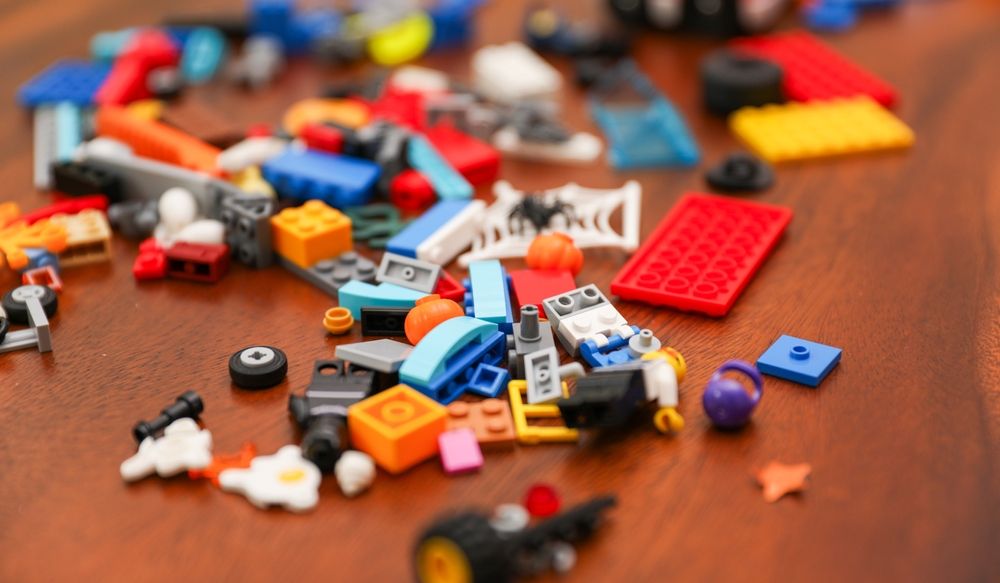
After so much seriousness, this day brings back an inevitable smile. Lego—those coloured blocks that have accompanied whole generations—celebrates its anniversary by recalling the date on which Ole Kirk Christiansen registered the patent that would forever change the way people play. Behind those iconic bricks lies a story of resilience: a furniture factory that, amid crisis, reinvented itself to become a creative universe that today brings children and adults together.
In its apparent simplicity, Lego contains a philosophy: building is imagining. Every castle, spaceship or city laid out on the table is also a small exercise in design, patience and freedom. And perhaps that is why it remains a cultural reference point: because it invites us to create possible worlds when the real one becomes complex.
This 28 January, many people celebrate by dusting off boxes, assembling impossible pieces or simply remembering the complete absorption of childhood. Playing, after all, is also a way of understanding the world.