
News
28 June: what is celebrated today
28 June has something of the street and something of the skin: a date when the intimate becomes public and the everyday becomes a banner. Today the calendar blends advocacy and care, identity and nature, preventive medicine and ways of saying “this body is mine”. And, as a counterpoint, a dish that sums up country and memory: Peruvian ceviche, acidic and luminous, as if it too could tell a story of belonging.
International LGBT Pride Day or Gay Pride Day
28 June was not born as a celebration, but as a response. The night in 1969 when a police raid on the Stonewall Inn in New York sparked riots and protests that marked the visible beginning of the gay liberation movement is remembered. Since 1970, the date has become an annual occasion to defend equality, dignity and the right to live one's sexual orientation and gender identity without fear.
In many places, Pride remains a necessary march: there are countries where sexual diversity is persecuted and criminalised; in others, even when the law advances, everyday life still retains forms of discrimination. That is why Pride combines celebration and protest: joy as political language, visibility as protection, community as refuge.
There is also internal debate: some warn of commercialisation and call for a critical Pride, closer to real urgencies. But the backbone remains: remembering where the struggle comes from and those who still need to reach a world where “normal” is not an achievement, but a starting point.
World Tree Day
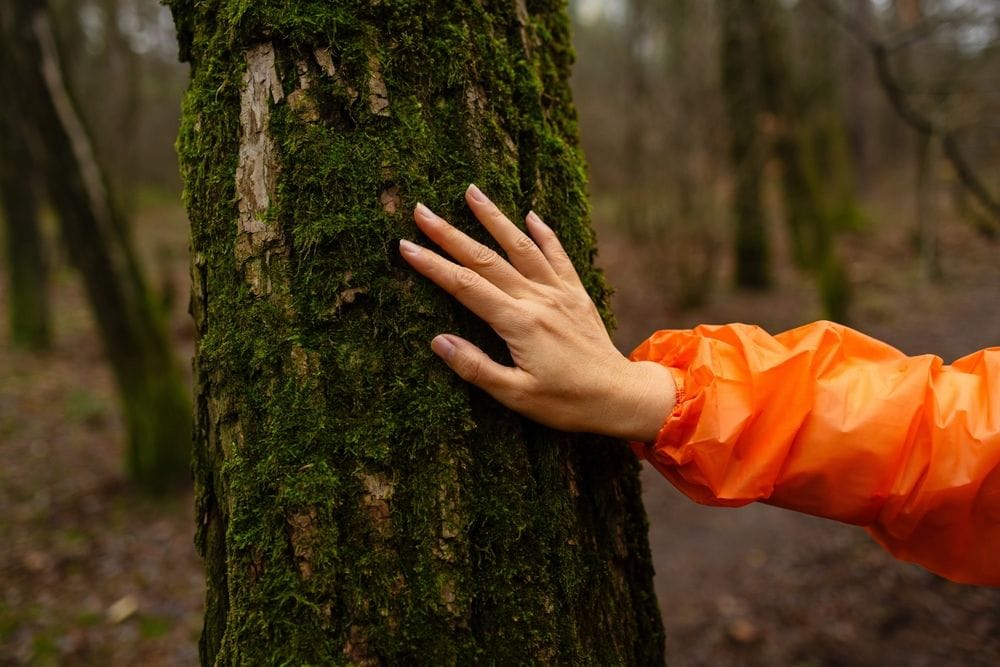
At the same time, 28 June looks upwards: towards trunks, canopies and shade. In many countries, World Tree Day is celebrated as a gesture of awareness of forest loss and climate urgency. Its origin is not entirely clear, but its meaning is: to remember that trees are not decoration, but the living infrastructure of the planet.
They release oxygen, capture CO₂, regulate the water cycle, protect soils and sustain entire habitats. At a time of more intense fires and persistent deforestation, talking about trees is talking about the future: about liveable cities, possible agriculture and biodiversity that does not quietly go out.
And there is a cultural dimension that also matters: sacred trees, symbols of freedom or refuge. Planting, caring for, protecting: small actions which, repeated, become climate policy.
International Neonatal Screening Day
There are revolutions that fit into a few drops of blood. On 28 June, International Neonatal Screening Day is commemorated, dedicated to neonatal screening —the well-known «heel prick test»— which can identify congenital, metabolic, endocrine or immunological diseases before symptoms appear and cause irreversible damage.
The date is linked to the birth of Robert Guthrie, a pioneer of the technique in the 1960s, and has been celebrated since 2021, driven by international associations. The idea is simple and compelling: diagnosing in time changes an entire life, and also a family's emotional and economic fate.
But the day also highlights an inequality: not all babies have access to the same number of tests or to the same quality of programmes. That is why this commemoration is not only scientific: it is a demand for health equity from the first day of life.
World Phenylketonuria Day
Within the universe of rare diseases, 28 June is also dedicated to phenylketonuria (PKU), a genetic metabolic disease caused by a deficiency of the enzyme that processes phenylalanine. Without early diagnosis, the accumulation of this amino acid can cause severe neurological damage; with neonatal screening and treatment, the prognosis changes radically.
The day, promoted since 2013 by the European Society for Phenylketonuria, stresses the importance of early detection and real access to treatment and specific foods. PKU demonstrates something essential: in medicine, sometimes the difference between «fate» and «a possible life» lies in a timely test and available resources.
And it also invites a social perspective: supporting those who live with a strict diet and continuous care is understanding that health is sustained not only by willpower, but by systems that leave no one behind.
International Body Piercing Day
28 June also has a note of self-expression: International Body Piercing Day is celebrated, linked to the birth of Jim Ward, who opened one of the first professional piercing studios in California in 1978. What for centuries was a ritual, cultural or identity practice came to engage with contemporary aesthetics and with the idea that the body is also a place of art.
Piercing can be fashion, belonging, memory, challenge or simple play. And the day frames it as what it is: a way of deciding about one's own image, of telling one's story through a visible gesture. At its best, it speaks of consent, care and respect for diverse bodies.
National Ceviche Day
And, only in Peru, 28 June is celebrated as National Ceviche Day, an emblematic dish recognised as Cultural Heritage of the Nation since 2004. Fish marinated in citrus, onion, chilli pepper, sweet potato: a recipe that seems simple, but contains centuries of history and cultural intersections.
Origins are attributed to pre-Hispanic traditions —such as that of the Mochicas— and to later transformations with ingredients that arrived from other shores. Its very name contests roots between Quechua and Arabic, as though language too were a market where the seas mingle.
Celebrating it is usually as straightforward as it is happy: eating it. But behind it there is also economy and community: artisanal fishing, restaurants, festivals, gastronomic trade. A country told in a cold, gleaming dish.