
News
28 May: what is celebrated today
28 May is a date with two rhythms: that of the everyday—eating, playing, going to school, caring for the body—and that of the structural, what determines who can do so freely and who cannot. Today the calendar blends playfulness and urgency, the intimate and the social: the right to an unhurried childhood, women’s health as a public cause, menstrual dignity, the fight against hunger and those diseases which suddenly remind us how fragile life can be. Taken together, the day sounds one shared call: living well should not be a privilege.
International Day of Play
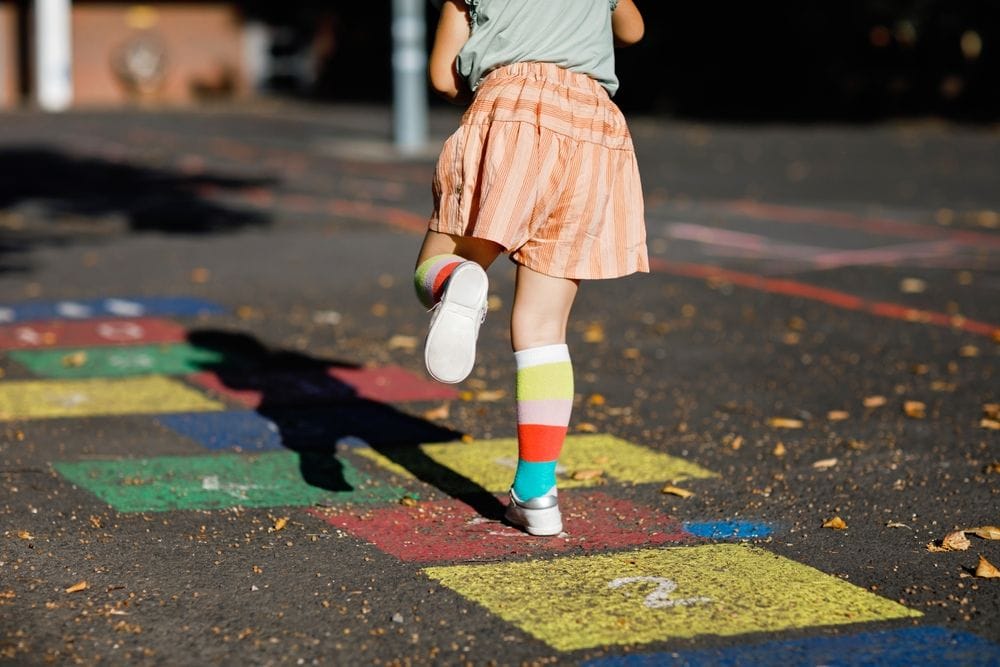
Playing is not wasting time: it is learning to inhabit it. Since 1999, the International Toy Libraries Association (ITLA) has promoted the celebration of 28 May to remind us that play is a children’s right—supported by Article 31 of the Convention on the Rights of the Child—and, at the same time, a human need that does not disappear as we grow up. In play, rules are tried out, worlds are invented, frustration is negotiated and we learn to live alongside others without an instruction manual.
In recent years, moreover, the calendar has broadened its focus: since 2024, the UN has officially proclaimed the International Day of Play for 11 June. Two dates for the same idea are not redundancy: they are insistence. Because in a world that pushes towards early productivity, defending play means defending creativity, resilience and that serious joy which sustains the mental health of girls, boys… and adults too.
International Day of Action for Women’s Health
Women’s health is not a “sectoral issue”: it is at the centre of social life, although it is often treated as peripheral. This commemoration, born in 1987 from international networks for sexual and reproductive rights, recalls that millions of women still face health barriers because of poverty, violence, war or discrimination. It is not enough to talk about access: we must talk about quality, medical listening, prevention and the material conditions for living without fear.
The date acts as a mirror: what a society does—or fails to do—with women’s health reveals its idea of justice. That agenda includes maternal care, research, education, mental health and the right to decide. And it also includes the simplest, most political thing: that taking care of oneself should not be an obstacle course.
International Treacher Collins Syndrome Day
There are faces that compel the gaze of others to choose: curiosity or respect. Treacher Collins syndrome, a rare congenital craniofacial malformation, usually entails challenges in several areas—hearing, sight, breathing, feeding—and a long journey through specialists. That is why 28 May seeks to make affected people and their families visible, as they often move between consultations, operations, therapies and bureaucracies.
The choice of date recalls the birth, in 1862, of the doctor Edward Treacher Collins, whose name became linked to the diagnosis. But what matters most is in the present: that difference should not become isolation. Raising awareness here means opening opportunities, reducing prejudice, guaranteeing support and remembering that a dignified life does not depend on having a “normative” face.
International Menstrual Hygiene Day
There are silences that are inherited, and the menstrual taboo is one of the most persistent. This day, promoted by WASH United, places menstrual hygiene in the realm of human rights: access to products, water, safe toilets, information and education without shame. The choice of date is symbolic and educational: the 28th for the average cycle, in May for the average days of bleeding. Here, the calendar becomes pedagogy.
Talking about menstruation should not exclude anyone from school, work or public life. And yet, it still does. That is why this day is not only a health campaign: it is an invitation to dismantle stigmas and to understand that dignity is also measured in the everyday, in what a person can do without fear of staining, hiding or being judged.
World Hunger Day
Hunger is not only a lack of food: it is a form of inequality that runs through education, health, housing and security. Since 2011, this date promoted by The Hunger Project has insisted that the world produces enough and, even so, millions of people are left out of the distribution. It is a moral and political paradox: the empty plate as the consequence of a system that fails, not of an inevitable fate.
Thinking about hunger as a global problem means looking beyond the charitable gesture. It speaks of sustainable solutions, local alliances and rights. And also of an uncomfortable question: what do we normalise when we accept that part of the planet always lives on the edge? 28 May reminds us that “zero hunger” is not a pretty slogan: it is a debt.
World Blood Cancer Day
There are diagnoses that arrive like an invisible blow: blood, which seemed to have no history, suddenly becomes the centre of everything. This day raises awareness of oncohaematological diseases such as leukaemia, lymphoma or myeloma, and underlines a crucial reality: stem-cell transplantation can be an opportunity, but finding a compatible donor remains difficult for many patients.
The day also gives a face to collective hope: registering as a donor is a simple act with enormous consequences. In a world accustomed to abstract causes, this one is concrete: someone—somewhere—can live because another person decided to be available.
World Mixed-Breed Dog Day
The mixed-breed dog has no pedigree, but it does have a biography: that of mixtures, the street, the shelter, the second chance. This observance promotes adoption and challenges an absurd hierarchy: the one that makes animals “better” or “worse” according to their certificate. The dog without a breed also tends to bear the social disadvantage of what is not chosen.
Celebrating it means looking at loyalty without labels. And understanding that, sometimes, the idea of “purity” is only an excuse to abandon. 28 May proposes the opposite: responsibility, care and a home that does not ask about lineage.
National Nutrition Day
Food is culture, pleasure and also health policy. In Spain, this day has been celebrated on 28 May since 2010, promoted by FESNAD, to foster healthy habits and prevent disease. In Mexico, the same commemoration exists on another date (27 January), which reminds us of something useful: eating well is not a universal recipe, but a balance between science, context and custom.
Beyond fashions and headlines, nutrition is about accessibility: it is not enough to know what is “healthy” if it cannot be bought, cooked or chosen. That is why this observance works when it becomes practical: food education, workshops, critical thinking about industry and a less guilt-ridden relationship with the plate.
European Week Against Cancer
In the last week of May, Europe insists on prevention, early diagnosis and research, but also on something less visible: the need to support people during the process, without simplifying their experience. Cancer is not merely a statistic; it is a journey with fear, fatigue, bureaucracy and, sometimes, loneliness.
The week reminds us that health is a system, not an individual feat. And that a society is measured by its ability to care when life becomes complicated: with resources, equity and humanity.
International Week of Solidarity with the Peoples of Non-Self-Governing Territories
In the same calendar that has room for play and care, an underlying question appears: who decides for whom? This week proclaimed by the UN points to territories that have not yet attained full self-government and calls for guarantees of rights, well-being and control of resources. It sounds technical, but it is profoundly human: living without permanent tutelage, without someone else administering the future.
Solidarity here is not sentimental; it is political. It means not looking the other way when history is prolonged in the form of inequality. And remembering that self-determination is not an abstract concept: it is the real possibility of writing one’s own life.