
News
4 January: what is celebrated today
The year is barely waking, yet it already invites us to look beyond what is visible and deeper than the surface. 4 January brings together two observances which, from different spheres, speak of perception, knowledge and the human capacity to transcend limits: World Braille Day and World Hypnosis Day. One champions the right to reading and communication for people living without sight; the other explores the mysteries of mind and consciousness. Both remind us that understanding the world does not always come through the eyes, but through other ways of feeling and thinking.
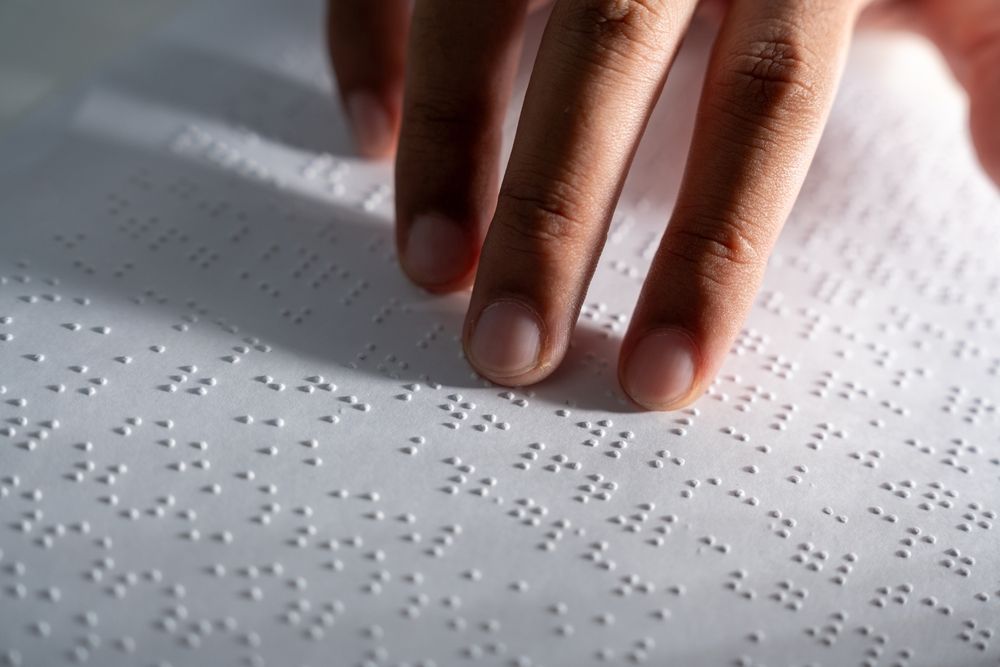
World Braille Day: reading with your fingertips
Touch can be a way of seeing. In 1809, a French boy called Louis Braille lost his sight after an accident in his father’s workshop. Years later, he transformed his own darkness into language: a system of raised dots that would allow millions of people to read, write and, above all, imagine.
His invention, born of necessity and intuition, became one of the greatest cultural revolutions in history. Today, every 4 January — the date of his birth — the world celebrates World Braille Day, established by the UN to remind us that literacy is also a form of freedom.
In those small cells of six dots pulses the essence of human knowledge: the possibility of communicating, learning and belonging. Braille does not only translate words; it also opens doors — to education, work and dignity. On a planet where more than 200 million people live with visual impairment, this system remains a bridge between silence and speech, between isolation and participation.
Braille teaches us that seeing is not only a matter of eyes. It is a lesson in patience, attention and respect for different ways of perceiving. Touching a sentence, tracing it with one’s fingers, is another way of reading the world.
World Hypnosis Day: the journey into the mind
If braille turns touch into reading, hypnosis turns the mind into a mirror. World Hypnosis Day, also celebrated on 4 January, seeks to break down myths and prejudices about a practice that, beyond spectacle, has a long history linked to medicine, psychology and the search for well-being.
From the ancient Greek temples of sleep to the practices of contemporary hypnotherapists, the desire has always been the same: to understand the power of suggestion and the brain’s capacity to heal. Franz Mesmer spoke of ‘animal magnetism’ in the eighteenth century; James Braid, a century later, gave this science a name that continues to fascinate researchers and sceptics.
Hypnosis is neither a trick nor a spell. It is a state of deep concentration, a form of communication between the conscious and unconscious mind. It is used to relieve pain, overcome phobias, give up addictions or reconcile a patient with their own memories. Sometimes a few well-guided words are enough for the body to respond with relief and the mind to free itself from an invisible weight.
Celebrating this day is recognising that human knowledge advances not only by looking outwards, but also by exploring its own interior. For every consciousness, like a page in braille, holds a secret language waiting to be deciphered.