
News
6 January: what is celebrated today
The dawn of 6 January holds something of mystery and hope. It is the day when homes fill with children’s laughter, skies with imagined stars and souls with ancient questions. Three celebrations converge on this date, speaking of faith, destiny and compassion: Three Kings’ Day, World Day of War Orphans and World Astrology Day. Three ways of looking at the sky — with gratitude, sadness and seeking — that remind us, each in its own way, that we remain children of the stories we believe.
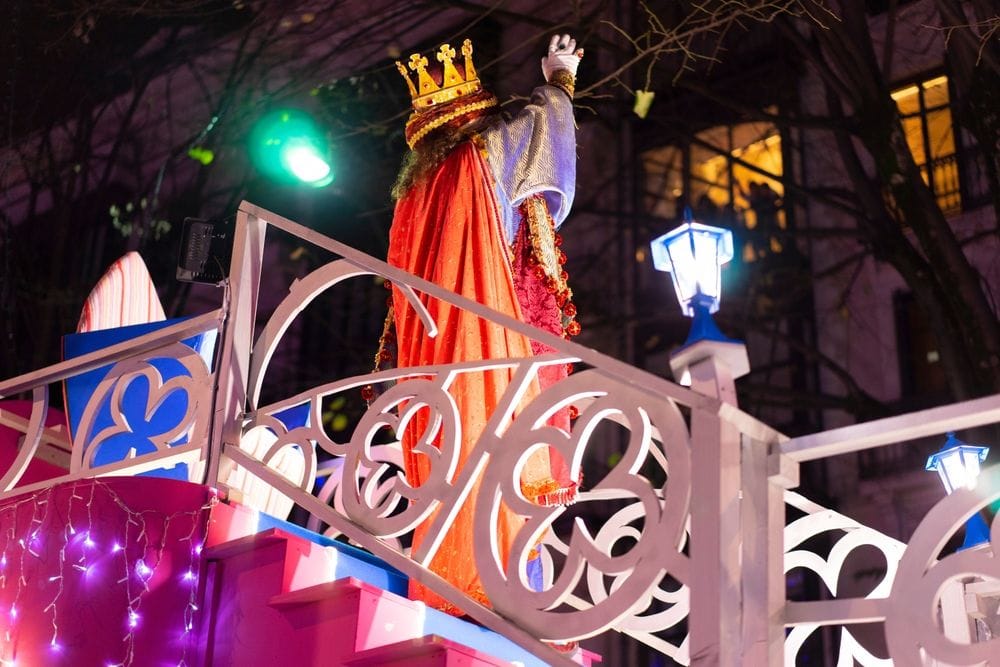
Three Kings’ Day: the star that still guides
For millions of children, Three Kings’ Day is the most eagerly awaited morning of the year: shoes beside the tree, a glass of milk, a letter written with excitement. But behind the magic of gifts and parades, an ancient story survives: that of three wise men who followed a star to pay homage to the newborn. Melchior, Gaspar and Balthazar represent faith that walks without certainty, guided only by light.
6 January celebrates the Epiphany, a word that means “revelation”. It is the end of the Christmas season, when the divine becomes visible and the world, for an instant, feels reconciled. From Spain to Mexico, from Peru to France, families gather around a roscón de reyes, the circular bread decorated with fruit that symbolises the crown of the magi and love with neither beginning nor end.
But beyond the religious rite, Three Kings’ Day is a reminder of what is essential: following one’s own stars, keeping the capacity for wonder alive and sharing generosity. Every gift, every child’s smile, prolongs the echo of that journey to Bethlehem.
World Day of War Orphans: the silence of losses
On the same date as children’s joy, the calendar also confronts us with its reverse: World Day of War Orphans, an observance that forces us to look at what violence takes away. Behind every conflict, millions of children are left without family, without school, without shelter, becoming witnesses and victims of a world they did not choose.
Recent history —from Europe after the Second World War to Syria, Ukraine or Sudan— continues to repeat the same wound. UNICEF reminds us that these children suffer not only the loss of their parents, but also that of their future. Many are recruited; others are simply forgotten. Childhood, which should be a territory of play, becomes a field of survival.
This day seeks to awaken empathy and commitment. Peace is not signed only between governments: it is built in every gesture of care, in every opportunity we give a child to feel safe again. Remembering war orphans is remembering our responsibility as humanity.
World Astrology Day: reading the sky, understanding ourselves
Perhaps that is why World Astrology Day is also celebrated on this same 6 January. Because, ever since humans raised their eyes, they have sought answers to their own destiny in the stars. The Three Wise Men were, in fact, astrologers from the East: priests who knew how to read the signs in the sky. The “Star of Bethlehem” was their symbolic compass, the bridge between ancient science and faith.
Astrology, though now stripped of scientific rigour, retains its ancestral charm. More than predicting the future, it has been a poetic way of connecting with the universe, of recognising that our lives are part of a greater order. In birth charts and zodiacs, human beings have sought to find meaning in uncertainty, to translate chaos into constellations.
Perhaps that is why, every 6 January, we look at the sky with a mixture of childhood and wisdom. We continue to seek the star that will guide us, whether real or symbolic. Because, even in a world saturated with data, we still need to believe in the light.