
News
7 May: what is celebrated today
Some days, the calendar opens a window onto our most contemporary vulnerabilities: illness and inequality, digital lives that depend on a password, public health decided by a forgotten bucket of water. 7 May is not marked by loud celebrations, but by reminders that call for our attention. It is a date to face what usually stays out of focus and to understand that protection is also a form of justice.
World AIDS Orphans Day
7 May is dedicated to those who inherited an absence: millions of boys and girls orphaned by AIDS. This observance, promoted since 2002 by FXB International, seeks not fleeting compassion but something harder: for the world to remember that the epidemic does not end with an adult's diagnosis, but continues in the daily lives of those growing up without a safety net.
The history of this day is linked to Albina du Boisrouvray, founder of FXB International, who gave a name to a consequence too large to remain invisible. The organisation insists on a clear principle: if the response to HIV/AIDS is funded, a significant share must also support vulnerable children and the often impoverished families that take them in. Because, in practice, most do not live in institutions: they live in homes full of effort, in shared care, in communities that do what they can with what they have.
To speak of ‘AIDS orphans’ is to speak of basic rights: education, health, protection, affection and a future. And also of a moral question running through this date: how do we measure progress if we leave behind those who pay the longest-lasting price?
World Password Day
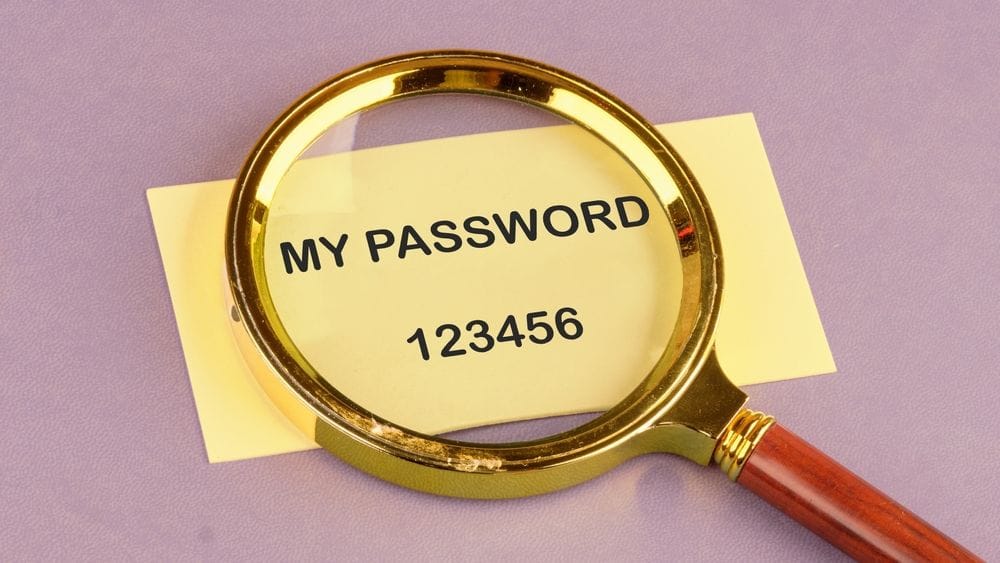
The first Thursday in May — which in 2026 falls on 7 May — reminds us that today many doors are opened not with keys but with passwords. World Password Day has existed since 2013 and began as a call for awareness: a weak password can be the entry point to our accounts, our photos, our money, even our identity.
Behind this observance is the idea popularised by researcher Mark Burnett, who was already advocating a more serious security culture in 2005, one less reliant on ‘the same old approach’. Later, initiatives from the technology sector helped establish the date and turn it into an annual reminder. But its deeper meaning is not technical; it is almost domestic: looking after passwords means looking after privacy.
In a world where life is stored in the cloud, a password resembles a secret phrase that protects us from the noise. Changing it, strengthening it, not reusing it: these are small acts which, like making sure a door is properly locked at night, do not guarantee that nothing will happen, but do reduce the scope for disaster.
Mosquito Awareness Week
And while we think about digital passwords, the calendar insists on an ancient, buzzing and persistent danger. From 5 to 9 May, Mosquito Awareness Week continues, promoted since 2016 by the Pan American Health Organization (PAHO). Its message is direct: many serious diseases — such as dengue or Zika — begin with a tiny detail, in the stagnant water where a mosquito's life begins.
This week follows an almost educational logic: prevention is learned and practised. It is not enough to spray insecticide when the problem erupts; the cycle must be broken earlier by cleaning, emptying containers and checking plant pots, tyres and drains. Perhaps the most uncomfortable thing about these campaigns is their truth: public health does not always depend on a hospital; sometimes it depends on the yard at home.
The observance also has a community dimension: if one family takes care and another does not, the risk circulates all the same. That is why this week is not celebrated: it is put into action. And in that shared action lies a very concrete form of hope, made of habits and common responsibility.