
News
8 May: what is celebrated today
There are dates that bring together many layers of human experience: immediate aid, the memory of collective wounds, health defended through information, and even the discreet place of animals that have sustained entire civilisations. 8 May is a day with a broad perspective: from the battlefield that gave rise to a humanitarian idea to the everyday care that can save years of life. In between, an uncomfortable and necessary reminder: compassion is not a gesture; it is a system that is trained.
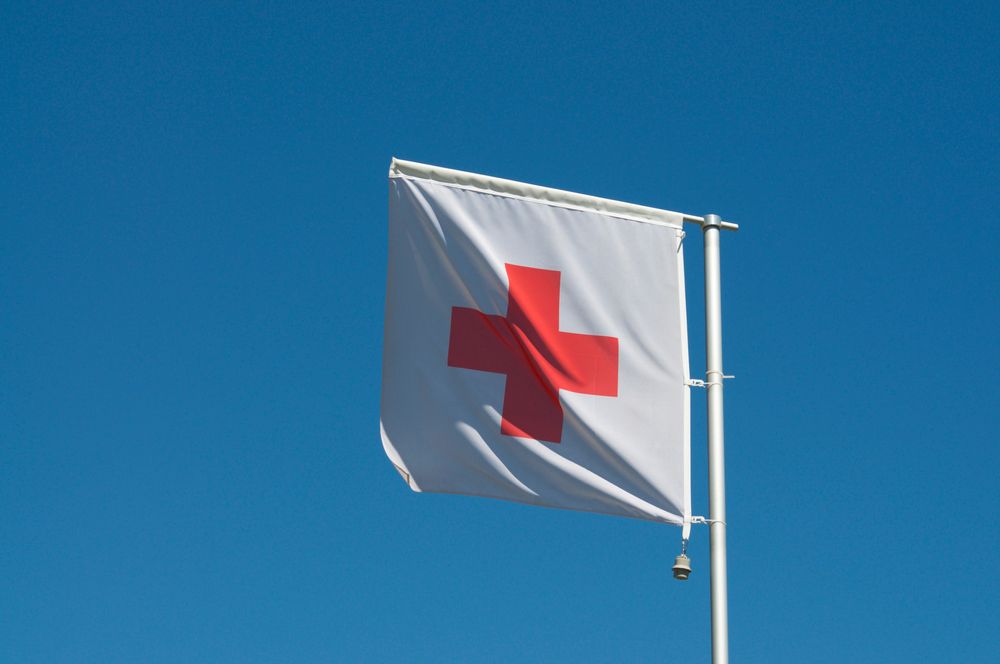
World Red Cross and Red Crescent Day
8 May is World Red Cross and Red Crescent Day, commemorating the birth of Henry Dunant, the man who saw the horror of Solferino in 1859 and decided that the neutrality of care should be a moral law. That night, among thousands of abandoned wounded people, an idea was born that still crosses borders today: provide aid without asking which side the pain comes from.
The Red Cross and Red Crescent form the world’s largest humanitarian network. Their emblem, recognisable on any map, is more than a symbol: it is a promise of access amid chaos, permission to provide aid in conflicts, disasters, displacement, vulnerable neighbourhoods or health emergencies. Their strength lies not only in their structure, but in the sum of volunteers and workers who turn aid into routine.
Celebrating this day means remembering that humanity also organises itself. That there are trained hands to search, rescue, accompany and support. And that, in times of polarisation, the radical act can be a very simple one: saving lives.
Days of Remembrance and Reconciliation in Honour of Those Who Lost Their Lives in the Second World War
8 and 9 May are not just dates on the calendar: they are a historical hinge. The UN established these days in 2010, coinciding with the 65th anniversary of the end of the conflict, to honour the victims and sustain a memory that does not become a museum, but prevention.
The choice of both days speaks of perspectives: on 8 May 1945, Nazi Germany’s unconditional surrender was signed, marking the end of the war in Europe; but in Moscow it was already 9 May, a date many countries remember as Victory Day. That duality reveals something essential: history is shared, but it is also experienced differently.
Remembering — through ceremonies, exhibitions and family stories — is a form of reconciliation, but also a warning. In a world where tensions return under other names, memory functions as a compass: it points to what must not be repeated.
World Ovarian Cancer Day
8 May also speaks of a silent battle: that against ovarian cancer, a disease often discovered late, when symptoms are confused with digestive discomfort or ‘unimportant’ inconveniences. That is why this observance, created in 2013, insists on something basic: listen to the body and do not normalise persistent signs.
It is commemorated to raise awareness and promote prevention: regular gynaecological check-ups, attention to recurrent changes, and access to timely diagnosis. In human terms, this day is a defence of time: the time gained when it is detected earlier, the time lost when it is minimised.
The global campaign rests on an idea of health justice: ‘No woman left behind.’ A slogan that is not a metaphor, but a demand for visibility, research and support.
International Thalassaemia Day
There are illnesses that cannot be seen at first glance, but condition life through the blood. On 8 May, International Thalassaemia Day is celebrated, a hereditary disorder that alters haemoglobin production and can cause anaemia, fatigue and complications requiring continuous monitoring.
This day seeks visibility and support for research, but also to defend rights: access to treatment, prevention programmes and sustained care. The International Thalassaemia Federation (TIF), founded in 1986, has turned the experience of patients and families into an international voice pushing for fairer policies and care.
Behind the medical term there is an everyday reality: people learning to live with checks, transfusions, fears and routines. Naming thalassaemia on the calendar means recognising that constancy and reminding us that health also depends on what society decides to prioritise.
World Donkey Day
Among so many solemn observances, 8 May holds an unexpected tribute and, precisely for that reason, a revealing one: World Donkey Day. It is celebrated to highlight this animal’s importance in human activities and to defend its conservation and welfare, especially where it remains an essential part of rural work.
The donkey has been transport, draught power and a field companion for millennia; it is estimated to have been domesticated around 6,000 years ago in North Africa. Its unjust reputation — the idea of ‘stubbornness’ — conceals practical intelligence: it knows how to assess risk, conserve energy and endure difficult conditions.
Celebrating it means looking with respect at what sustains life without applause. It also means remembering that progress should not be based on the exhaustion of those — human or animal — who carry the heaviest load.
Mosquito Action Week
Although it is not a one-day observance, Mosquito Action Week continues from 5 to 9 May, promoted by PAHO since 2016. Its message is almost domestic, but deeply political: public health begins in small things, in standing water forgotten in a container, a plant pot or a tyre.
Preventing dengue, zika, chikungunya or malaria does not always require a heroic gesture, but shared habits: clean, empty, cover, check. The campaign reminds us of something uncomfortable: if one house takes care and the next does not, risk circulates anyway. That is why this week is not ‘commemorated’: it is practised.