
News
9 April: what is celebrated today
Some dates do not look at the world in the abstract, but trace it through specific geographies and very real wounds. 9 April is one of them: a day shaped by the fight for equality, the memory of victims and the remembrance of figures who set the political course of the 20th century. Three distinct commemorations, united by the same underlying question: what kind of justice are we willing to build?
Equal Pay Day (Argentina)
On 9 April, Argentina marks Equal Pay Day on its calendar, a date that puts figures and a face to a persistent inequality. It is not only about wages: it is about time, opportunities and recognition. According to estimates by international organisations, women in the country earn, on average, significantly less than men for work of equal value, a gap that widens further in informal employment.
The date arose at the initiative of women who decided to point out the obvious: earning less for the same work is not an individual anomaly, but a repeated structure. The image is as compelling as it is symbolic: while many men “finish” their working year on 31 December, many women have to work several months longer to reach the same annual income.
This day does not function as an isolated gesture, but as an uncomfortable reminder. It speaks of pay inequality, but also of unemployment, insecurity and the invisible burden of care. It puts a difficult-to-ignore truth on the table: formal equality does not always translate into real equality.
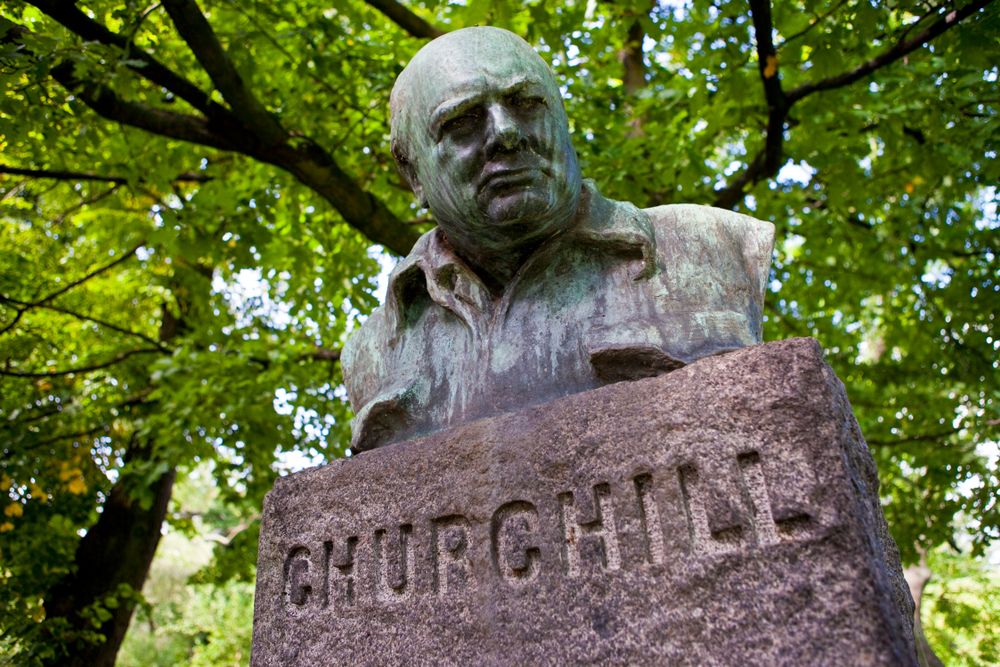
National Winston Churchill Day (United States)
In the United States, 9 April is devoted to the memory of Winston Churchill, the British statesman who received honorary US citizenship in 1963, an unprecedented gesture granted during his lifetime. A year later, President Lyndon B. Johnson officially proclaimed this date as a national day in his honour.
Churchill was many things at once: politician, soldier, writer, tireless speaker. Prime Minister of the United Kingdom at decisive moments of the Second World War, he became a key figure of resistance to Nazism and a symbol of leadership in times of crisis. His voice, amplified by radio and history, shaped the narrative of an entire era.
Remembering him today also means looking at him with critical distance: understanding his legacy, its lights and shadows, and asking how the forms of leadership that mark entire generations are built. The commemoration does not freeze the figure; it returns him to historical debate.
Day of Memory and Solidarity with the Victims of the Armed Conflict (Colombia)
In Colombia, 9 April is a day of reflection and remembrance. Since 2011, this date has honoured the victims of the armed conflict and those who have survived decades of violence. The choice of day is no coincidence: it refers to the murder of Jorge Eliécer Gaitán in 1948, an event that triggered a spiral of violence known as El Bogotazo.
The figures are hard to absorb: millions of victims, forced displacement, irreparable losses. But this day is not limited to numbers. It is an invitation to listen to stories, recognise others’ pain and uphold memory as both a political and human act.
Under the slogan “For the victims, for peace”, the commemoration insists on something essential: there can be no possible future without truth, reparation and solidarity. Remembering is not reopening old wounds, but preventing oblivion from repeating them.