
News
9 January: what is celebrated today
9 January brings together two observances that, at first glance, seem to come from different worlds: static electricity, with its invisible and capricious science, and hot-air balloons, which remind us of humanity’s determination to rise above the ground. Both celebrations, however, share the same energy: the idea that the imperceptible—a spark, an updraft, a scientific intuition—can transform our relationship with the world. They are days that invite us to look at everyday phenomena with renewed wonder.
World Static Electricity Day
Static electricity often appears as a fleeting gesture: a small spark when touching a door handle, hair standing on end in the middle of winter, an almost imperceptible crackle in clothes fresh from the tumble dryer. But behind these domestic anecdotes lies a phenomenon that has fascinated scientists since Antiquity. Accounts place Thales of Miletus rubbing amber against wool and observing how that material came to life, attracted light objects and became a kind of fleeting magnet. Thus triboelectricity was born, long before we were able to name it.
The choice of January for this observance has something of physical poetry: cold, dry air encourages the accumulation of charges, turning this month into a natural setting for experimenting with the imbalance between positive and negative. Everything begins when two surfaces rub against each other; as they separate, they exchange electrons, and that microscopic disorder leads to the spark we feel at our fingertips. Nothing could be simpler, and at the same time, nothing more universal.
However, static electricity is not merely a capricious game of matter. In laboratories, industries and even space exploration it can become both a risk and a tool. On the Moon and Mars, for example, the lack of humidity creates an environment where charges accumulate easily, something NASA continues to monitor closely. Static electricity is a reminder that what is most everyday is, at heart, profoundly strange: a mechanism that connects our steps across the carpet with planetary studies.
Balloon Ascension Day
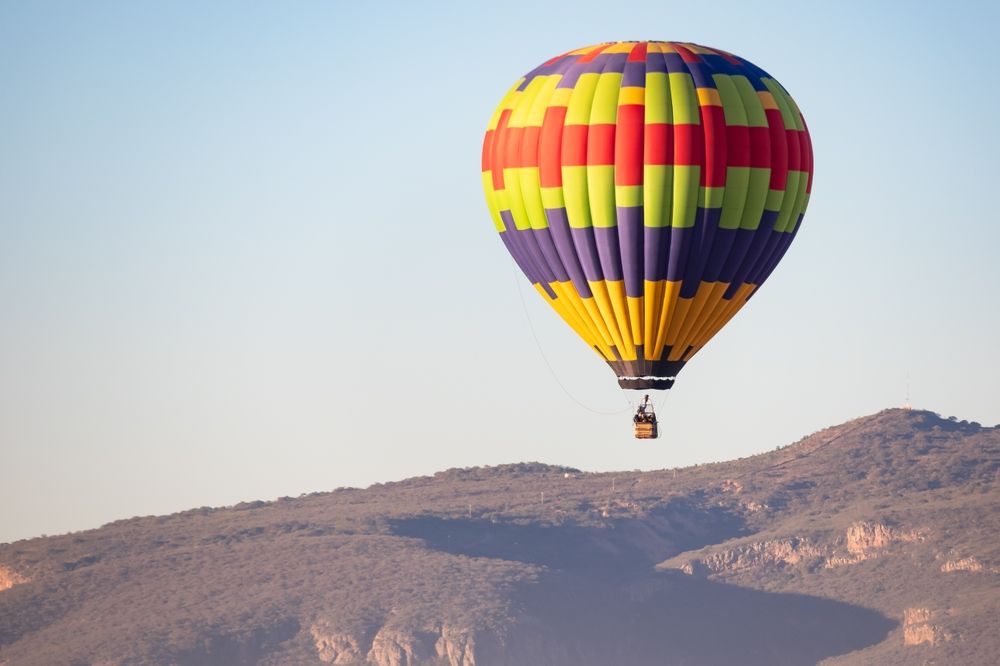
That 9 January 1793, Independence Square in Philadelphia looked upwards as never before. Jean Paul Blanchard, a French aeronaut, had decided to demonstrate that the sky was not a limit but a possibility. His balloon rose to around 364 metres while George Washington, the chronicles say, watched that marvel in fascination. In the eighteenth century, when flying was no more than a dream wrapped in metaphors, that moment opened a symbolic door to the future.
But this date does not celebrate the first flight in history — that honour belongs to the Montgolfier brothers, in 1783 — but the first balloon journey made on United States territory. Even so, all these milestones share the same impulse: the human desire to see the world from another perspective, to prove that gravity can be challenged if one has enough boldness and a balloon full of hot air.
Literature also embraced this invention with almost immediate enthusiasm. Julio Verne imagined impossible journeys, from Africa to around the world, while other authors recounted expeditions as daring as they were poetic. The balloon became a metaphor for the inner journey, risk and freedom. And although balloon flights are now just another tourist experience, they retain a romantic aura: the idea of floating among landscapes and clouds, carried by the wind as though, for an instant, the rigid lines of everyday life were dissolving.
Celebrating this day means letting oneself be tempted by height, even if only in thought: remembering that there was a time when looking upwards meant looking towards the future.