
News
9 May: what is celebrated today
9 May has something of a crossroads: politics becomes a promise of peace, nature reminds us that the planet understands no borders and, in the same gesture, the everyday economy appears — who produces, who pays, who survives — alongside light celebrations that speak of community. It is a date that alternates the solemn and the familiar, as if the calendar wanted to tell us that the world is sustained both by great agreements and by small customs.
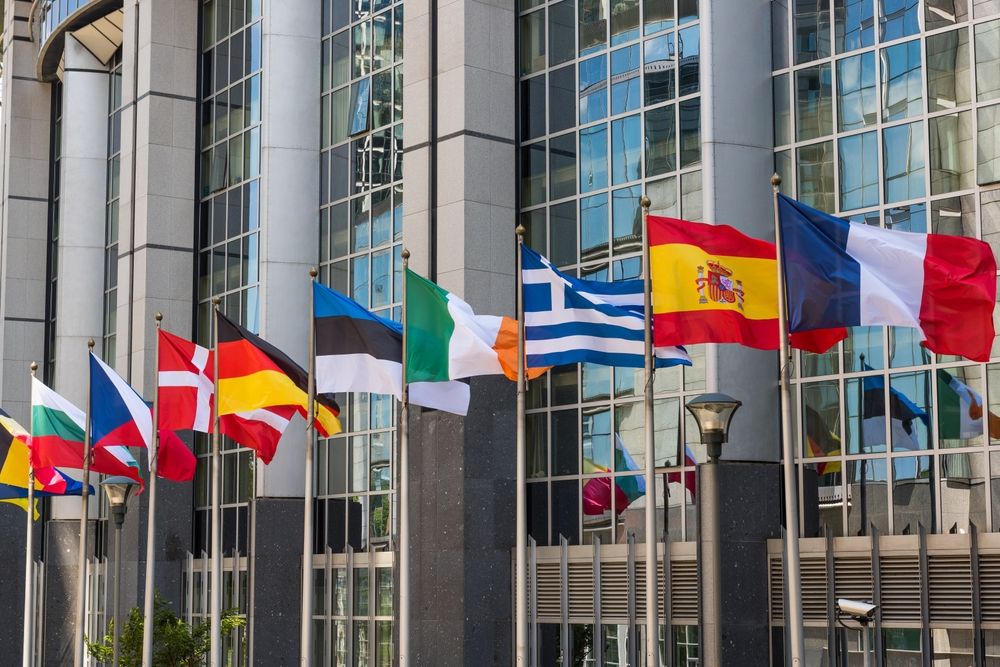
Europe Day
Europe Day is celebrated every 9 May as an origin date, almost a founding moment, for the idea of a united Europe. On that day in 1950, Robert Schuman delivered the declaration proposing something that sounded bold at the time: jointly managing strategic resources — coal and steel — so that a new war would be simply unthinkable. In that logic, cooperation was not a diplomatic ornament, but an architecture for peace.
The anniversary, officially recognised since 1985, recalls that the European Union was not born as a symbol, but as a method: negotiate, distribute, modernise, improve working conditions, build shared rules. And although it is not a public holiday in most countries, 9 May acts as a mirror: it invites us to ask what “Europe” means today when challenges — migration, energy, inequality, security — once again put strain on the common project.
Celebrating it can be as institutional as attending public events and as intimate as rereading the simple idea that sustains everything: peace is not inherited; it is managed.
World Migratory Bird Day
The second Saturday in May — which in 2026 coincides with 9 May — shifts the focus in scale: from the political map to the map of the sky. Migratory birds fly thousands of kilometres and, on that journey, connect continents as if they were living threads between seasons. That is why this commemoration is celebrated twice a year (May and October), following the natural rhythm of the great migrations.
Since 2018, campaigns have been unified under a single global initiative, and the central idea is repeated with different variations: protect routes, wetlands and resting areas; reduce threats created by ourselves — glass, light pollution, loss of trees, plastics — that turn the city into a trap. When a flock becomes disoriented, “nature” does not fail: the design of the world we have built fails.
This day is an invitation to look upwards and understand something uncomfortable: the future of these birds also measures the health of the planet we inhabit.
World Fair Trade Day
9 May 2026 also coincides with the second Saturday in May, the date of World Fair Trade Day. Here the focus is not on what we buy, but on the invisible contract behind each product: who produces it, under what conditions, and how much they really receive for their work. The commemoration arose to point out a structural inequality: small producers forced to sell cheaply in a market dominated by large players.
Fair Trade proposes another logic: prices that make living possible, transparent practices, environmental respect, labour rights, the absence of child labour and a less cynical value chain. Organisations such as the WFTO help uphold standards and certifications, but the starting point is cultural: understanding that “price” does not always tell the complete story.
Celebrating this day means asking, without moralising, what kind of economy we feed through our habits. Sometimes, an everyday purchase is also a vote.
World Lost Sock Day
And suddenly, the calendar allows itself a wink: 9 May is also World Lost Sock Day. It is a small and almost absurd anniversary — which is why it works — because it touches on a universal domestic comedy: that pair that breaks apart without drama when the washing machine decides to keep one half.
The story of the sock also has something of intimate archaeology: early examples are spoken of as far back as third-century Egypt, and the term itself goes back to Latin roots connected with footwear. But the charm of this day lies not in erudition, but in recognition: we have all lost something like that and felt, for a second, that the world is laughing at our expense.
Perhaps that is why it is celebrated: to remember that even everyday life has stories, and that life is also made up of minor mysteries.
Free Comic Book Day
The second Saturday in May is also Free Comic Book Day, born in California in 2002 as a celebration of reading habits and a gateway for new generations. Bookshops and specialist stores give away copies and organise activities: signings, gatherings, reading marathons, conversations that evoke childhood and discovery.
This day has something of a community ritual: it shows that culture does not always need solemnity to be important. A comic can be humour, adventure, memory, social criticism; it can be the first step towards a life of reading or an excuse to return to a forgotten passion.
In a world saturated with screens, giving away printed stories remains a beautiful gesture: almost a declaration of faith in imagination.
Mosquito Action Week
And as a backdrop to these days, Mosquito Action Week continues from 5 to 9 May, promoted by PAHO since 2016. Its message does not change: preventing diseases such as dengue or zika begins with controlling breeding sites, with standing water that seems innocent until it is not.
It is an anniversary lived in practical mode: check containers, clean, empty, cover. It also means understanding that public health is not only the task of authorities, but a shared discipline: if one street takes care and the next does not, the buzzing crosses all the same.