
News
André Ricard and his 140 objects at DHub until March 2027
DHub brings together 140 pieces by André Ricard in an expanded exhibition following its appearance at the Madrid Design Festival. From the Copenhagen ashtray to the Barcelona 92 torch, the exhibition shows how design is also measured by its use. It can be visited until 14 March 2027.
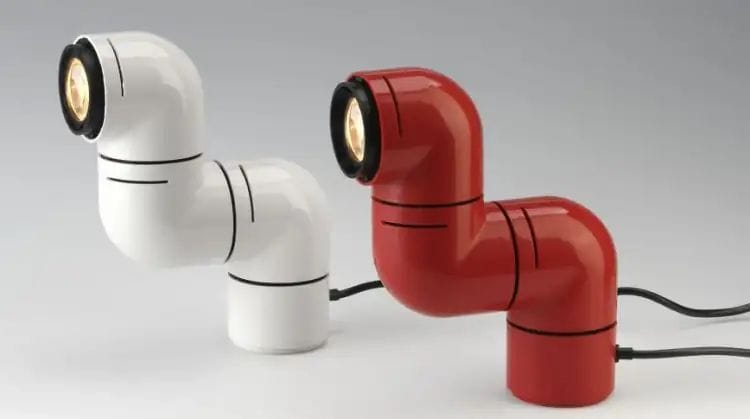
The exhibition traces domestic design and the career of a pioneering Barcelonan
A juicer placed in a kitchen and an aluminium Olympic torch represent two scales of the same profession: solving specific needs. André Ricard (Barcelona, 1929) is the focus of the exhibition "André Ricard. Disseny en ús", which brings together 140 pieces at Disseny Hub Barcelona (DHub).
The exhibition arrives from the Madrid Design Festival in an expanded version. The display brings together everyday objects and designs that have become part of Barcelona’s memory.
A kitchen for the juicer
Curators Marina Povedano y Arnau Pascual have organised the pieces according to the domestic setting for which they were conceived. The presentation avoids artifice and focuses on the essence and usability of each object.
Pascual believes the designer’s achievement lies in making an object work without demanding attention. The idea is well illustrated by Povedano’s example: if a juicer is shown, it should appear in a kitchen.
From the Copenhagen ashtray to Barcelona 92
Among the most recognisable pieces is the tubular Tatú lamp (1972), which appears on the exhibition poster. The Copenhagen ashtray dates from 1966; its Mallorca y Tossa variants arrived in 1970.
The COMPACT dinnerware set (1962) is also on display. In another area, a juicer from the late 1980s appears alongside an Ibiza plug socket (1974).
The Olympic torch designed for Barcelona 92 strengthened Ricard’s bond with his birthplace. He conceived it to reflect the Olympic spirit and Barcelona’s identity, with low emissions and safety for athletes; the final design combined the shape of a classic aluminium cauldron with modern lines.
Incidentally, Barcelona’s cultural life has been enriched by another event: Fundación Miró has added 37 works by Katsuta and six previously unseen in Spain.
Design is also built from industry
The exhibition traces Ricard’s role in the professionalisation and promotion of industrial design. It also covers his international reach and his work as a theorist. According to Pascual, his Franco-Catalan background allowed him to travel and make contacts in the sector in London.
Ricard argued that the designer should be involved in the entire process, from the first idea to the finished product. His relationship with the perfume company Puig serves as an example. He also played a key role in the foundation of the Associació de Disseny Industrial del FAD (ADI-FAD), and helped to promote Barcelona, Cataluña y España through design.
The exhibition can be visited at DHub until 14 March 2027.