
News
Post-war Barcelona is revived in a novel about shanty towns, guitar and survival in Montjuïc
Los acordes de la ciudad, Raúl Montilla’s new novel, revives post-war Barcelona through a young man from the Montjuïc shanty towns who finds in the guitar a way to escape poverty and arbitrariness.
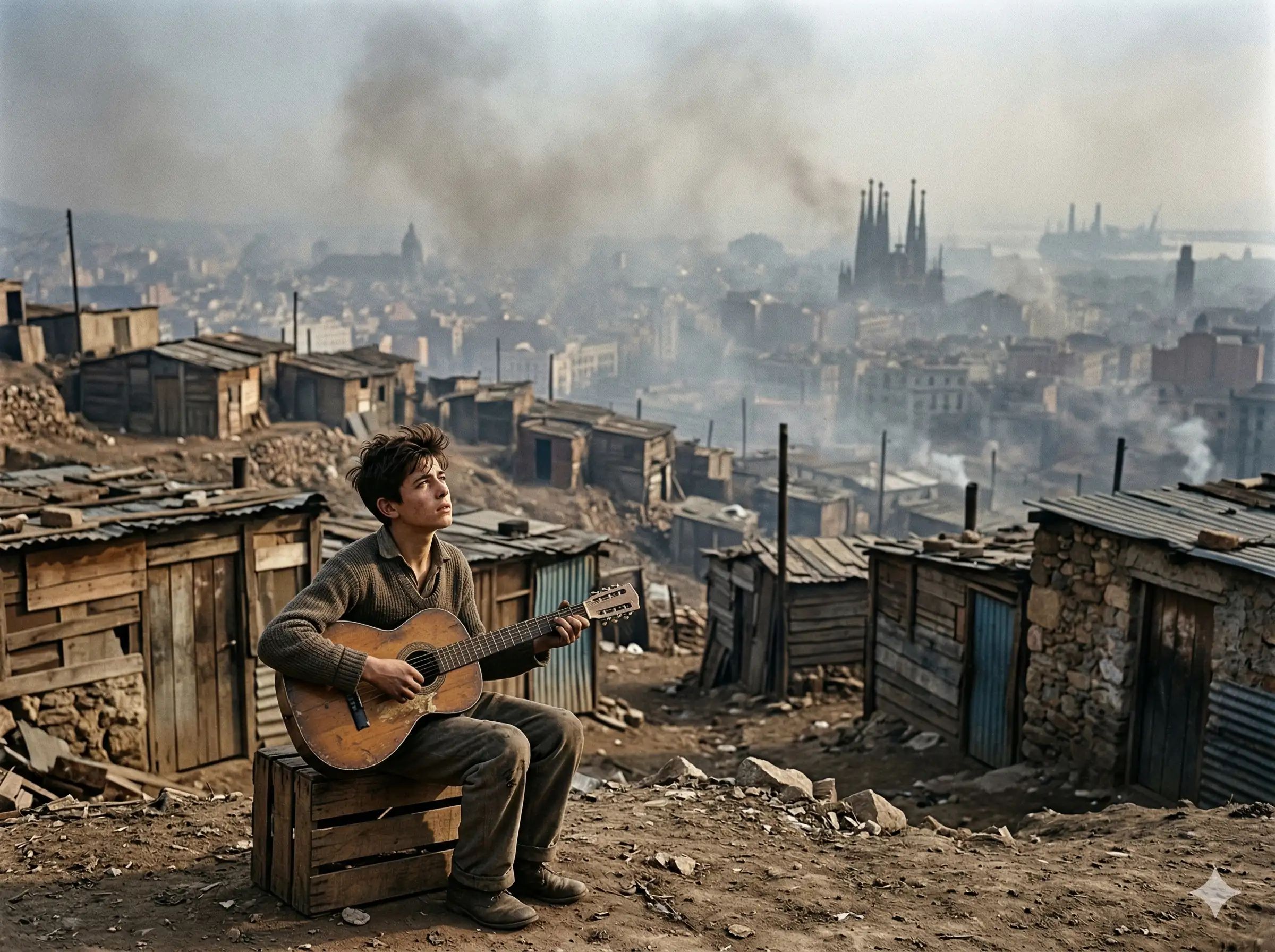
A new novel transports the reader to post-war Barcelona. The story follows a young man from the shanty towns of Montjuïc who finds an escape route in the guitar. Figures such as Carmen Amaya and Peret cross his path. The story shows how arbitrariness could change everything in an instant.
In Barcelona, every corner holds stories that still resonate in the collective memory. The city of the 1950s, marked by the post-war period and daily survival, comes back to life in a novel that explores the hardship and hope of those who grew up on its margins. The protagonist, Teodoro Montoya, known as el Canijo and el Niño del Chacho, survives in the shanty towns of Montjuïc, where poverty and uncertainty are daily bread.
The plot delves into the life of this young pickpocket, who discovers in the guitar a passion capable of transforming his destiny. Through his eyes, the reader travels through a vibrant and contradictory Barcelona, where music and art become a refuge from the arbitrariness of power. Iconic figures such as Carmen Amaya and Peret appear in the narrative, weaving connections between popular culture and the social reality of the time.
The novel, by Raúl Montilla, continues the path of great urban epics begun with Las hijas de la fábrica. In Los acordes de la ciudad, the city itself is the protagonist, reminding us that the ghosts of the past are never so far away and that, at any moment, life can take an unexpected turn.
Montjuïc, beyond its current image as a green lung and cultural space, was for decades a territory of contrasts. The shanty towns that spread across its slopes took in thousands of families who had arrived from all over Spain seeking opportunities. There, forced coexistence and a lack of resources gave rise to an identity of its own, marked by resilience and creativity. Today, echoes of that past remain present in the city's memory and in the stories that literature rescues from oblivion.
Novel details (6 Apr 2026): Los acordes de la ciudad (480 pp., Ediciones B) portrays 1950s Barcelona from Montjuïc and Somorrostro. Teodoro Montoya “el Canijo” discovers music with el Chacho; Carmen Amaya, Peret and el Pescaílla appear in the novel.