
News
Aranjuez and the Casa Blanca: a study reveals the Spanish influence on the urban planning of Washington D. C.
A recent academic study suggests that the urban layout of the US capital is much more Spanish than previously thought, with Aranjuez as a possible source of inspiration.
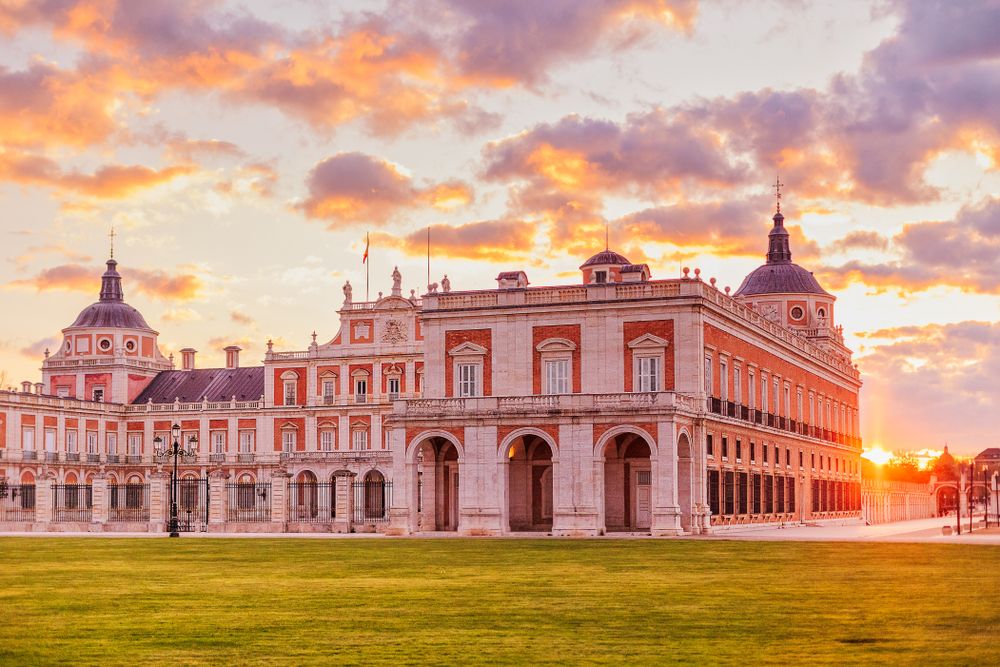
Researchers at the Universidad Politécnica de Madrid and the Universidad de Almería have published a study in the journal Urban Planning and Development that directly links the design of Washington D. C., the city that houses the Casa Blanca, with the urban planning of Aranjuez. According to the analysis, Pierre L’Enfant, the cartographer commissioned in 1791 by George Washington and Thomas Jefferson to design the new capital, may have adapted on a large scale the plans of the town near Madrid, a source of pride for Carlos III in the 18th century.
The coincidences go beyond the anecdotal: both models share a system of twelve radial avenues converging on symbolic spaces, a street layout with trapezoidal forms and the strategic placement of their main buildings. Even the Potomac River may have replicated the meander of the Tagus in Aranjuez, while elements such as the National Mall and the connection between the Casa Blanca and the Capitol have parallels in the gardens and ceremonial axes of the Spanish city.
The authors point out that there are no documents proving that L’Enfant worked directly with the plans of Aranjuez, but there are records of Carlos III's urban designs being sent to different European courts. This circulation of ideas, together with the relationship between French and Spanish urban planners, reinforces the hypothesis of a direct influence. The finding not only highlights Aranjuez's cultural and urban-planning importance, but also reopens the debate on the transfer of knowledge in city planning on both sides of the Atlantic. Washington, a symbol of monumentality and political power, could largely be an enlarged reflection of the Spanish geometric model.