
News
Hospital de la Santa Creu begins key renovation in the heart of Raval
The former Hospital de la Santa Creu has begun a new phase in the heart of Raval. Barcelona has started rehabilitation work on its main façade and cloister, two spaces of great historic value that form part of the neighbourhood's daily life and the city's cultural map.
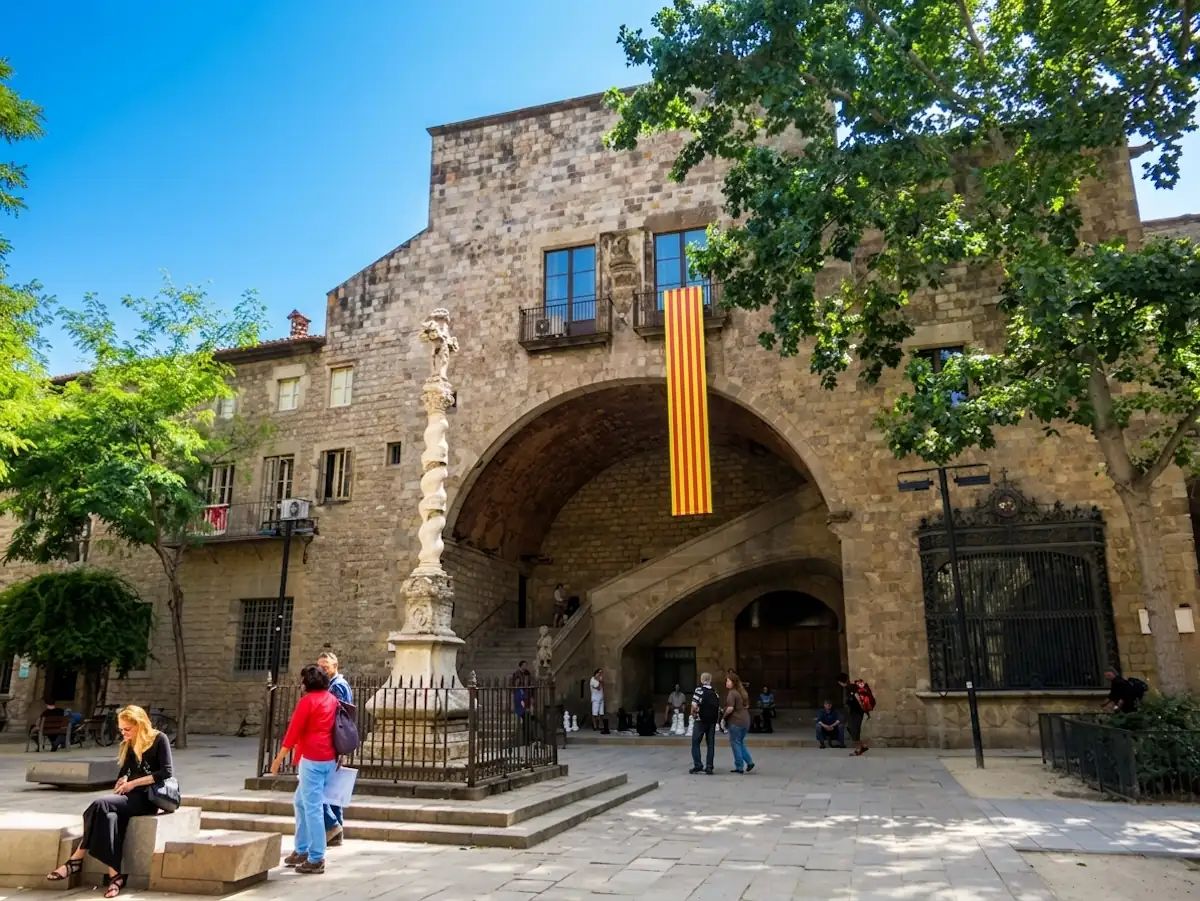
The intervention exceeds two million euros and seeks more than the restoration of old stone. The project is part of a wider transformation of the surrounding area, with new public spaces, urban improvements and future cultural facilities that may change the way residents, students, visitors and users pass through this part of the Raval.
The cloister works have a budget of more than 1.3 million euros. The work focuses on consolidating the vaults and arches, cleaning the stone, renewing the roof and reinforcing the structure of a space of more than 2,400 square metres spread over several levels.
The first activity has already been visible in the Jardins de Rubió i Lluch, where the trees have been protected and old elements removed before the more visible restoration tasks begin. The priority is to guarantee the stability of the complex without losing the historic character of a place used every day by residents, students and users of nearby facilities.
In parallel, restoration of the site’s main façade is also advancing. In this case, investment exceeds 700,000 euros and covers 1,089 square metres. The intervention includes cleaning, consolidation, replacement of architectural elements and restoration of the entrance sculptural group with Montjuïc stone.
During the works, the main entrance remains protected and pedestrian and vehicle access continues to be guaranteed. The intention is for the restoration to proceed without completely disrupting the daily functioning of a heavily used area, located among cultural facilities, educational centres, the Boqueria and the Rambla.
The two interventions are being carried out at the same time and are expected to finish at the beginning of next year. The timetable fits with other elements of a wider urban operation intended to strengthen the cultural and civic axis around the former hospital.
One of the most important changes will be the renewal of the Doctor Fleming gardens and Plaça de la Gardunya. The intervention covers more than 4,600 square metres and includes new trees, street furniture and a children’s play area, with the aim of making a space that has functioned for years more as a thoroughfare than a place to stay more welcoming.
The surroundings are also preparing for other transformations. The future refurbishment of Mercat de la Boqueria, planned from 2026, will coincide with the redevelopment of the Rambla. In addition, a passage will be opened to connect the hospital’s inner gardens with Plaça de la Gardunya, improving pedestrian continuity in the neighbourhood.
The former nursery school on the site will be turned into an extension of Escola Massana, strengthening the link between heritage, artistic education and cultural life. In a second phase, more than 12,000 square metres of the former hospital are expected to be renovated to house a district library and expand the Biblioteca de Catalunya.
Founded in the 15th century, the Hospital de la Santa Creu is one of Barcelona’s great historic complexes. Its rehabilitation comes at a key moment for the Raval, a neighbourhood where every urban improvement is also read in terms of coexistence, access to culture and recovery of public space.
The work will not change the neighbourhood overnight, but it may help bring order to one of its most symbolic points. If the project advances as planned, the former hospital will cease to be only a monument crossed by the city and will gain weight as a living, open and useful space for those who live, study and move through the Raval each day.