
News
Badalona gives initial green light to the expansion of the Can Ruti campus
Badalona has taken the first step towards one of the most ambitious urban and healthcare transformations of the coming decade. The City Council has given initial approval to the modification of the Plan General Metropolitano, which will allow the expansion of the Hospital Germans Trias i Pujol campus, better known as Can Ruti.
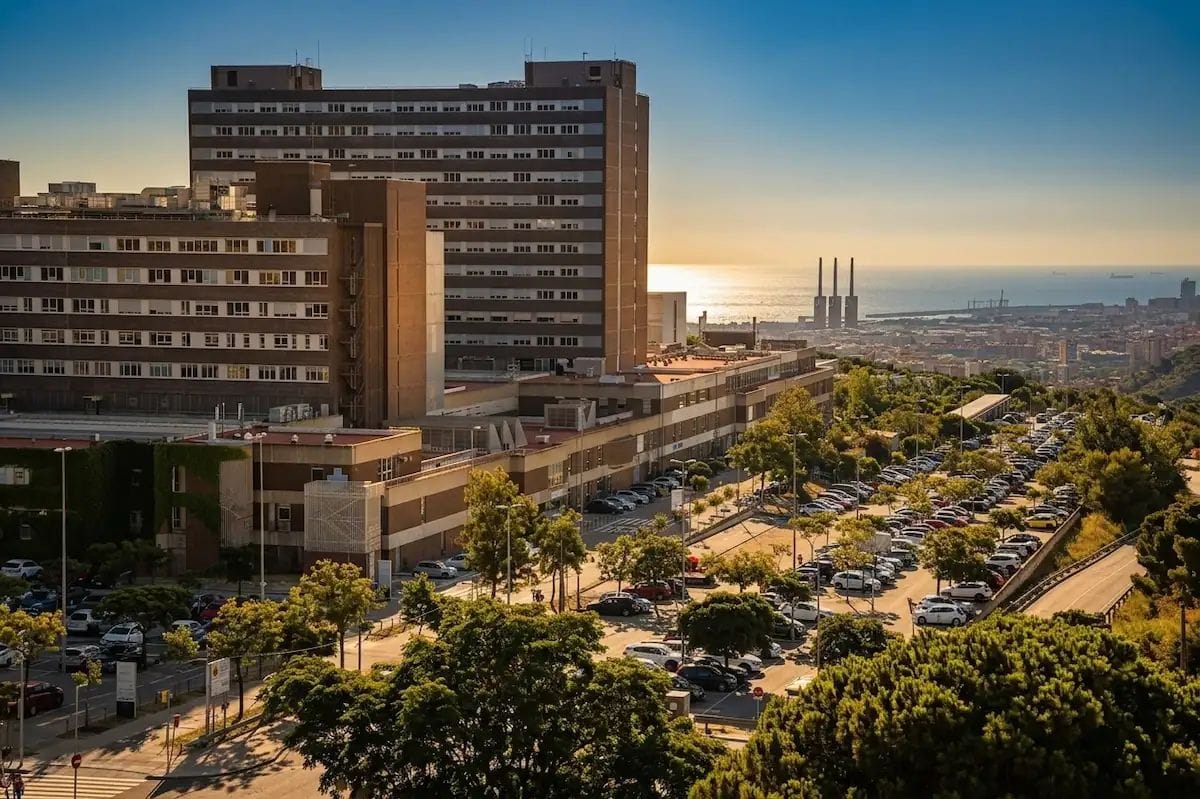
The project affects more than 74 hectares around the Serralada de Marina and seeks to organise the growth of an area that already concentrates hospital, research, teaching and care activity. The idea is to turn Can Ruti into a major biomedical and healthcare hub able to compete with other benchmark metropolitan spaces.
The amendment plans to incorporate 7.7 hectares of new developable land and reserve 13.6 hectares as open spaces. Growth will be concentrated primarily in the upper part of the campus, where buildings, access routes and infrastructure already exist, to avoid dispersed expansion into more sensitive areas of the natural surroundings.
Planned actions include new hospitalisation areas, more operating theatres, laboratories, teaching, research and clinical-simulation spaces. It also proposes expanding parking capacity, a demand repeatedly voiced for years by workers, patients and relatives who come to the hospital.
The plan reserves 190,000 square metres for the hospital and 39,600 for research and teaching. With that leap, Badalona wants to strengthen Can Ruti's role as a healthcare and scientific engine, attract companies in the sector, laboratories, start-ups and activity linked to biomedical innovation.
The expansion will not be limited to putting up new buildings. The project also includes creating the Torrent de la Carbassa park, protecting streams, forests and historic farmhouses, and removing old roads planned on paper that were never built.
Around Vall de Pomar, Turó d’en Boscà and the Canyet neighbourhood, the operation will involve new roads, accessibility improvements and a different organisation of the space. It also plans to facilitate access to the Paco Águila athletics track and renew the sewage network, an intervention long awaited in the area.
The project also includes land for economic activity, a student residence, a hotel and offices. These uses seek to accompany the campus's growth and respond to an increasingly common reality in major healthcare hubs: professionals, researchers, patients and visitors who need services near the hospital.
Environmental protection will be one of the sensitive points in the process. Can Ruti is in a privileged but also fragile setting, beside the Serralada de Marina. Therefore, the expansion will have to balance growth, mobility, new facilities and preservation of the landscape.
Compared with the initial proposal, the changes are mainly technical. The space planned for the Institut Josep Carreras will grow to 40,000 square metres, while the Institut Guttmann will gain 3,000 square metres of buildable area, reinforcing the weight of research and specialised care within the campus.
After initial approval, the file will now enter a phase of public display, submissions and funding searches. The timetable will not be immediate: the horizon for the expansion is around ten years, so Badalona is now beginning a long, complex and decisive path.
Can Ruti is already one of Catalunya's major healthcare benchmarks, but its growth may also change Badalona's role within the metropolitan area. The key will be ensuring that the future campus does not operate as a scientific island on the mountain, but as a connected, accessible space able to generate opportunities without breaking the balance with its surrounding environment.