
News
Barcelona speeds up the transformation of La Sagrera with 11,000 new homes
La Sagrera is set for a radical transformation before its station opens. More than 11,000 homes and new facilities will arrive before 2032. The City Council will invest 260 million to populate the area. The city's largest urban park will connect neighbourhoods that have long been separated.
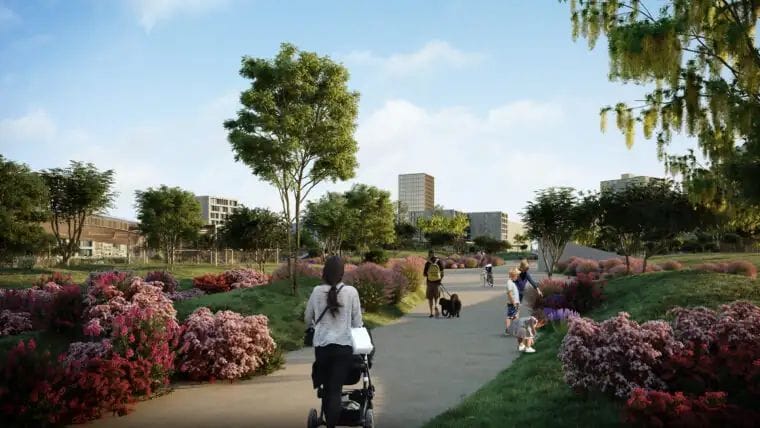
La Sagrera is preparing for a radical change before opening its station. More than 11,000 homes and new facilities will arrive before 2032. The City Council will invest 260 million to populate the area. The city’s largest urban park will link historically separated neighbourhoods.
The countdown to the opening of La Sagrera station has already begun, but the real change for those living in Barcelona will come much earlier. The City Council has decided to invest 260 million euros until 2031 to completely transform the surroundings of the future station, with the construction of more than 11,000 homes and a range of facilities intended to bring life to one of the city’s most neglected areas.
The plan does not only respond to the urgency of affordable housing, but seeks to prevent the station from becoming a mere transit point. The aim is for the neighbourhood to be full of life and activity when high-speed trains begin to run in 2032. The operation extends from the boundary of El Clot to Trinitat Vella, on the Besòs side, and envisages that up to 30,000 people will be able to settle in the new homes.
The transformation includes six major housing developments, with a mix of market-rate and protected housing. The Prim sectors stand out, where more than 3,500 flats will be built, and the former Casernes de Sant Andreu, which will add more than 2,100 homes, most of them social housing. New developments are also planned on the land at La Maquinista and the former Mercedes factory, as well as in the Colorantes sector, with varying proportions of officially protected housing.
The project goes far beyond housing. Twenty new facilities will be created, including a nursery, a new primary care centre and the expansion of a secondary school. In addition, the area will be filled with small shops, large retail outlets, hotels and offices, with space to create up to 10,000 jobs. The linear park that will cover the tracks will be Barcelona’s largest, with 36 hectares of green areas linking neighbourhoods historically separated by railway infrastructure.
Works have already begun at some points, such as Casernes de Sant Andreu and Colorantes, while at others, such as Prim and La Maquinista, demolitions are expected to finish in 2027 to make way for construction. At Mercedes, the first private flats could be ready in 2029. The City Council will also process planning changes this year to increase the land allocated to affordable housing.
The municipal commitment seeks to guarantee that those already living in Barcelona can stay, in a context of rising prices and scarce supply. By the end of 2025, more than 600 homes will already be under construction around the future AVE station, marking the start of one of the city’s greatest urban transformations in decades.
La Sagrera, for years a symbol of delays and unfulfilled promises, is set to become the new epicentre of Barcelona of the future. The station, which aspires to be the city’s second major rail hub, will not only change mobility, but redefine the urban and social landscape of all north-east Barcelona. The linear park, with its 36 hectares, will be a green lung linking neighbourhoods and offering new spaces for meeting, leisure and sport to thousands of residents.