
News
Barcelona speeds up the green transformation of the Meridiana up to the Sarajevo bridge
Barcelona takes a key step in the redevelopment of the Meridiana. The city council is driving a greener, more pedestrian-friendly project. Sustainable mobility and connections between neighbourhoods are being prioritised. Find out how the avenue will change in the coming years.
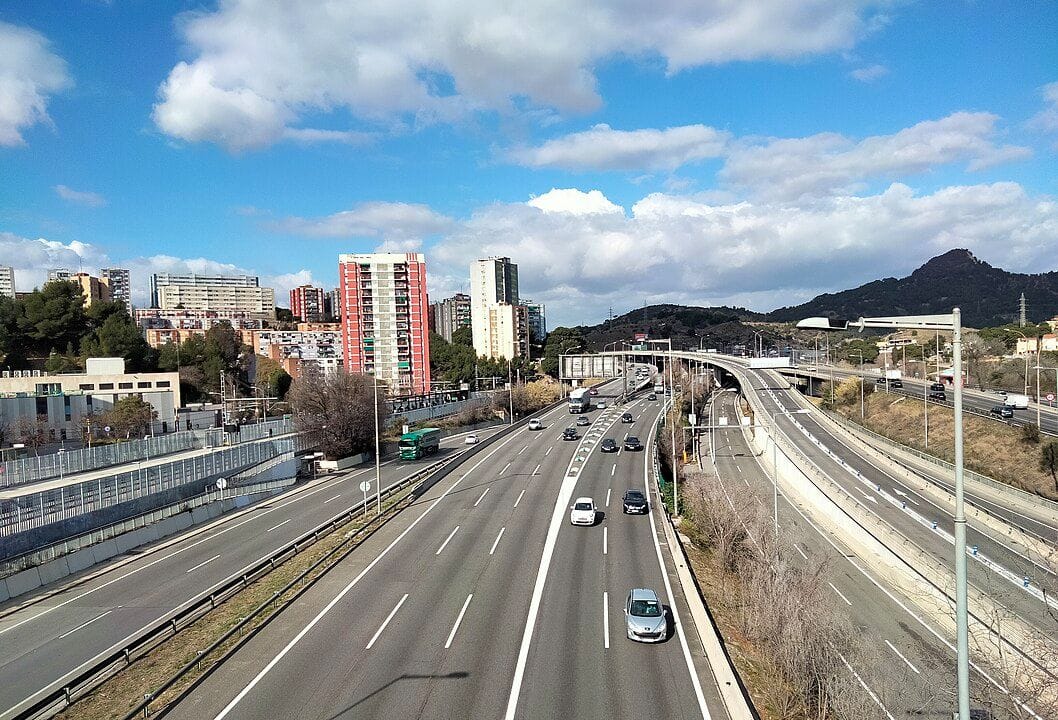
Barcelona City Council has launched the next phase of the transformation of Avinguda Meridiana, extending the redevelopment as far as the Sarajevo bridge. The aim is to give continuity to the avenue’s new image, with a commitment to more green areas, pedestrian spaces and improvements to sustainable mobility, especially in the connection between the neighbourhoods of Nou Barris and Sant Andreu.
The council has put out to tender the drafting of the preliminary project for the section between Passeig de Fabra i Puig and Carrer de Peñíscola, covering around 2.5 kilometres. This section, one of the most complex, will have to define the final layout of the carriageway, solutions for overcoming the level differences between neighbourhoods, the distribution of green space, street furniture and lighting.
At present, the Meridiana has a varied configuration, with between three and six inbound lanes, high-capacity bus lanes and side carriageways linking to adjacent roads. In the outbound direction, general traffic uses the central carriageway, while urban buses and local traffic use the side carriageways.
One of the main challenges is the difference in level between the central carriageway and the side carriageways, which are separated by a wall, making accessibility and cross-neighbourhood connections more difficult. The preliminary project will have to propose solutions that strengthen sustainable mobility, with particular attention to public transport and the cycle lane.
The tender concerns section 3 of the transformation. The council expects the preliminary project to be ready in spring 2027, after which the detailed designs will be drafted and the works put out to tender. At the same time, preliminary studies will begin for section 4, which will run from the Sarajevo bridge to Carrer de la Piedra, beyond the Torre Baró bridge. In addition, a meeting with neighbourhood organisations is scheduled for January to set out the tendering process in detail.
Meanwhile, works are already progressing on the section between Carrer de Felip II and Passeig de Fabra i Puig, which began in April and are scheduled for completion by the end of 2026. This section anticipates the avenue’s future configuration, with more space for pedestrians, sustainable mobility and green areas.
In section 2, the intervention focuses on two key points: the Sagrera cross-connection hub, which provides for a large central space for pedestrians, one-way cycle lanes and improved gardens; and the intermodal transport hub, between Carrer de Felip II and Garcilaso, where the space will be reorganised to improve public transport connections and its integration with other users. Bus lanes and stopping areas for urban and interurban buses will be provided.
To strengthen connectivity, new pedestrian crossings will be created on several streets, increasing the number of pedestrian crossings from nine to fifteen, as the council has explained.