
News
Barcelona seeks more direct flights to Asia and the US after the Middle East crisis
Barcelona wants to fly further without depending so heavily on stopovers in the Middle East. The aviation crisis caused by the conflict in the region has left a clear lesson for El Prat: when hubs such as Doha, Dubai or Abu Dhabi are blocked, connections with Asia, Oceania and part of Africa become much more fragile. The airport is now seeking to strengthen its direct long-haul routes, particularly to Asia and the United States.
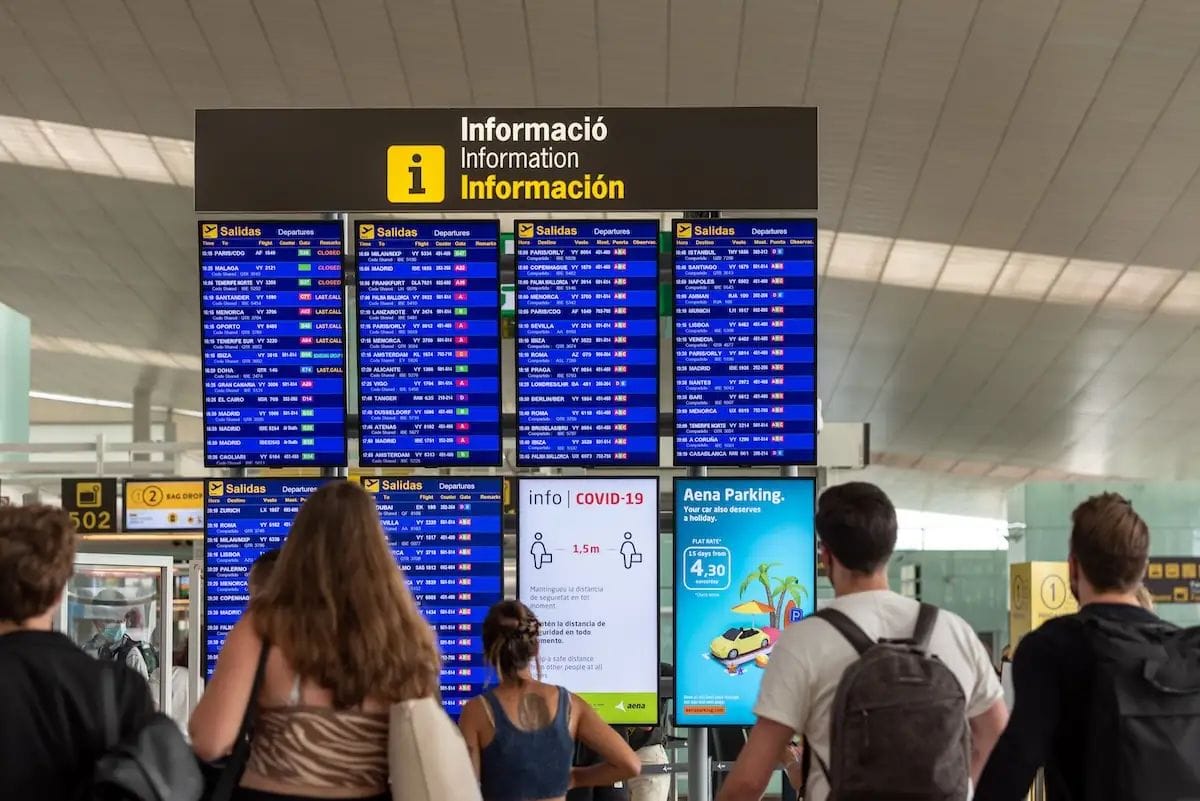
The change in strategy has not come from nowhere. During the latest crisis in the Middle East, several airlines suspended flights and key airspaces were closed, affecting routes that connected Barcelona with Asia through the Gulf. The impact was felt even during Mobile World Congress week, when El Prat expected to handle more than 9,000 flights and nearly 1.75 million passengers.
Barcelona’s Air Route Development Committee wants to use that context to defend a simple idea: the more direct flights the city has, the less it will depend on third-party airports in times of international tension. The aim is to strengthen intercontinental connections, restore pending routes and attract new airlines to markets where Barcelona still has room for growth.
The United States is already driving growth. Delta launched the direct Barcelona-Seattle route this May, with three weekly frequencies, an important connection for tourism, business and technology. This is added to the strengthening of transatlantic services with routes to cities such as Boston, New York, Atlanta, Miami, Chicago, Washington, San Francisco and Los Angeles, depending on the season and airline.
El Prat will reach 63 international long-haul routes in 2026, with new additions such as Seattle, Lima and El Salvador, and with its sights set on Asia. Level’s new route to Lima will begin on 9 June with three weekly frequencies, also strengthening Barcelona’s role towards Latin America.
Asia is the most delicate piece. Barcelona has already restored or strengthened connections with China and Korea in recent years, but it still has fewer direct flights than other major European airports. The Gulf crisis has given more arguments to those advocating non-stop routes to Asian destinations: not only for passenger convenience, but for economic resilience, trade fairs, congresses, logistics and investment attraction.
The commitment comes alongside the debate over the expansion of El Prat. Aena and the Govern argue that Barcelona needs more capacity to capture intercontinental flights and compete better with other European hubs. Critics respond that long-haul growth may increase tourism pressure, emissions and the environmental conflict in the Llobregat Delta.
For those travelling from Barcelona, the change would translate into something very concrete: fewer stopovers, less risk of being stranded by a distant crisis and more options to fly direct to major markets. For the city, the challenge is more complex. Gaining connections with Asia and the US can strengthen congresses, universities, businesses and higher-spending tourism, but it also requires deciding what kind of growth El Prat wants to take on. After the Middle East crisis, connectivity is no longer measured only in destinations. It is also measured in independence.