
News
Barcelona closes the World Congress of Architects with a clear message on housing
Barcelona has closed the World Congress of Architects with a message that goes far beyond buildings. The meeting's final declaration has placed the right to housing at the centre of the debate and recalled that architecture has direct consequences for everyday life, the climate and the way cities are inhabited.
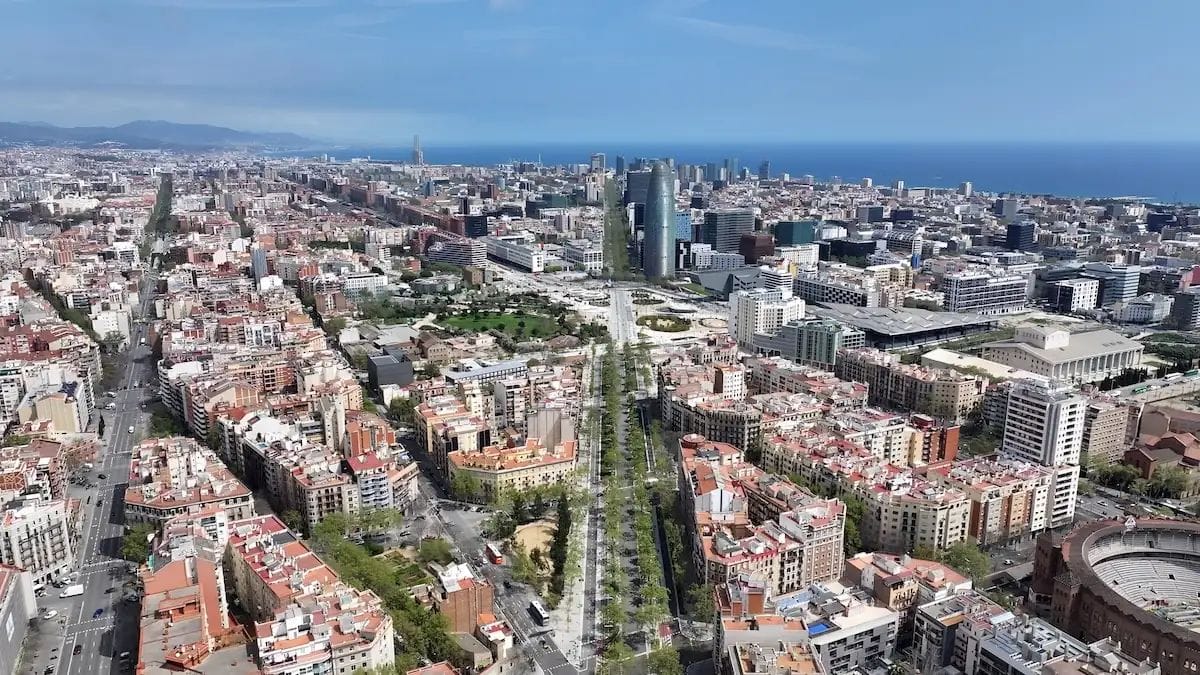
Over four days, more than 10,000 professionals took part in debates, sessions and meetings that brought together tens of thousands of attendees. The congress turned Barcelona into an international capital of architecture, but also into the setting for an urgent conversation about inequality, the climate emergency and urban responsibility.
The final manifesto was brief but forceful. The architects argued that the right to housing “is not negotiable” and that quality and beauty in built spaces cannot be treated as privileges reserved for a few. In that view, the city should not be designed solely to be profitable or photogenic, but to be liveable.
The declaration also issued an environmental warning. Every local decision, every project and every act of construction has consequences that go beyond its own walls. In a context of climate crisis, the professionals called for greater honesty about the real impact of building, demolishing, refurbishing or transforming the land.
Another of the most striking messages was the need to abandon an exclusively anthropocentric perspective. The congress argued that architecture must also think about the planet’s other inhabitants, not just humans, and accept that the built environment forms part of a broader ecosystem.
The president of the CSCAE, Marta Vall-llossera, was tasked with reading the final declaration. Her address distilled many of the concerns that had run through the gathering: housing, environmental footprint, social justice, beauty, professional responsibility and the urban future.
Regina Gonthier, president of the Unión Internacional de Arquitectos, highlighted the exceptional nature of the congress and the work of the six young curators who shaped the programme. The event opted for debates, shared sessions and open conversations rather than a classic succession of individual lectures.
Joan Busquets, honorary president of the congress, recalled the 1996 edition, when Barcelona hosted this international event for the first time. Thirty years later, the challenges have changed scale: housing, water, climate and urban inequalities can no longer be viewed as isolated problems.
Mayor Jaume Collboni celebrated Barcelona’s becoming the first city to host the Congreso Mundial de Arquitectos twice. For the City Council, the event fits with the city’s role as World Capital of Architecture 2026 and with its desire to influence the international urban debate.
The closing included the symbolic handover to Beijing, which will host the next edition in three years’ time. That handover left a clear image: the discussions opened in Barcelona will continue to travel, because the problems architecture faces are shared by cities all over the world.
The importance of the congress lies in the fact that it did not remain solely about forms, materials or big names. It spoke about affordable housing, liveable neighbourhoods, natural resources, everyday beauty, and public and private responsibility. Issues that affect professionals as much as any resident who pays rent, crosses a square without shade or lives in a poorly insulated building.
Barcelona has used these days as an urban laboratory to look outward, but also inward. The city knows first-hand the pressure on housing, tourism, the transformation of public space and the effects of extreme heat. That is why the congress’s final message does not sound remote: it lands directly in its streets.
The declaration will not solve the housing crisis or the environmental footprint of construction on its own. But it leaves a demand that is hard to ignore: architecture cannot be limited to producing icons. It must respond to how people live, who can remain in the city and what each decision costs the land.
The Congreso Mundial de Arquitectos leaves Barcelona with a phrase that sums up the substance of the debate: it is not only about what is designed, but about what world is built. And that question no longer belongs only to architects.