
News
Barcelona closes events for the 600 years of the Roma People with an emotional walk and new commitments
Barcelona bids farewell to the 600 years of the Roma People with a special walk. The City Council announces a new local plan until 2030. They recognise key figures and commit to equality. Discover how the city promotes Roma culture.
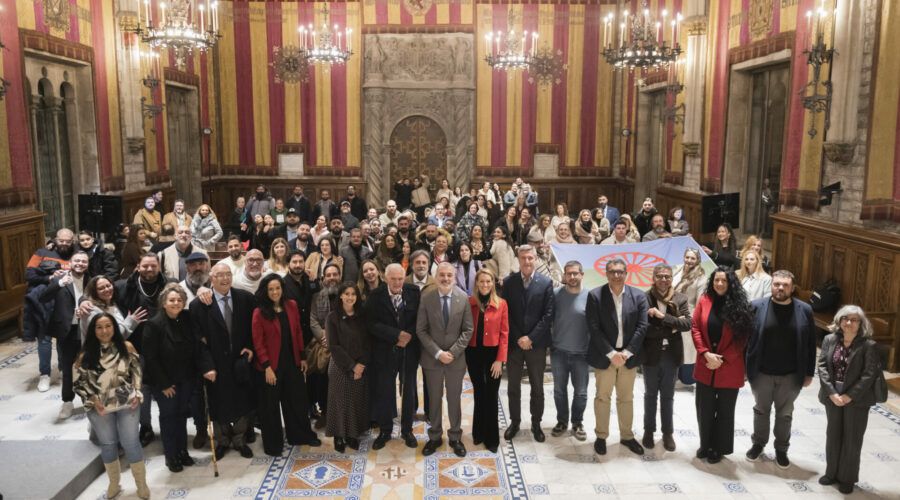

Barcelona bids farewell to 600 years of the Pueblo Gitano with a special walk. The Ayuntamiento announces a new local plan through to 2030. It recognises key figures and commits to equality. Discover how the city is promoting Roma culture.
Barcelona has brought the commemoration of 600 years since the arrival of the Pueblo Gitano on the peninsula to a close with a symbolic walk and an institutional event at the Ayuntamiento. More than a hundred people, many dressed in traditional costume, travelled from Plaza de l’Àngel to the Saló de Cent, where the closing event was held in the presence of mayor Jaume Collboni.
During the ceremony, the second deputy mayor, Maria Eugènia Gay, and the commissioner for Participación Ciudadana, Pedro Aguilera, welcomed attendees. One of the most notable moments was the recognition of people who have fought for the rights and visibility of the Pueblo Gitano in the city.
Mayor Collboni took the opportunity to announce a new Medida de Gobierno: the Pla Local del Poble Gitano de Barcelona 2026–2030. As he explained, this plan has been agreed with the Consell Municipal del Poble Gitano and different municipal departments, with the aim of combating anti-Roma racism, promoting Roma culture and progressing towards real equality of rights.
The event included a round table on the future of the Pueblo Gitano from a women’s perspective and a musical performance by artists including La Tana, Falete Perona, Mariano Santiago, Antonio Fernández y Joni Cortés, with interpretation into Romanó by Perseo Cizmic, director of Kher.
The declaration of 2025 as Año del Pueblo Gitano, promoted by the Gobierno de España, has served to recognise this community’s cultural, social and linguistic imprint in Barcelona and across the country. The city joined the initiative with an institutional declaration that invites reflection on the historical and current challenges facing the Pueblo Gitano.
In November last year, the Taula Interdepartamental del Poble Gitano was created, a new space for municipal coordination to ensure the cross-cutting implementation of public policies aimed at this community. The forum includes the participation of different areas and departments of the Ayuntamiento, as well as representatives of the Consell Municipal del Poble Gitano.