
News
Barcelona adds a new quantum computer connected to MareNostrum 5
Barcelona takes another step in the European race for quantum computing. Barcelona Supercomputing Center will incorporate EuroQCS-Spain, a new quantum infrastructure that will be integrated with MareNostrum 5, the major supercomputer housed in the chapel of Torre Girona. The aim is not to replace classical supercomputing, but to combine it with quantum capabilities to tackle increasingly complex scientific problems.
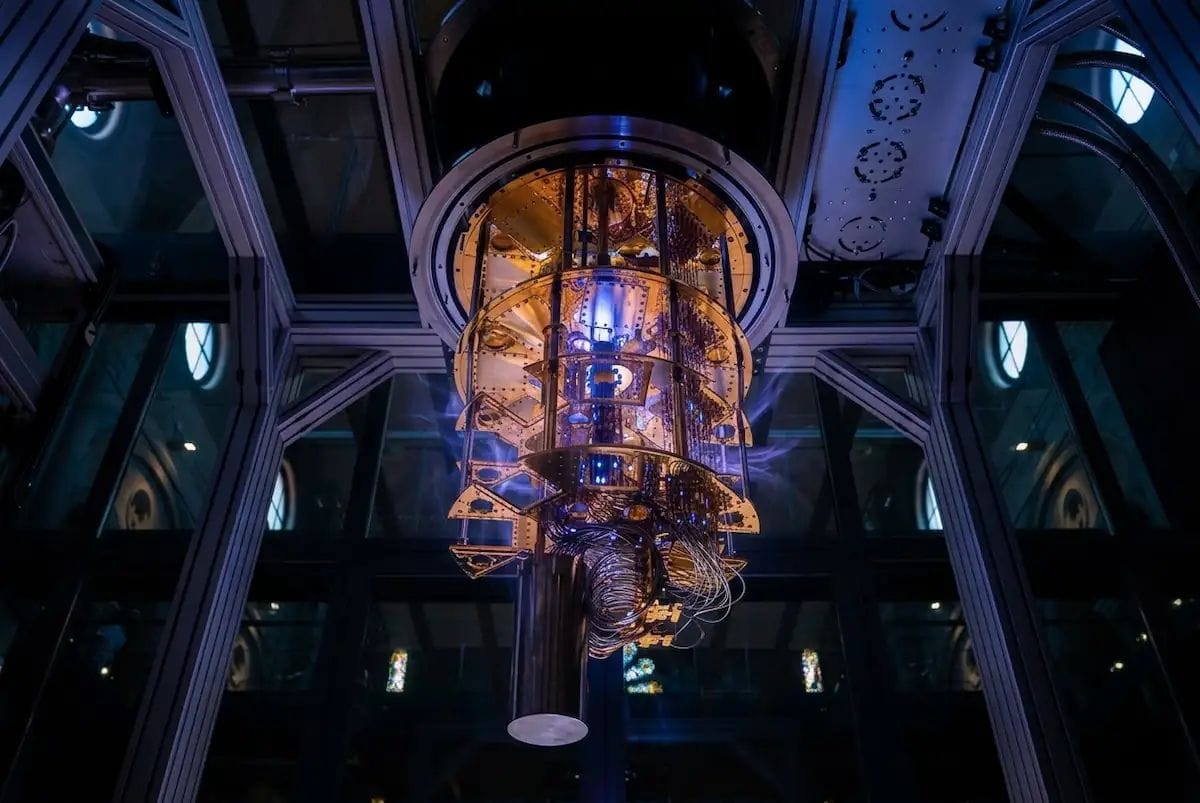
The project is funded with 9.8 million euros and is part of the European strategy to deploy quantum computers in public supercomputing centres. This network aims to give researchers, public administrations, and companies access to home-grown technology, so they are not always dependent on external providers in a field already considered strategic for the digital sovereignty of the European Union.
EuroQCS-Spain will enable progress in hybrid computing, a model that blends traditional and quantum processing. This approach can be useful in fields such as mathematics, cryptography, physics, molecular chemistry, logistics, or training artificial intelligence models, where some problems are too demanding to be tackled by conventional methods alone.
The new system follows the path set by MareNostrum-Ona, the first Spanish quantum computer with European technology, presented in 2025 at the BSC. That installation was already conceived as a quantum partition integrated into the MareNostrum 5 ecosystem, available to the research community and connected to the Red Española de Supercomputación.
One of the most significant aspects for Barcelona is the role of the Catalan company Qilimanjaro Quantum Tech, specialising in analogue quantum computers and full-stack technology development. Its involvement strengthens a local ecosystem where public centres, universities, and emerging companies are starting to move in the same direction: building their own technology rather than just consuming it.
The installation at the BSC also has symbolic value. The chapel of Torre Girona, a historic desacralised building in Les Corts, has already been home to several generations of MareNostrum supercomputers. Now it once again serves as a showcase for a science that seems futuristic, but is beginning to have very concrete applications in health, climate, materials, digital security, and artificial intelligence.
For Barcelona, the arrival of EuroQCS-Spain is not just a technological milestone. It strengthens the city's position on a European map where advanced computing, AI, and cybersecurity will determine much of the scientific and economic competitiveness in the coming years. If MareNostrum 5 already placed the BSC among the continent's leading computing centres, the quantum layer adds another ambition: that part of Europe's digital future will be tested, programmed, and understood from Barcelona.