
News
Barcelona studies a third Rodalies tunnel beneath Diagonal to ease rail congestion
Recurring problems on Rodalies have brought back to the fore an infrastructure that has appeared in mobility studies and plans for years: a third rail tunnel beneath Barcelona. The proposal is to create a new corridor crossing the city along the Diagonal axis to ease pressure on the two tunnels that currently carry much of metropolitan rail traffic.
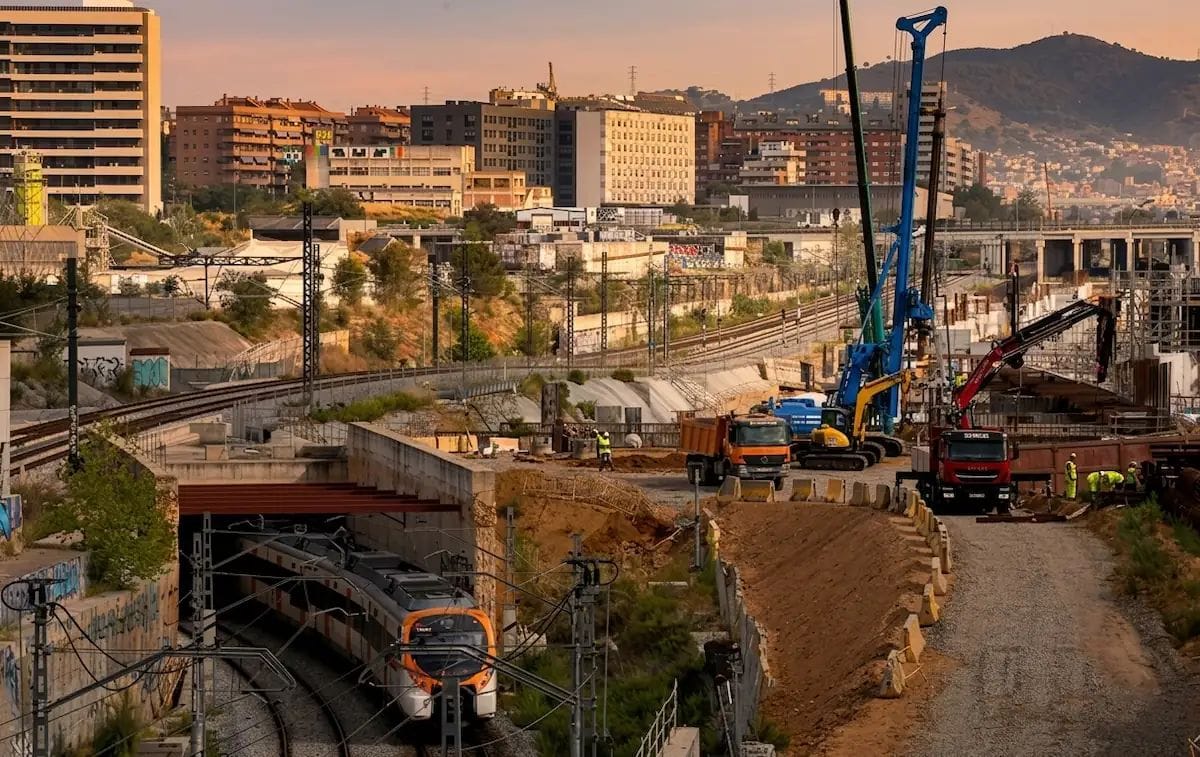
Today, a large proportion of Rodalies trains run through the Plaça Catalunya and Passeig de Gràcia tunnels. When an incident occurs in either of them, the consequences quickly spread across the entire network. Creating a third connection would make it possible to distribute services better and increase the capacity of infrastructure that has been operating at its limit for years.
Preliminary studies envisage an alternative rail entry into Barcelona from Baix Llobregat, connecting municipalities such as Castelldefels, Gavà, Viladecans, Sant Boi and Cornellà with new strategic points within the city. This would make it possible to offer more routes and reduce dependence on the current corridors.
The initiative coincides with the new Estrategia Ferroviaria de Catalunya, which is committed to diversifying connections and improving the network's resilience. The projects included also feature the Línea Orbital Ferroviaria, intended to connect metropolitan cities without the need to pass through central Barcelona.
Experts consider that the two measures could complement each other. While the orbital line would facilitate cross-regional journeys between comarcas, the third tunnel would make it possible to accommodate more trains and reduce the impact of incidents that currently affect thousands of users every day.
For now, there is no specific timetable for its construction. The infrastructure remains in the technical and economic analysis phase, as it would entail a multimillion investment and complex works beneath one of Barcelona's main avenues. Even so, growing demand and Rodalies' capacity problems mean that the proposal is gaining weight in future planning.
Diagonal has historically been one of the major axes of urban transformation in Barcelona. If the project is ultimately realised, it could also become the backbone of a new phase for metropolitan rail transport. Beyond the works themselves, the aim is simple: for daily journeys to be more reliable, for incidents to affect fewer users and for Barcelona to have a network ready to keep growing over the coming decades.