
News
Barcelona's full council calls on the Generalitat for more investment in education and fewer class-ratio constraints and less bureaucracy
Barcelona's municipal plenary has approved a declaration urging the Generalitat to increase investment in education, reduce class ratios and bureaucracy, and strengthen measures such as free provision for ages 0–3.
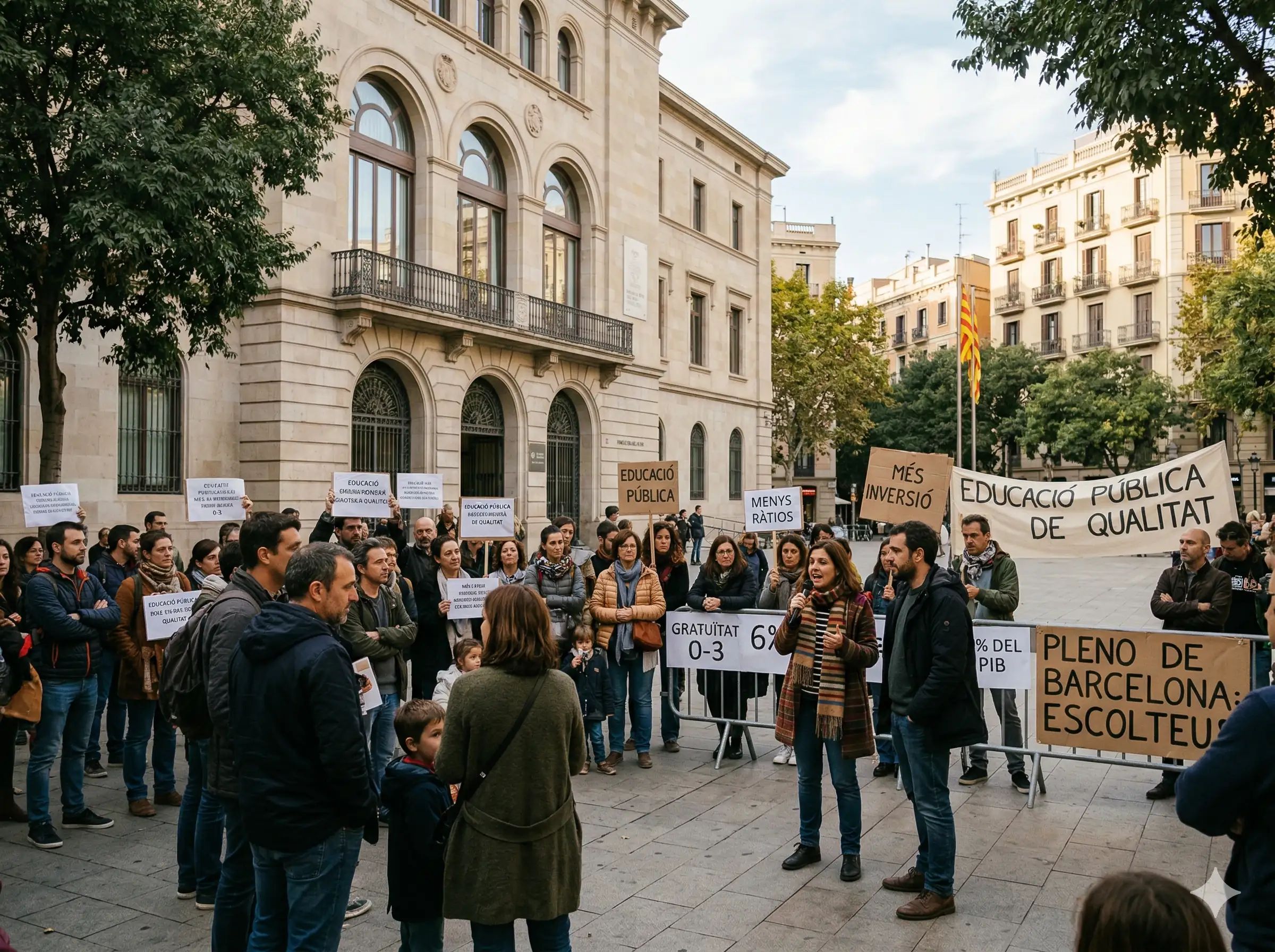
Barcelona City Council calls on the Generalitat for urgent changes in education. The municipal plenary supports teachers’ demands after weeks of protests. There are calls to increase education investment and reduce bureaucracy in schools.
Recent teachers’ protests have shaken Barcelona’s political agenda, where the City Council has decided to take a position. This Friday, the municipal plenary approved an institutional declaration supporting the main demands of teaching staff and requiring the Generalitat to take concrete measures to improve both their working conditions and the quality of public education.
Barcelona Plenary (27 Mar 2026) approved institutional declaration (ERC + Junts/BComú/PSC): urges the Generalitat’s Education department to improve working conditions for teaching staff/personnel (after USTEC/CGT strikes); 6% of Catalonia’s GDP (LEC 2009); reduce class sizes/bureaucracy; Catalan as the teaching/welcome language; free 0–3 provision. PSC clarifies: it does not support USTEC (which did not sign the CCOO/UGT/Govern Illa agreement); general public support. It will be forwarded to the Parliament/Department.
The initiative, promoted by ERC, comes after several days of strikes and gatherings in the city’s educational centres. The approved text calls on the Govern to raise investment in education until it reaches 6% of Catalonia’s Gross Domestic Product, a figure that unions consider key to guaranteeing sufficient resources in classrooms.
Support for the declaration has been broad: Junts, Barcelona en Comú and the PSC have joined it, although the socialists have wanted to make clear that they do not support the specific demands of the Ustec union, which has led the latest mobilisations and did not sign the recent agreement between CCOO, UGT and Salvador Illa’s executive. To avoid controversy, the final text does not mention Ustec or limit its requests solely to public education.
Among the measures requested, the City Council insists on the need to reduce the pupil-to-class ratio, move towards free provision in the 0–3 age stage and simplify the bureaucracy faced by management teams. In addition, the declaration underlines the importance of Catalan as the language of instruction and welcome in the education system, urging the Generalitat to guarantee the resources needed to meet these objectives.
Public education in Barcelona has historically reflected the city’s social and economic challenges. Teachers’ current demands add to a long tradition of mobilisation in defence of the Catalan school system, marked by the pursuit of equity, innovation and social cohesion. The debate over funding and the management of educational resources remains one of the most sensitive issues for families and sector professionals.