
News
Barcelona to build the Parc de Tecnologia Marítima at Nova Bocana with an investment of 142 million
Work on the Parc de Tecnologia Marítima will begin this year at Nova Bocana with an investment of 142 million and a building designed to bring together students, startups, and companies from the blue economy.
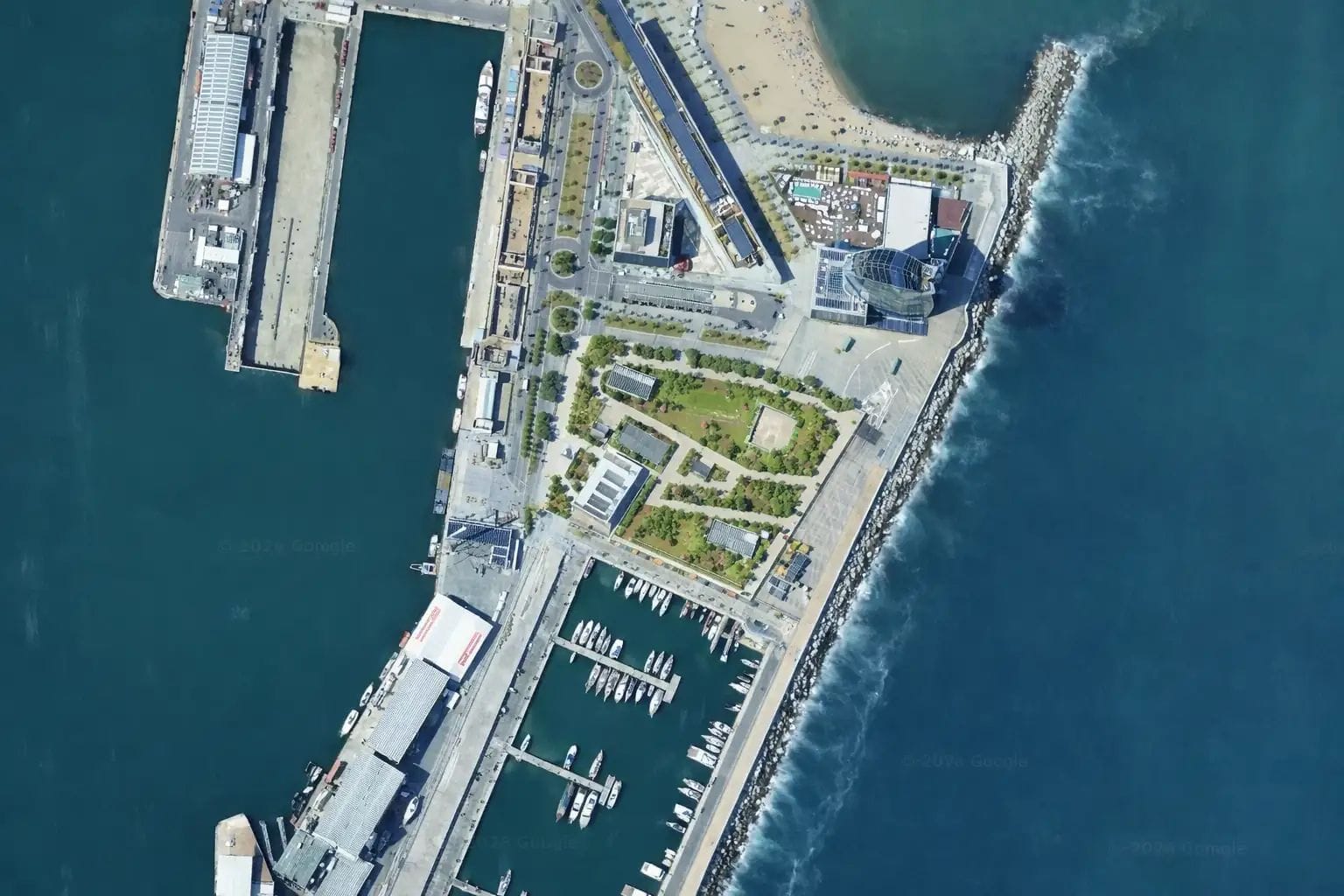
The Parc de Tecnologia Marítima will begin to be built this year at the Nova Bocana. The project, with an investment of 142 million euros, will transform the area with a pioneering centre for nautical innovation and the blue economy. New spaces for students, start-ups and companies will change the landscape beside the Vela hotel.
The transformation of the Nova Bocana will take a leap forward this year with the start of construction work on the Parc de Tecnologia Marítima, a project that promises to change Barcelona's relationship with the sea and innovation. The new building, located at the end of Passeig Borbó and beside the Vela hotel, will become a benchmark for those committed to the blue economy and sustainable boat design.
The Ayuntamiento de Barcelona and the Generalitat have decided to make a strong commitment to this growing sector, allocating 142 million euros over three years to promote research, training and entrepreneurship around the sea. More than a third of that investment will go to a 16,500-square-metre public building, designed by Mestres-Wäge, which will stand out for its silhouette inspired by port cranes and for housing facilities unique in the Mediterranean.
The Parc will bring together master's students from the Facultat de Nàutica de Barcelona (FNB-UPC), start-ups and established companies, all focused on developing practical solutions for the challenges of the maritime sector. The building will have navigation simulators, a hydrodynamic testing pool, a towing tank and the possibility of incorporating a wind tunnel, facilitating experimentation and knowledge transfer.
Management of the centre will fall to the Fundació Barcelona Capital Nàutica (FBCN), which will integrate services for the market and coordinate collaboration between administrations such as the Generalitat, the Ayuntamiento, the UPC, the Port de Barcelona and the State. This year, the Departament de Recerca i Universitats has already set aside 14 million euros to advance construction, which will have frontages on Marina Vela, passeig Joan de Borbó and plaza Rosa dels Vents.
The building will be laid out over five floors and a basement. Emerging and established blue-economy companies will occupy the upper floors, while the third floor will combine entrepreneurship areas, employment information and a manoeuvre-simulation centre. The first two floors will be devoted to classrooms and laboratories for around 180 postgraduate students, as well as spaces for research and outreach.
General services and common areas will be located on the ground floor, but the true technological heart will be in the basement, with experimental laboratories including a 27-metre two-dimensional wave pool and a 40-metre towing tank. The future addition of a wind tunnel and other advanced laboratories is also planned. Until recently, students at the Facultat de Nàutica had to travel to Madrid to carry out tests, but the UPC already has a wave pool in its Laboratorio de Ingeniería Marítima, which could alter the initial plans.
The Parc de Tecnologia Marítima is expected to accommodate around 530 people, including students, researchers and entrepreneurs, in addition to a team of 20 professionals dedicated to animating the space. Access will be supported by public transport, with V15 and V19 buses and the nautical bus, as well as 58 spaces for bicycles and 20 for scooters.
The road to this point has not been easy. The ideas competition was launched in 2021 with an opening in 2026 in mind, but administrative procedures and the signing of the funding agreement have delayed the timetable. After several revisions to the project, the forecast is that works will start in 2025 and the building will open in 2028, marking a turning point in Barcelona's maritime innovation.
The blue economy has become one of Barcelona's most promising drivers of economic diversification. This concept encompasses all activities related to the sea, from research and technological development to coastal protection and the generation of marine renewable energy. With its port tradition and commitment to sustainability, the city seeks to position itself as a benchmark in the Mediterranean, attracting talent, investment and new job opportunities in a rapidly expanding sector.