
News
Barcelona promotes the full transformation of the Jardins Oriol Martorell
Barcelona takes an important step towards transforming one of Sarrià-Sant Gervasi's pending spaces. The City Council has initially approved the renewal of the Jardins Oriol Martorell, an action that will turn an area currently underused into a large green space between Sarrià and Les Tres Torres.
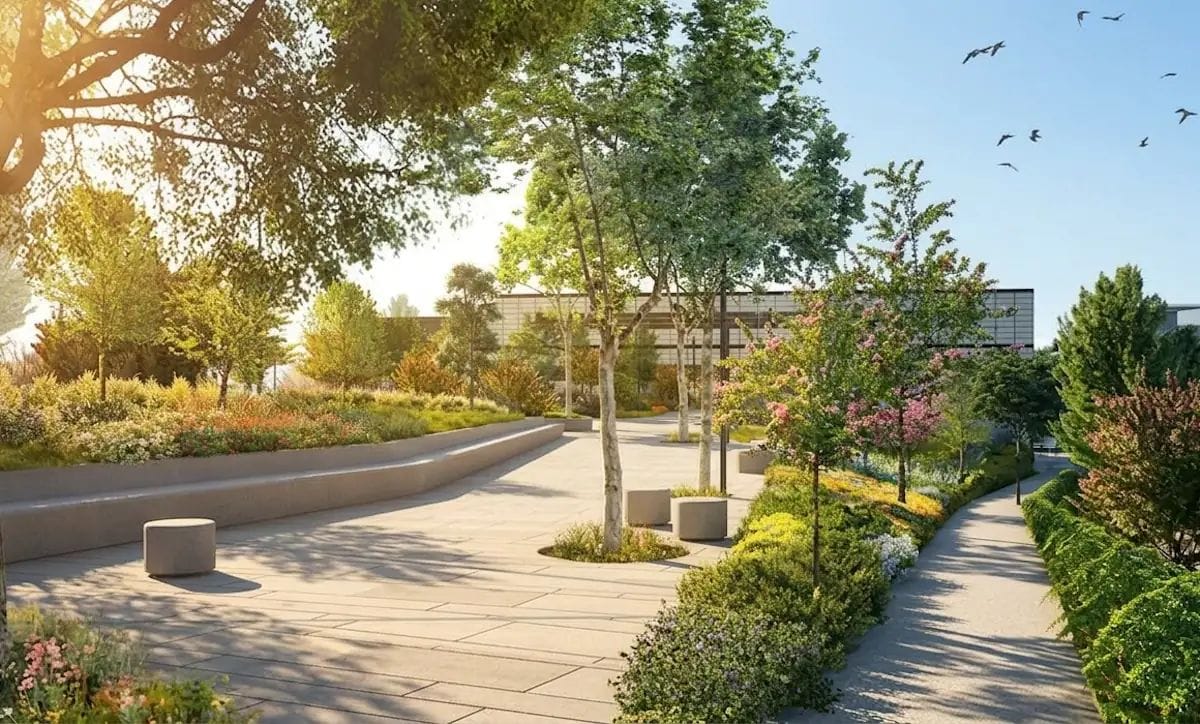
The project affects the area located between Carrer del Carrilet, Carrer del Cardenal de Sentmenat and Via Augusta. The intervention has a budget of 8.7 million euros and seeks to completely reorganise a space that for years has functioned more as an urban void than as a neighbourhood garden.
The work will create a new green area of 5,844 square metres, conceived as a communal space for spending time and everyday connection. The idea is not only to plant more vegetation, but to build a place where residents of both neighbourhoods can cross, sit, play, meet and use the park as part of their daily routine.
The future gardens will have accessible paths, rest areas, social spaces, children's play areas and urban allotments. The design responds to a longstanding local demand: to turn a hard, fragmented area into a friendlier, more useful and greener public space.
The redevelopment also aims to improve the connection between Sarrià and Les Tres Torres. Via Augusta and the railway infrastructure have shaped the relationship between the two areas for decades, and the new park will function as a pedestrian axis to soften that separation.
One important element will be the integration of the Espai Gardenyes urban allotments, which will be relocated within the new layout of the park. This component preserves the community link of a space already used by residents and organisations, although it will now have to fit within a broader project.
The municipal plan also includes inclusive children's play areas and two photovoltaic pergolas, according to documentation from the Pla d’Acció de Govern 2023-2027. The combination of shade, solar energy and spaces for spending time points towards a garden model better prepared for hot summers and prolonged use.
The transformation comes within Barcelona's strategy to gain nearby green space on plots and underused areas. The City Council has included Oriol Martorell among the leading projects to turn disused places into new parks and landscaped areas distributed throughout the city.
The history of the space explains part of the wait. Until 2005, this area housed depots of Ferrocarrils de la Generalitat de Catalunya, and the site remained for years pending a definitive solution. For many residents, the redevelopment is an urban debt that has been dragging on for far too long.
Initial approval does not mean that works will start tomorrow. The project still has to go through administrative procedures and public consultation. The Associació Veïnal de Sarrià has indicated that the timetable communicated to residents envisages public consultation in July 2026, the start of works in January 2027 and completion in June 2028.
That timetable will be key to measuring the real scope of the municipal push. The neighbourhood has heard promises about these gardens several times, and the challenge now will be for the initial approval to turn into machinery, construction work and a completed park.
For Sarrià and Les Tres Torres, the redevelopment could change more than a green area. It could create a new daily route between neighbourhoods, bring more life to an area that is currently unattractive and add a space for shade, play and meeting in a city that needs every available metre of green space.
Jardins Oriol Martorell aspire to cease being a deferred project and become a visible part of the Barcelona that adapts to heat, recovers urban voids and returns public space to residents. The test will come when that sketch of the future becomes a garden used every day.