
News
Barcelona seeks to shield its green corridors after years of legal battles
Barcelona is trying to close one of the most uncomfortable urban-planning wounds of recent years: the legal insecurity of its green corridors. After several rulings against measures such as Consell de Cent, Comte Borrell or Rocafort, the Àrea Metropolitana de Barcelona has taken action to strengthen their fit within planning rules and prevent these traffic-calmed streets from continuing to depend on case-by-case judicial interpretations.
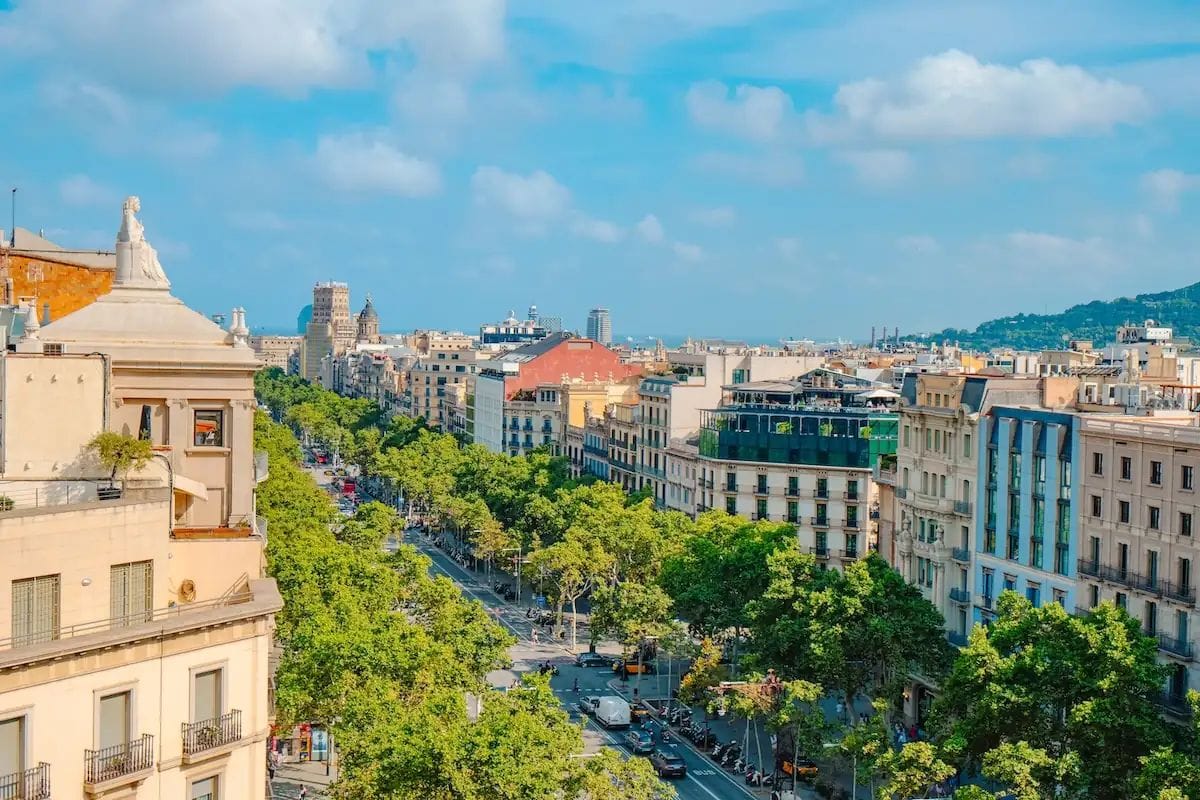
The change involves amending the regulations of the Plan General Metropolitano, the urban-planning framework that has organised Barcelona and its surroundings for decades. The discussion may sound technical, but it has a very specific consequence: providing legal backing for streets where cars have lost space and pedestrians, areas for spending time, greenery and slower mobility have gained it.
The courts had questioned the procedure above all. Several rulings pointed out that transformations of this scale could not be processed as simple ordinary works, but had to be supported by a planning amendment. In other words, the issue was not only whether people liked the green axes or not, but whether the Ayuntamiento had used the appropriate legal route to change the role of those streets.
The new move seeks precisely to close that gap. If the green axes are set out more clearly in urban-planning regulations, it will be harder for a judgment to order a street returned to its previous state solely because of a procedural defect. For the Ayuntamiento and the AMB, the aim is to protect a city model that has already changed physically and which many residents use every day.
The measure comes after years of political and neighbourhood tension. Supporters of the superilles and green axes present them as a tool to reduce traffic, gain shade, create meeting spaces and adapt Barcelona to heat and pollution. Their critics, by contrast, denounce a loss of accessibility, problems for trade, greater pressure on nearby streets and a transformation carried out with little consensus.
Consell de Cent sums up that division well. For some Barcelona residents, it has become a friendlier, more walkable street with neighbourhood life. For others, it remains the symbol of an intervention that altered mobility in the Eixample too quickly. Now, with the regulatory reinforcement, the debate no longer focuses only on benches, trees or lanes, and moves squarely into a bigger question: who decides how the city is transformed and with what guarantees.
Barcelona is not discussing only the future of a few specific streets. It is deciding whether major urban traffic-calming schemes will be reversible episodes, exposed to every legal challenge, or a stable part of the metropolitan map. The legal protection will not end the criticism or solve every problem of coexistence, loading and unloading or mobility. But it may mark a before and after: the green axes would no longer be merely a work inherited from a previous term, but a recognised part of the urban model the city wants to consolidate.