
News
Barcelona achieves its largest historic fall in air pollution in 2025
Barcelona breaks air-quality records in 2025. Stations show historic lows in pollution. The city is moving closer to European targets for 2030. Discover how this affects public health.
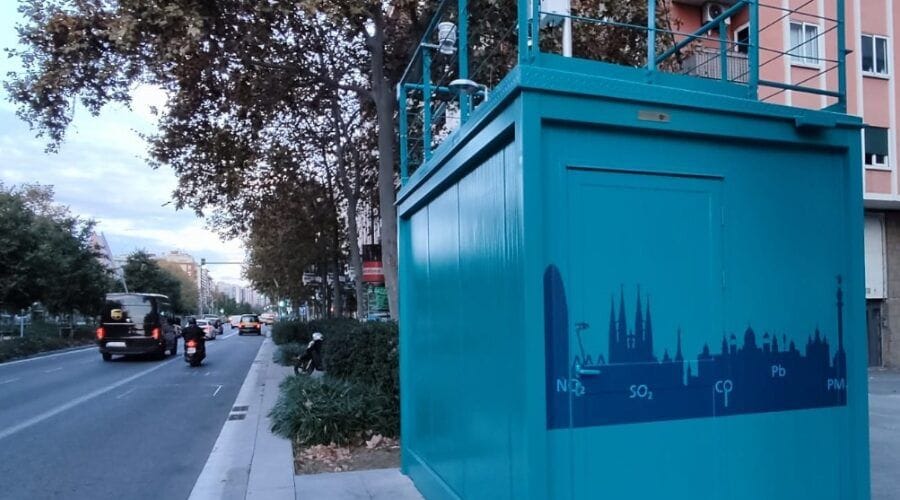
Barcelona breaks air-quality records in 2025. Monitoring stations show historic lows in pollution. The city is moving closer to European targets for 2030. Find out how this affects public health.
Barcelona closed 2025 with the best air-quality figures ever recorded in the city. All stations in the Xarxa de Vigilància i Previsió de la Contaminació Atmosfèrica recorded declines of between 4% and 12% compared with the previous year, consolidating a downward trend already observed in recent years.
The Eixample district has gone from 33 to 29 µg/m³ of NO2 in just one year, while Gràcia-Sant Gervasi has reduced its levels from 27 to 25 µg/m³, placing it 15 points below the current limit. These figures bring the city closer to the European target of 20 µg/m³ for 2030 than to the current threshold of 40 µg/m³.
As for PM10 and PM2.5 particles, provisional 2025 data show stabilisation compared with 2024. All stations comply with the European Union's annual limit values. In Eixample, PM10 levels stand at 22 µg/m³ and PM2.5 levels at 11 µg/m³. In Vall d’Hebron, the figures are 17 and 9 µg/m³ respectively.
Despite the improvement, the impact on public health remains a concern. The City Council keeps air quality as a priority and has expanded the monitoring network with a new traffic station on Avinguda Meridiana, bringing the number of monitoring points in the city to 11.
The reduction in pollution is already reflected in Barcelona residents' health. According to the Agència de Salut Pública de Barcelona, mortality attributable to air pollution fell by 32% between 2020 and 2024 compared with 2018-2019, amounting to around 600 avoided deaths. Preliminary 2025 data point to a reduction of 40-45%, with around 800 fewer deaths.
The Pla Clima de Barcelona envisages investments of 1.8 billion euros to achieve climate neutrality in 2030. Key measures include improving the monitoring network, the development of the Low Emission Zone, the recovery of green areas, the record number of public transport passengers and the increase in tram users.
The 2025 Air Quality Report will be published in the second half of 2026 and will make it possible to analyse in detail the development of the indicators and the effectiveness of the measures applied.