
News
Barcelona asks for time to adapt 1,550 traffic lights and avoid extra congestion
The City Council has requested a moratorium from the DGT to avoid having to change the signage at 1,550 intersections all at once. The new rule on flashing amber could complicate traffic and reduce green time for pedestrians.
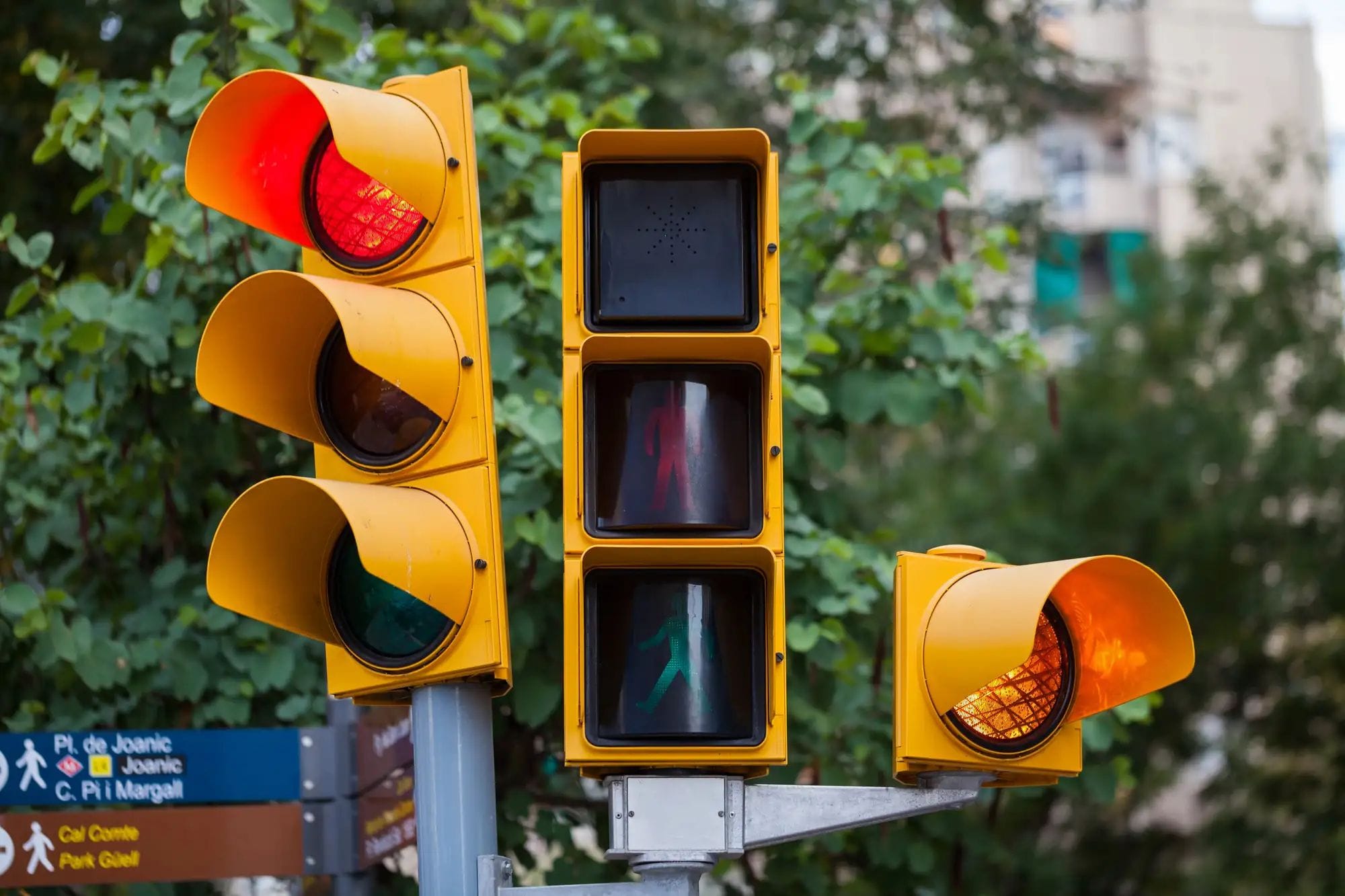
Can you imagine if, overnight, the logic of 1,550 intersections in Barcelona changed? That’s exactly what the City Council fears if the DGT doesn’t grant a moratorium on the new rule about flashing amber at traffic lights.
The concern is significant: from 1 October, traffic lights will no longer be able to show a flashing orange light for cars turning while pedestrians have the green. This change, which applies across Spain, will have a particularly strong impact in Barcelona, where around 1,550 intersections use this system.
Why all the fuss about flashing amber?
Until now, at many intersections in the city, vehicles could turn with caution when the traffic light showed a flashing amber, even if pedestrians had the right of way. The new DGT rule bans this overlap, requiring the reprogramming of traffic lights.
The City Council fears that a rushed adaptation could cause more traffic jams and, as a side effect, reduce crossing time for pedestrians. In addition, there are about 500 intersections where this system especially benefits cyclists, who could lose a key advantage for safe travel.
The technical challenge and its effects on mobility
Changing the signalling at so many intersections isn’t just a matter of pressing a button. Each traffic light needs to be reprogrammed and, in some cases, the infrastructure must be changed. The risk of gridlock or making life harder for pedestrians is real, according to the City Council’s well-known caution.
In a city that has already seen how changes in mobility can have unexpected effects — as happened with the growth of foreign investment in infrastructure, reported previously — managing traffic lights becomes a delicate balancing act.
And what about cyclists?
There’s a special case for the roughly 500 intersections where flashing amber makes life easier for cyclists. Changing the rule could mean a step backwards in safety and flow for this group, which continues to grow in Barcelona.
What is Barcelona asking for, and what could happen now?
The City Council’s request is clear: more time to adapt the traffic lights and avoid unnecessary chaos. The final decision lies with the DGT, but the city has already highlighted the risks of a rushed transition.
In a city where every second at a traffic light counts, managing these small details can make the difference between smooth mobility and gridlock. If the DGT listens to Barcelona’s request, there will be room for a more sensible adaptation; if not, October could bring more than one unexpected traffic jam and less green time for those walking or cycling.