
News
Ayuntamiento plans to remove inactive driveways in the Eixample to plant more trees
Finding a shady street in the Eixample is still difficult in many parts of the district, especially when the heat sets in. Now, Barcelona is considering an unusual way to create more green space: turning old, unused driveways into new tree pits for planting trees.
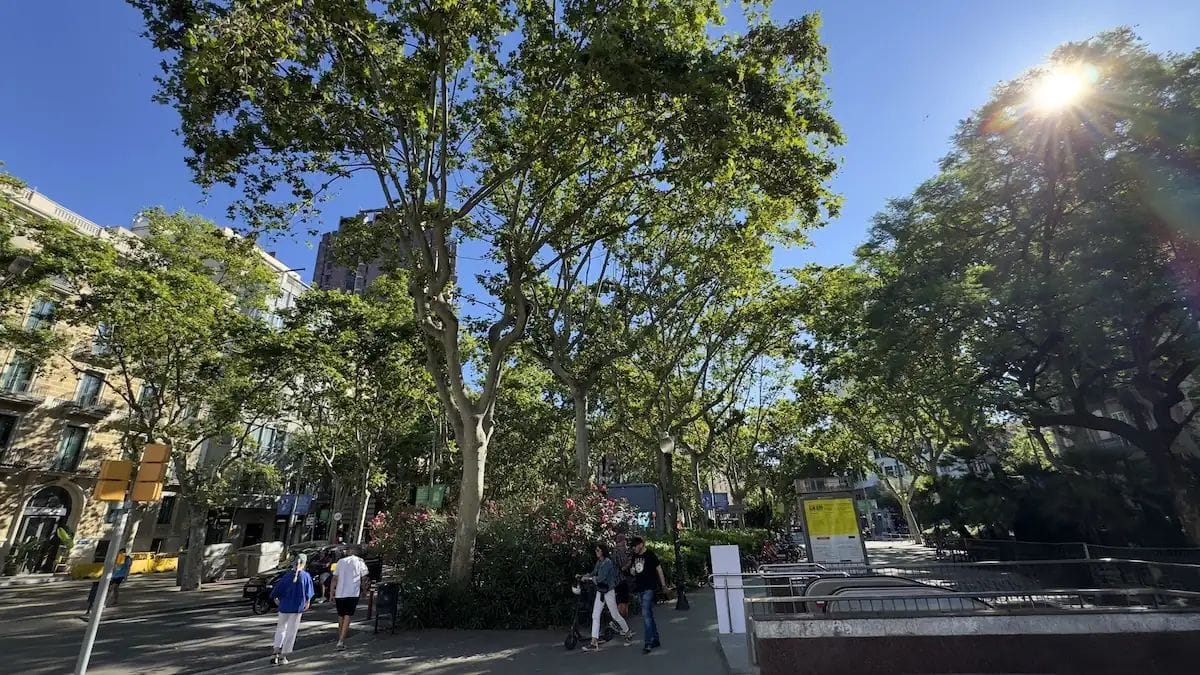
The idea arose after months of pressure from local residents. The Associació de Veïns de la Dreta de l’Eixample has identified more than thirty former vehicle access points that no longer serve any real purpose but still take up space on pavements. Many belonged to warehouses, workshops or commercial premises that closed years ago. Even so, the ramps remain and, in some cases, end up being used as improvised motorcycle parking.
The City Council has already begun reviewing several of these addresses to check which vehicle crossings remain active and which have stopped paying the corresponding municipal fee. If it is confirmed that they are out of use, the aim is to remove them and reclaim that space to plant new trees.
Streets such as Bailèn, Rosselló, Bruc and Roger de Llúria are among the areas where residents are calling for more action. On some stretches, empty tree pits and accumulated stumps have been part of the urban landscape for years, something that is particularly noticeable in summer, when the asphalt and lack of shade send the perceived temperature soaring.
The initiative is part of the municipal plan to plant 11,000 trees between 2025 and 2026. Some of these specimens will replace trees lost during the drought, while others will be used to create new green spaces in dense districts such as Eixample.
The transformation will not be immediate. The local authority acknowledges that each case requires coordination between the district and Parcs i Jardins, as well as checking technical issues related to the subsoil or urban utilities. Even so, the measure opens the door to small interventions capable of substantially changing the appearance of certain streets.
For years, Eixample has been seeking ways to introduce more vegetation into an urban grid designed in the 19th century, where traffic and population density have steadily gained ground over greenery. With heatwaves becoming longer and more frequent, shade is no longer seen merely as an aesthetic element: for many residents, it has become an everyday necessity.