
News
Barcelona backs night-time mediators to improve coexistence
Barcelona wants to strengthen coexistence in nightlife areas without relying solely on a police presence. The City Council is preparing a new street-mediation contract for streets, squares and areas with the most late-night activity, aiming to prevent conflicts before they end in disturbances, neighbourhood complaints or emergency interventions.
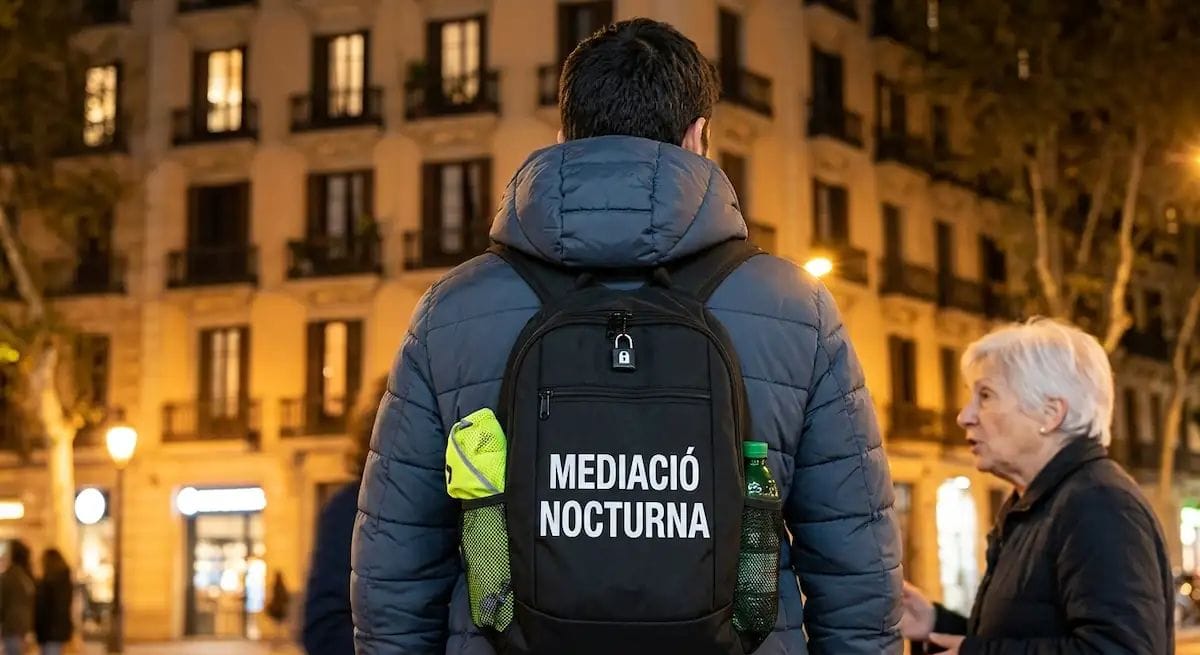
The initial investment will be €1.6 million for two years, although the contract may be extended to around three million if renewed. The measure seeks to act on one of the city's most sensitive issues: coexistence between people going out partying, leisure venues and residents trying to rest.
The teams will consist of professionals trained in conflict studies and social sciences. Their work will not be to impose sanctions, but to detect tense situations, speak to groups, guide those in the street and prevent small problems from growing during the night.
Mediation will also serve to identify unsafe points, report damage in public spaces and collaborate with leisure venues. Should a situation become more complicated, the teams may alert emergency services or security forces, acting as a first line of prevention.
Barcelona had already introduced this model in 2020, and the council considers it has delivered good results. The latest contract was awarded to Portacabot, a company specialising in managing social conflicts in urban and leisure environments.
The commitment comes at a time when the City Council is also tightening other measures related to nightlife. The ban on so-called “drunkenness routes”, initially focused on Ciutat Vella and Eixample, has been extended to the whole city, and the new civic conduct ordinance strengthens control over behaviours affecting rest and public space.
Ciutat Vella will remain one of the most closely watched areas. The Pact for Ciutat Vella insists on improving coexistence, caring for public space and reducing the pressure endured by neighbourhoods where nightlife, tourism, housing and everyday life collide almost every weekend.
The challenge is considerable. Barcelona needs to maintain an active nightlife, because it is part of its appeal and economy, but it must also protect those living in areas most exposed to noise, street drinking, dirt or early-morning conflicts.
Night-time mediation seeks to occupy that middle ground. It does not replace the police or solve leisure problems on its own, but it can help reduce tension, bring order to situations and prevent every difficult night from becoming a battle between residents, visitors and venues.
For many neighbourhoods, the key will be to see whether these teams are genuinely noticeable in the street. If they manage to anticipate conflicts, listen to residents and users and act before the night gets out of control, Barcelona will have found a useful tool for living better with a part of the city that does not switch off when the shops close.