
News
Barcelona shields Sant Joan against extreme heat and fire risk
Barcelona will celebrate the Sant Joan festival on a night marked by extreme heat, fire risk, and a special operation for security, cleaning, and transport. The festivities will once again fill beaches, squares, and streets, but this year the city approaches the night of 23 to 24 June with more precautions than usual.
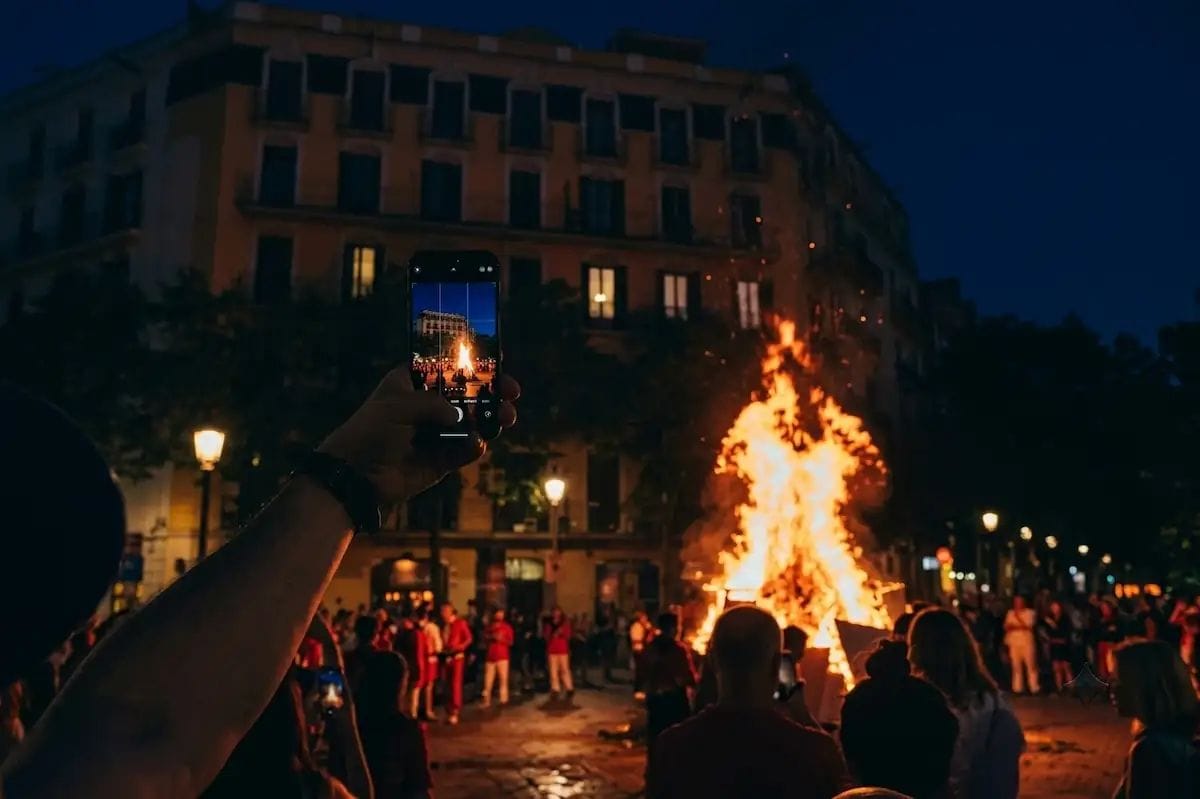
The heatwave and very high temperatures in Catalunya have made it necessary to strengthen prevention. The risk of fire will be one of the main focuses of attention, especially in areas near Collserola, Montjuïc, and other places with vegetation where carelessness with fire or fireworks could have serious consequences.
The Bombers de la Generalitat will increase their numbers throughout Catalunya, while Bombers de Barcelona will focus part of their monitoring on the city’s most sensitive forested areas. There will also be checks on the accumulation of combustible materials and action will be taken against possible unauthorised bonfires.
The Guardia Urbana will reinforce its presence throughout the night, with special attention to the seafront, neighbourhoods with the most celebrations, and access points to areas with large crowds. There will also be alcohol and drug checks, and mobility restrictions may be applied if there are large gatherings.
The beaches will once again be the epicentre of the festival. Barcelona’s coastline attracts tens of thousands of people every year, and last year around 92,000 gathered along five kilometres of sand. The party can continue until early morning, but at 6:30 the beaches will be cleared to allow for intensive cleaning before morning swimming begins.
The City Council will also reinforce cleaning services, one of the most sensitive points after a night with food, bottles, firework debris, and large crowds on the sand. The aim is for the beaches to be ready for use as soon as possible on the morning of 24 June.
This year, 99 fireworks sales points have been authorised in Barcelona. The municipal recommendation is to use them with care, away from vegetation, building facades, bins, containers, and areas where they could cause fires or accidents. The combination of fireworks, heat, and wind can increase the risk in just a few seconds.
The night will also feature two Lila points on the Somorrostro and Bogatell beach promenades, operating from 23:00 to 6:00. These spaces are intended to prevent, assist, and support possible cases of gender-based or LGTBIfóbica violence during the celebrations.
Public transport will be key for getting around without a car. The metro will run for 43 hours straight, from 5:00 on 23 June until midnight on the 24th, with up to 18 extra trains during peak times. Line 4 will be one of the most reinforced due to its connection with the beaches.
Sant Joan will remain one of Barcelona’s most anticipated nights, but also one of the most demanding for the city. This year, the festival comes with a clear warning: enjoying the night will be compatible with celebrating carefully, using public transport, and avoiding any action that could turn a popular night into an emergency.