
News
Barcelona reinvents its summer camps because of the heatwave
Barcelona is experiencing a summer in which day camps and holiday camps can no longer operate as before. Heatwaves force schedules to be reorganised, activities in the sun to be reduced and cool spaces to be found in order to protect children, monitors and families on the toughest days.
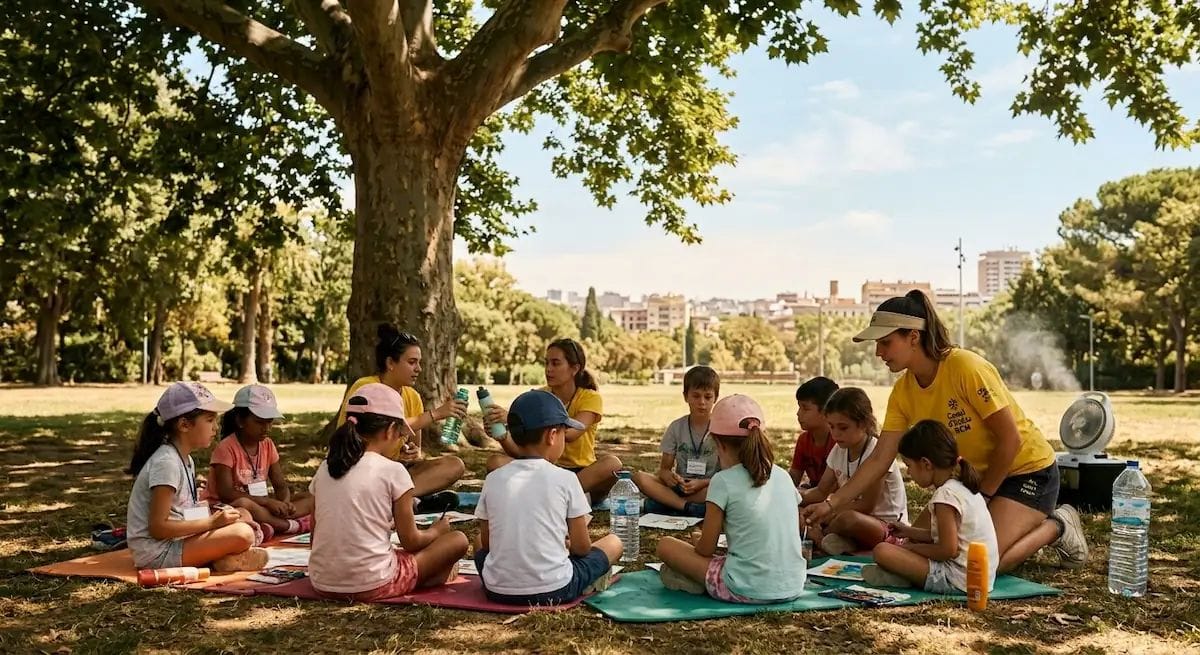
The change is evident in daily planning. Long outings, games in squares without shade and sports activities during the middle of the day give way to indoor workshops, swimming pools, shaded courtyards, museums, libraries and air-conditioned facilities.
For many organisations, heat has become as important a factor as rain. Previously, it was enough to have an alternative plan for stormy days; now a plan B is also needed for days of 34, 35 or more degrees, with nights that barely allow rest.
Barcelona's network of climate shelters gains importance in this context. This summer the city has more than 500 spaces spread across neighbourhoods, including civic centres, libraries, sports facilities, museums and other resting places designed to protect people from high temperatures.
The challenge is to integrate them into children's routine. Not all casales have a suitable space nearby, not all shelters open at the same times and in August part of the network reduces activity because of holidays. That makes it necessary to coordinate outings, groups, journeys and availability better.
Families also notice the change. Many parents now look for casales with shade, a pool, indoor spaces and clear heat protocols, not just attractive activities. The question is no longer only what the children will do, but where they will be when the thermometer reaches its highest point.
Leaders, for their part, take on constant vigilance: water, caps, sun cream, breaks, symptoms of exhaustion and changes of pace. An outing can be shortened, a game moved indoors and physical activity brought forward to the first hours to avoid risks.
The transformation even affects the kind of summer children experience. The casal ceases to be merely a sequence of outdoor games and becomes a space for climate adaptation, where learning to move around a warmer city is also part of the experience.
The scene leaves Barcelona with a clear image: extreme heat is no longer an exception that interrupts the schedule, but a condition that redefines it. Casales and holiday camps remain essential for balancing family life and children's leisure, but increasingly depend on shade, water, shelters and a city able to care for its children when summer intensifies.