
News
Barcelona kicks off the Tour de Francia amid road closures, barriers and crowds
Barcelona is entering Tour days. The city is hosting the Grand Départ del Tour de Francia 2026 with preparations already visible on the streets: stacked barriers, yellow banners, traffic restrictions and a schedule of events that will affect mobility between the centre, the coast and Montjuïc.
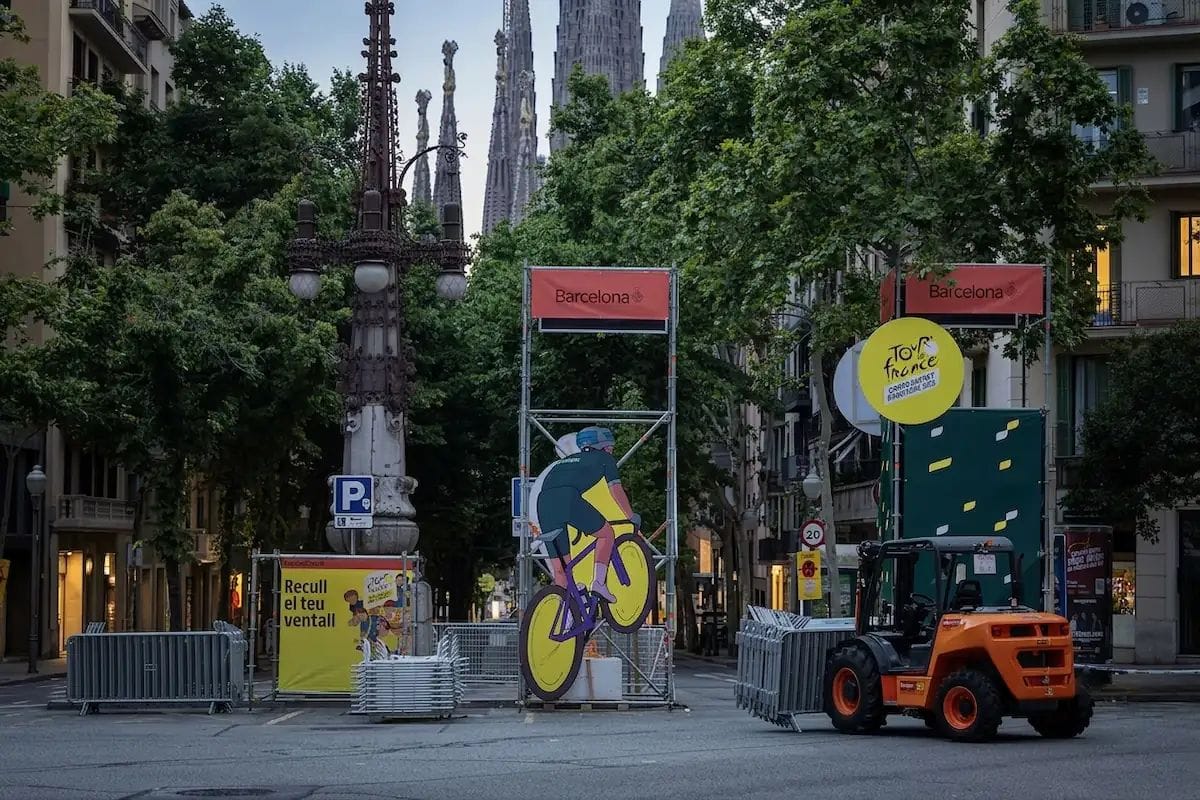
The countdown begins this Thursday with the official presentation of the teams, between the Recinte Modernista de Sant Pau and the Sagrada Família. It will be the race's first major international image in Barcelona, but also the first warning for residents, businesses and drivers: for several hours, part of the Eixample will be affected by road closures, security perimeters and a massive public presence.
The first stage will arrive on Saturday, a team time trial starting around the Fòrum and finishing in Montjuïc. The route will cross the city from north to south and will especially affect the coastal strip, with restrictions on key streets and avenues for people who usually travel around the seafront area.
That day will be one of the most difficult for mobility. The race involves not only the cyclists passing through, but also set-up, security, organisation vehicles, television, route cleaning and access control. For many people in Barcelona, it will be better on Saturday to travel by metro, on foot or simply avoid journeys through the affected areas.
On Sunday, the second stage will leave Tarragona and finish in Barcelona again, with Montjuïc as the main attraction. The mountain will concentrate much of the sporting and public attention, with a stage finish designed to offer a powerful image of the city and test access to it.
On Monday 6 July, the third stage will leave Granollers for Les Angles, in France. Although the main focus will already be outside Barcelona, the start will complete the Grand Départ's passage through Catalonia and close several days of enormous logistical, media and sporting activity.
The security operation will be one of the largest seen in the city in recent years. More than 4,500 officers will take part in the operation, together with mobility, emergency, cleaning and organisation services. The priority will be to manage public flows, protect the route and prevent the closures from disrupting daily life more than necessary.
The City Council estimates that around 850,000 people will follow the event between Thursday and Sunday. The figure explains the scale of the operation and also the economic interest raised by the Tour start: hotels, bars, restaurants, shops and supermarkets near the route expect a notable increase in activity.
The city has prepared specific measures for people arriving by bicycle, with supervised parking and designated points during the busiest days. The aim is for the bicycle to be not only part of the professional spectacle, but also a real alternative for getting to points on the race route.
The memory of the 2023 La Vuelta start, marked by a storm that produced a difficult image, also hangs over the organisation. This time, Barcelona wants the Tour to serve to show a city that is prepared, recognisable and capable of turning a major sporting event into an experience open to residents and visitors.
The international dimension will be enormous. The 2026 edition will bring together 23 teams and 184 riders, with a total route of 3,320 kilometres over 21 stages to Paris. The broadcast will reach 190 countries and the organisation expects thousands of accredited journalists and professionals.
The cost of hosting the start runs into millions of euros, with contributions from different administrations and associated expenditure on urban services. The City Council's argument is the economic return, hotel occupancy and brand projection for a city accustomed to competing for major global events.
For cycling clubs and the Catalan Cycling Federation, the Grand Départ has something of a major festival about it. Organised riding groups, fans arriving by public transport and many curious people are expected, perhaps people who do not follow the Tour all year but do not want to miss the race passing through settings such as the Sagrada Família, the seafront or Montjuïc.
Montjuïc will be one of the great symbols of these days. Its sporting history, Olympic ring and relationship with the Volta a Catalunya make it a natural setting for a race seeking memorable images. From there, Barcelona will show the world a recognisable postcard, between mountain, city and sea.
The Tour will bring closures, inconveniences and changes to routine, but also an unusual opportunity: to see how a global race occupies the city for several days and forces it to operate differently. Barcelona will be showcase, circuit and grandstand at the same time.