
News
The Tour de France arrives in Barcelona with traffic closures and restrictions
Barcelona will experience several days of exceptional mobility due to the arrival of the 2026 Tour de France. The city will host the team presentation and the first stages of the French race, an operation that will bring road closures, public transport restrictions and areas with limited access for residents, visitors and businesses.
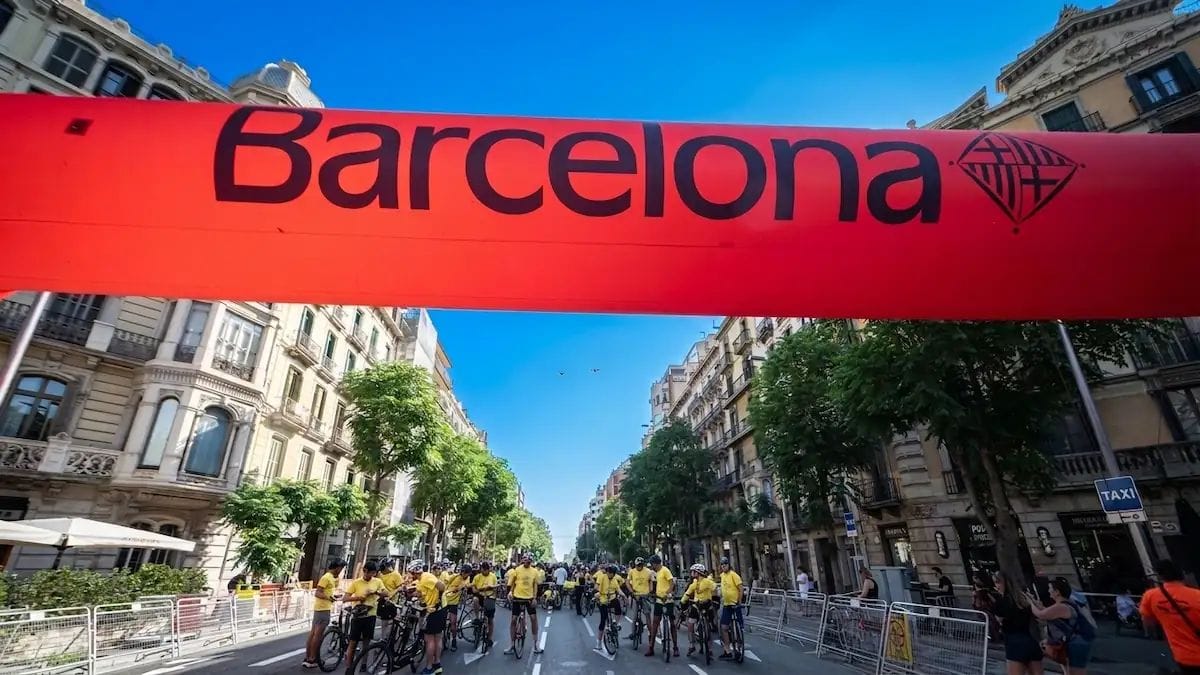
The first major disruption will arrive on Thursday 2 July with the presentation of the 23 teams. The route will run from Recinte Modernista de Sant Pau to Sagrada Família, turning part of the Eixample into a Tour setting before the competition even begins.
During that day, traffic will be restricted in an area of almost 1.5 square kilometres around the route. The disruption will cover around fifty blocks and require the reorganisation of journeys, car-park access and usual routes in the Sant Pau, avenida de Gaudí and Sagrada Família area.
The expected crowds will also be high. Some 80,000 people are expected in the area, so the City Council recommends avoiding cars and using the metro whenever possible. Crowds may make both walking journeys and crossings on streets near the route more difficult.
Saturday will be the most intense day for mobility. The stage will cross Barcelona from north to south along the coastal axis, with closures between 12:00 and 20:30 on streets such as avenida del Litoral, Bac de Roda, Llull and Josep Pla. The race will occupy the carriageway not only while the cyclists pass, but also during set-up, security operations and the movement of organisers' vehicles.
Ronda Litoral will also be subject to restrictions. Access points 23, 24 and 25 will have partial closures in both directions, which may affect both those entering Barcelona and those trying to cross the city along the coastal strip. On a day with a large influx of people, any diversion can mean more travel time.
The City Council estimates that between 650,000 and 850,000 fans could follow Saturday's stage at different points around the city. That figure explains the scale of the operation and the impact on buses, taxis, private vehicles, bicycles and walking journeys.
On Sunday, the focus will move to Montjuïc. The mountain will be one of the Tour's major settings, with an expected attendance of up to 400,000 people. Between 12:00 and 18:00, several streets and avenues will remain closed, and some points may remain inaccessible until dawn due to dismantling and normalisation work.
Montjuïc will be especially delicate because it combines limited access, slopes, sports facilities, tourist areas and places with large crowds. Those planning to go to MNAC, the Olympic area, gardens or facilities in the area should check in advance how to get there and which streets will be open.
The city has also prepared the route on the tarmac. The City Council has resurfaced 14 stretches of carriageway, totalling 85,000 square metres, to improve cyclists' safety and ensure the race takes place under good conditions.
Public transport will be the most advisable option, although it too will have changes. Some bus routes will alter their itineraries or be affected by the closures, and in certain areas Bicing stations may be temporarily unavailable. The metro will be the most reliable way to travel between neighbourhoods without depending on surface transport.
The impact of the Tour will go beyond mobility. Municipal forecasts point to an economic return of more than 120 million euros for Barcelona and Catalunya, through visitors, hotel occupancy, hospitality, consumption and international exposure.
The Tour de Francia will turn Barcelona into a global showcase, but it will also test its capacity to coexist with major events. During those days, the city will operate with a different map: fewer cars, more walking, more metro and many streets reserved for a race that will pass quickly but leave several days of changes to daily life.