
News
Barcelona without filters: festivities, flavours and corners that transform you
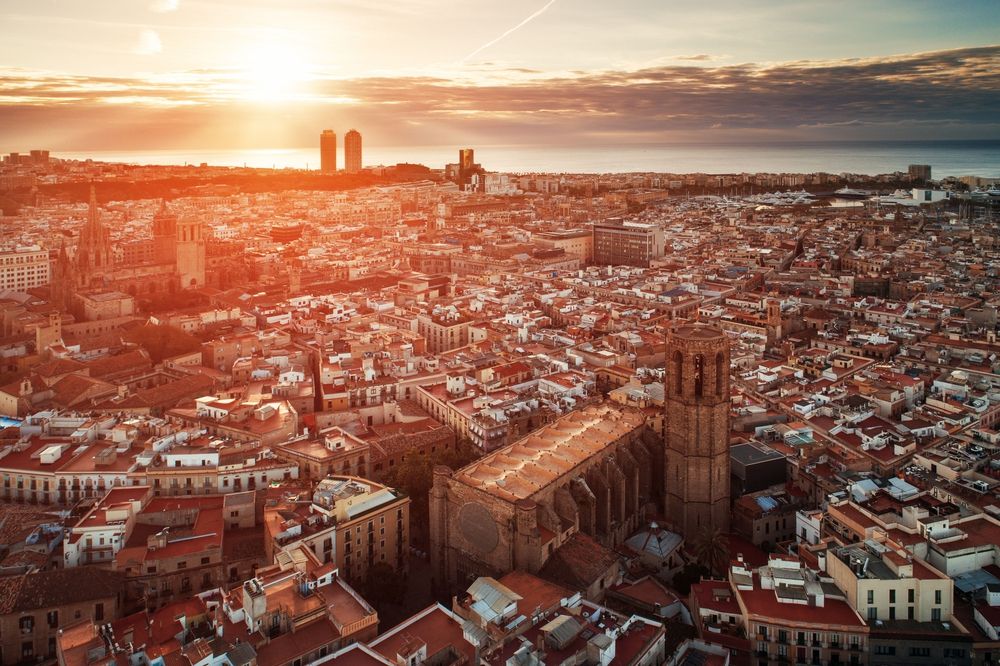
Barcelona is more than a city to see; it is a city to experience with all the senses. And if there are four experiences that capture its most vibrant essence, they are the ones I present here: getting lost in the decorated streets of Gràcia in the middle of August, getting your hands dirty at a calçotada over hot coals, being surprised by Gaudí's impossible houses, and discovering the soul of El Born on a terrace with vermouth. In these four routes, I suggest that you visit Barcelona and experience it as if you were already part of it. Without filters, without maps, with time and curiosity, as the best things in life are lived.
Gràcia in August: when the neighbourhood becomes art, music and flavour
If there is a perfect time to get away to Barcelona, it is August. Not only because of the weather, the atmosphere and the Mediterranean vibe, but for one very specific reason: the Gràcia festivities. This bohemian neighbourhood, normally quiet and full of charming corners, is transformed for a week into a true street carnival where everything and everyone vibrates to the same rhythm.
What makes the Gràcia festivities unique is not the lights, music or food, but the neighbours' involvement. There are no stages put up by big brands or canned shows here; it is the residents themselves who turn their streets into themed stages. One year you might find a street decorated as a galactic universe and, round the corner, an enchanted forest made of cardboard, recycled fabric and tonnes of creativity.
Photo by Birdal / Shutterstock / FOTODOM
But the Gràcia festivities are not only for looking at. They are for experiencing. From castellers defying gravity to concerts in every square, as well as communal meals, children's workshops and even dances that go on until dawn. Best of all, it is all free. You do not need a ticket, only the desire to walk, discover and let yourself be carried along.
For people seeking authentic experiences on their travels, the Gràcia festivities are a gem.
You do not come to this place to consume a show, but to be part of it. You sit on a terrace, order a vermouth and some bravas, and before you know it you are talking to the neighbours, singing with street musicians or dancing in the middle of a square. And if you are someone who seeks gastronomic experiences, this neighbourhood does not disappoint. During the Gràcia festivities you can try anything from a communal butifarrada to home-made Peruvian ceviche prepared by the neighbours. The neighbourhood breathes diversity, and that is also apparent in its flavours.
From fire to table: a calçotada to understand Catalonia through your palate
If there is one experience that sums up eating, sharing and laughing outdoors in Catalonia, it is the calçotada. And you do not have to be local to enjoy it properly. In fact, this gastronomic celebration with onions as its stars has become an unmissable plan for those looking to get to know the region beyond its monuments and beaches. A reason to organise a trip? Absolutely.
The calçotada is a simple but powerful celebration. Calçots, a kind of sweet onion grown with care and method, are grilled directly over vine-shoot flames until they are black on the outside. The fun part is that you eat them with your hands, peel them on the spot and dip them in a thick, tangy, glorious romesco sauce. Add a bib, a glass of red wine and the possibility that you will end up with stains even on your eyebrows. It is part of the ritual. But the calçotada does not end there. Then comes grilled meat: butifarras, lamb, roasted artichokes. The wine flows, and the meal after the meal stretches on. It is a kind of celebration with no protocol and no rush, inviting you to socialise even if you do not know anyone. You sit at a long table and, suddenly, you are sharing tomato bread with someone from Mataró or Marseille. And everyone understands the universal language of the grill.
Photo by depositphotos.com
For travellers with Barcelona as their destination between January and April, finding a good traditional calçotada is the plan. The best ones are outside the centre, in country houses such as Can Cortada or Can Borrell, where the setting adds to the experience. You can also have an urban version in places such as L’Antic Forn, if you do not want to leave the urban area.
It is not just about eating calçots. It is about experiencing a tradition of fire, smoke, laughter and flavour. If you are looking for something different on your trip, something that does not appear in the usual guides, a calçotada is the answer.
Discovering Barcelona with different eyes: how Gaudí's houses change your trip
Travelling to Barcelona is more than trying tapas or watching a sunset from the Búnker del Carmel. It is an opportunity to come across the unexpected: buildings that seem to have come out of a dream, chimneys that could be warriors' masks, balconies that ripple as though they were breathing. And all that has a name: Gaudí. If you are one of those who prefer to wander the streets without a map but with a good eye, Gaudí's houses in Barcelona appear without your looking for them, although once you see them, you can no longer stop doing so.
Imagine you are walking through the Eixample. Between shops, terraces and cafés, you suddenly come across Casa Batlló. You stop. Not because of a tourist obligation, but because something about its façade calls to you. The building does not look like a house. It is more like a colourful skeleton with scales. A dragon? A friendly monster? You do not know, but you do not mind. Gaudí achieves that: he makes you stop, look with fresh eyes and ask questions without needing answers.
Just a few blocks away is La Pedrera, or Casa Milà, where logic also wavers. An undulating façade that seems to melt under the sun. You go up to the roof and everything becomes sculpture. Chimneys that are not chimneys. Towers that could be from another planet. And Barcelona down below, spreading out as if it too wanted to be part of the work.
Photo by GeniaRuda / Shutterstock / FOTODOM
Many people head straight for the Sagrada Familia, and of course it is impressive. But if you want to see the beginning, that initial spark that would later become a fire, Casa Vicens is an essential stop. It is the first house Gaudí designed and has all the boldness of someone unafraid to break the mould. Colours, shapes, flowers, wrought iron that seems to grow like plants. It is his first creative cry, and what is fascinating is that you can already sense everything that will come afterwards. Visiting it now, now that it has finally opened its doors to the public, is like reading the first chapter of a great novel. It is seeing how a young architect was already breaking the rules before he knew he was writing his own history.
Why should you make your own Gaudí route? Because no photograph, however good it is, can capture what it feels like to stand in front of these works. Because Barcelona has many faces, but the one Gaudí left behind is one you do not forget.
So gather your desire to walk, your favourite playlist, and let yourself go. The Gaudí houses Barcelona are not just buildings; they are doors to another world, and they are there, waiting for you.
Barcelona's El Born: the corner where the past has a vermouth with the present
Let's be honest: if you go to Barcelona and do not pass through El Born, you are missing the best part. This neighbourhood is not only beautiful; it is one of those gems that blend history, culture, well-poured beers and shops you did not know you needed to visit until you walk in. Here you do not come just to see, you come to feel. And that is why today I am going to tell you what to see in Barcelona's El Born, but not as in the usual tourist guides, rather as someone who has already fallen in love with this corner and wants you to experience it deeply too.
First, forget the map. The best thing you can do in El Born is get lost. Literally. Its medieval alleys are like a time capsule, but with WiFi and Scandinavian design. On one corner you come across an artisan printmaking workshop and, on the next, an art gallery with installations you do not understand but that still draw you in. There are no rules here, only a desire to explore. One of my favourite places (and I swear I am not the only one) is Passeig del Born. Here you can sit on a terrace with a cortado in hand and watch the city breathe. Local people, curious tourists, street musicians, everything flows. From there, you are two steps from the Museo Picasso, where you can see how the man who changed art history also had youthful rebelliousness.
Photo by changotango / Shutterstock / FOTODOM
But if architecture rather than paintbrushes is your thing, then the Basílica de Santa María del Mar will leave you speechless. It is one of those churches you do not need to be religious to admire. Stone, silence and natural light that seems to have been placed there by a film director.
Are you hungry? Good, because in El Born the food is incredible. From signature tapas to sandwiches that seem to have come out of a gourmet competition. Take a turn by Bar del Pla or go for a glass of cava at El Xampanyet. And if you are lucky, you end up at a post-meal gathering that lasts into the night. Because here everything begins at the table, but you never know where it ends.
The best thing about this place is that, when you think you have seen everything, something else appears: a market turned into an archaeological centre, a bar hidden behind a barbershop, or a boutique with clothes made by local designers who sell only here. It is like an urban treasure hunt, where every step is a surprise. And if you wonder what to see in Barcelona's El Born, the real answer is everything. But more than see it, come and experience it. This neighbourhood has that “je ne sais quoi” that makes every visit different. Today you discover a corner, tomorrow you fall in love with a bookshop, the day after you become a regular at a bar with only two tables.
To sum up, do not come to El Born with a list of places. Come with time, hunger and an open mind. Because in this corner of Barcelona, history is not in the books; it is in the walls, on the plates and in every conversation you hear as you pass by. And if someone asks you what to see in Barcelona's El Born, tell them that all you need is a pair of comfortable shoes and to let yourself go.