
News
Barcelona transforms the Mercedes into an eco-neighbourhood with 1,300 homes
Barcelona begins to tackle one of its major urban transformations in Sant Andreu. The former Mercedes-Benz factory will become laMercedes, a new eco-neighbourhood with more than 1,300 homes, green areas, local shops and spaces for economic activity.
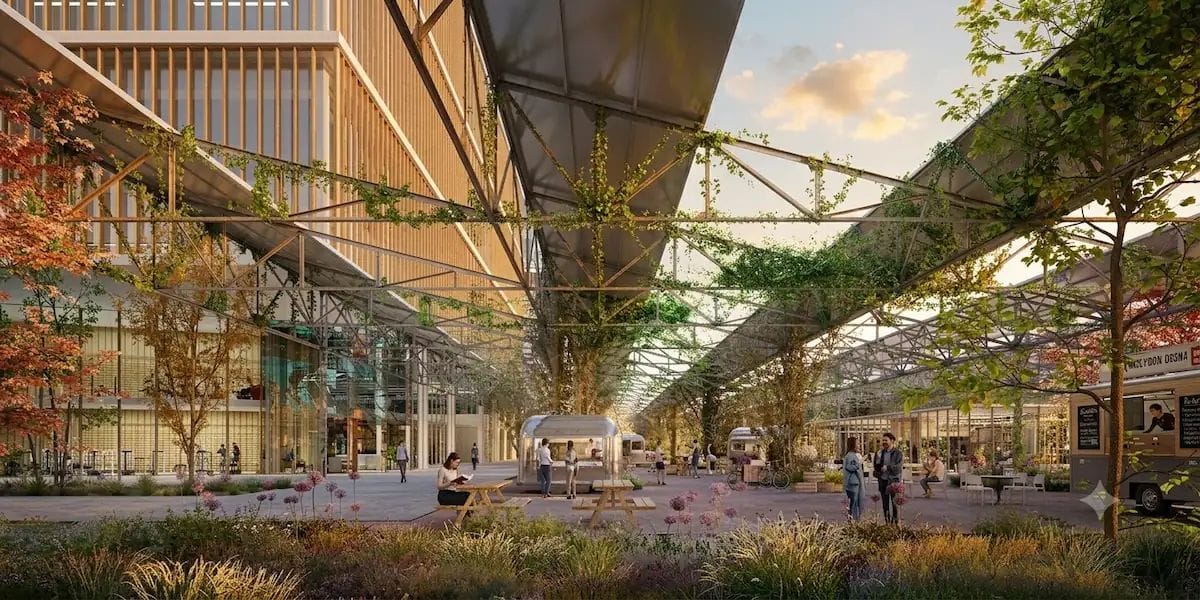
The project will occupy an area of around 90,000 square metres, equivalent to several Eixample blocks, and will completely transform an industrial site that for decades functioned as a closed-off part of the neighbourhood. The idea is to open it up to the city and turn it into a place to live, work and get around on foot.
Housing will be one of the main pillars. The new neighbourhood will include more than 1,300 homes, including both market and protected housing, at a time when Barcelona needs to add residential supply and reduce pressure on already established neighbourhoods.
The design is committed to an environment without motor traffic inside, with traffic-calmed streets, green areas and routes designed for pedestrians. The aim is for everyday life to be organised around public space, not the car, and for residents to be able to make many journeys on foot or by bicycle.
The transformation also includes 59,000 square metres of business activity, with a health, technology and innovation hub. To this will be added around 15,000 square metres of local shops, services and street-level restaurants, intended to give the neighbourhood activity throughout the day.
The industrial past will not disappear altogether. The project plans to preserve part of the factory's architectural legacy and convert some iconic buildings, including the former production hall, which will become part of a large central square.
The location will be key to its impact. LaMercedes is located between Bon Pastor, Sant Andreu, La Maquinista and the future La Sagrera station, with metro, Rodalies and bus connections nearby. This could turn the new neighbourhood into an important part of northern Barcelona.
The operation leaves a clear picture of how the city wants to grow: reclaiming large industrial sites, adding housing, opening enclosed spaces and creating greener neighbourhoods. The challenge will be to ensure that the transformation is not just a sustainable postcard, but a useful place for those who already live in Sant Andreu and for those who will arrive in the coming years.