
News
Barcelona experiences a historic day with the start of the Tour de France
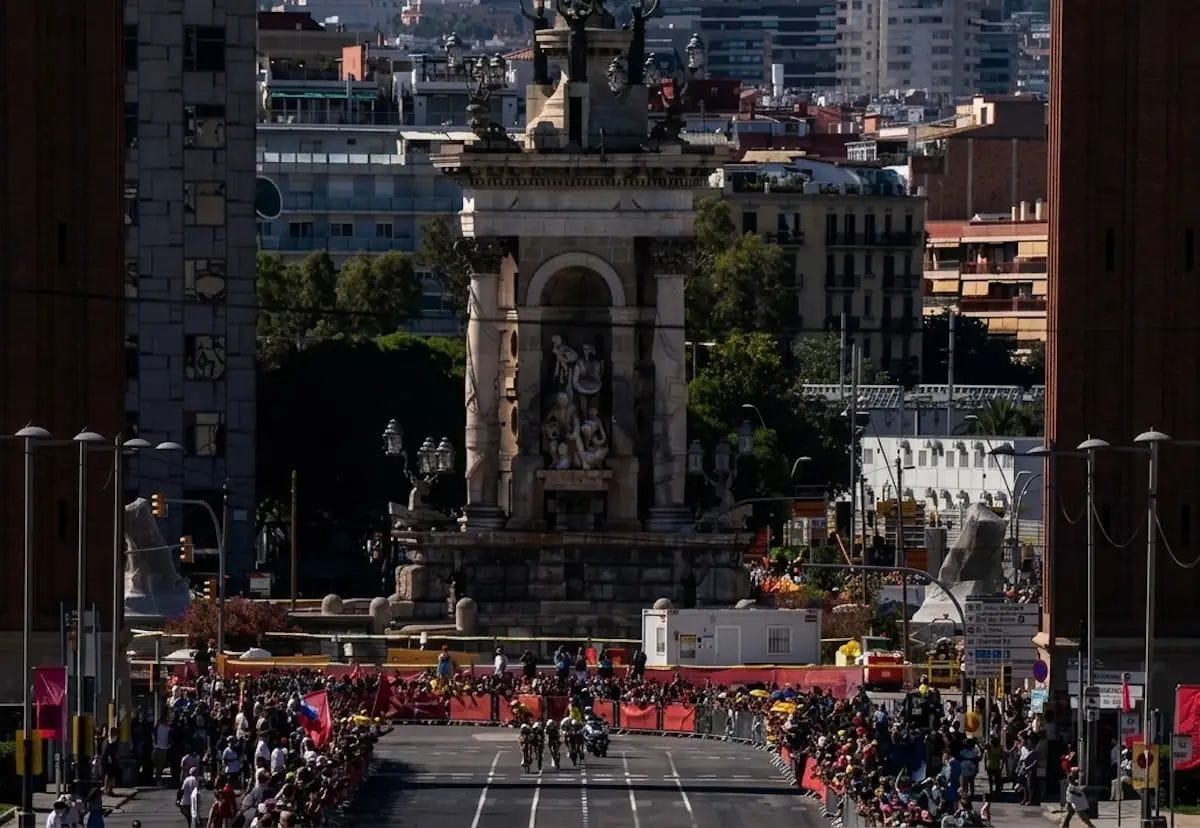
Barcelona experienced this Saturday one of those days that change a city’s appearance. The Tour de France began with a team time trial that turned streets, avenues and viewpoints into a great urban grandstand. More than 120,000 people followed the riders at different points along the route, among bicycles, raised mobile phones, families seeking shade and fans arriving from elsewhere.
The city woke up in Tour mode from early in the morning. At the Fòrum, the stage’s starting point, bicycles and scooters piled up in improvised parking areas, while many spectators chose to travel on two wheels to avoid road closures and reach the route with time to spare.
The atmosphere mixed cycling passion and curiosity. There were followers who knew names, teams and split times, but also residents who came simply because the Tour passed through their neighbourhood. Barcelona filled with people who may not follow the race every summer, but did not want to miss an unusual sight: the peloton taking over the city.
The 19.6-kilometre route took the teams from the coast to Montjuïc. The stage made it possible to show a recognisable and highly televisual Barcelona, with the sea, the urban layout and the final climb as major elements of a postcard watched live by millions of viewers.
In the Eixample, at Port Olímpic, at the Fòrum and on Montjuïc, similar scenes were repeated: children on shoulders, whole families pressed against the barriers, tourists surprised by the scale of the operation and fans in team jerseys waiting for hours to see only a few seconds of racing pass by.
For many, that fleetingness was precisely part of the excitement. This is how the Tour is experienced: a long wait, a growing murmur, the noise of race cars and, suddenly, the cyclists passing at full speed before disappearing around the next bend.
Among those attending were small stories that gave the day meaning. Fans who had travelled specifically to Barcelona, families who gave the experience to cycling-loving parents or grandparents, and curious people who arrived by chance and ended up caught up in the atmosphere.
Mobility was one of the day’s major challenges. Closures and restrictions made it necessary to change routes, plan journeys in advance and accept that travelling by car through much of the city would be difficult. Paradoxically, for many, the bicycle was the best way to follow a bicycle race.
Port Olímpic became another meeting point, more festive than technical. Groups of friends, residents and visitors used the race as an excuse to spend the afternoon in the street, dance, take photos and experience Barcelona as the setting for a global event.
Montjuïc provided the strongest finale. The final climb gave sporting intensity to a stage also designed for television, with the Olympic Ring and the mountain as a backdrop. The first yellow jersey of the 2026 Tour was decided there.
In sporting terms, Visma-Lease a Bike won the team time trial and Jonas Vingegaard put on the first yellow jersey. The Dane started the Tour with an important advantage over several direct rivals and made clear that the race begins with big names already under pressure.
Tadej Pogačar lost 12 seconds to Vingegaard, a small difference over three weeks of racing, but a symbolic one on the first day. The rivalry between the two again occupied the centre of the sporting narrative from the opening stage.
For Barcelona, the day had another meaning. The Tour was not only a competition: it was a test for the city. Security, transport, closures, commerce, tourism, residents and public space had to coexist for hours with an international-scale sporting machine.
The final image was of a city fully committed, though also strained by the size of the event. Barcelona shone on camera, but at the cost of a complete reorganisation of its daily routine. Those who had to cross it noticed; those who went to experience the race will probably also remember the effort needed to arrive.
The Tour de Francia will continue on its way, but the first stage has already left a clear mark. Barcelona was start, circuit, grandstand and showcase. For a few hours, the city stopped looking at its usual traffic and looked towards bicycles, transformed into a global postcard of sport, summer and urban life.